KLSCAH land premium appears to have been given away for free
Muhammad Fathi said the reduction in the premium from RM4.67 million to RM1,000 also raised questions about transparency and the criteria used by the government in granting the concession.


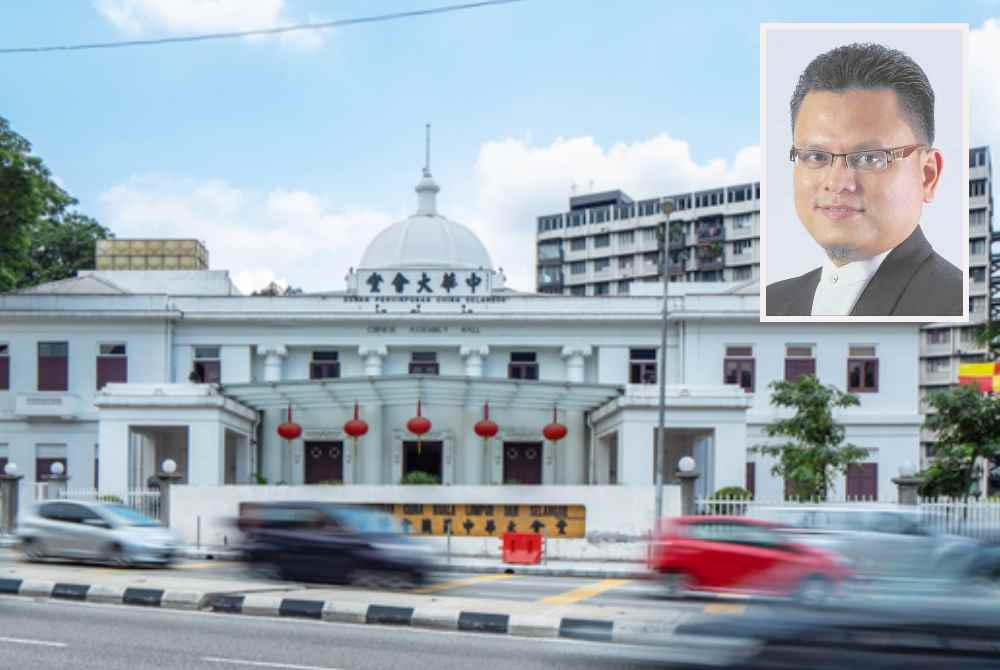
SHAH ALAM - The reduction in the land premium for the Kuala Lumpur and Selangor Chinese Assembly Hall (KLSCAH) from RM4.67 million to a nominal RM1,000 is seen as excessively low, almost as though the land had been given to the association for free.
Constitutional expert Associate Professor Dr Muhammad Fathi Yusof said the government should have set a more reasonable premium rate by taking into account various factors, including public interest, the recipient's ability to make payment and the intended use of the land.
He said land premiums set by the government are generally lower than market value, potentially ranging between 25 and 50 per cent of the market price.
“If the building is used for purposes that generate income, the question of affordability does not arise.
“In fact, even if no reduction were granted, the premium should still be set at a more reasonable rate, rather than the nominal amount of RM1,000,” he told Sinar on Monday.
Muhammad Fathi said the reduction in the premium from RM4.67 million to RM1,000 also raised questions about transparency and the criteria used by the government in granting the concession.
As such, he said the government must explain the basis for granting the privilege, including who benefits from it and whether the recipient genuinely requires assistance.
“There must be transparency. What are the criteria for granting such privileges? Who among the people benefits from them? Does the recipient genuinely need them? Does the association comprise poor and underprivileged groups who require assistance?” he said.
Elaborating further, Muhammad Fathi said the setting of land premium rates should not be based solely on the historical significance and heritage status of a building, but must instead be assessed using more objective criteria.
He added that public interest, government revenue, the recipient body's ability to pay and the intended use of the land should also be taken into consideration.
He further noted that many other buildings also have their own historical significance, raising questions about whether those premises would similarly qualify for nominal land premiums if heritage status were used as the basis for such concessions.
“All these factors must be assessed using more objective criteria, rather than relying on just one factor,” Muhammad Fathi added.
He said heritage building preservation could actually be carried out through gazettement and did not necessarily require exemptions or special concessions on land premium rates.
Therefore, he said the government must ensure that every decision to grant such privileges is based on sound and consistent grounds to avoid questions over unequal treatment of other heritage buildings.
Download Sinar Daily application.Click Here!