Invasive alien fish threaten Malaysia’s river ecosystems, with thousands caught
The problem extends beyond Pahang, with alien fish also being detected in other states.
NORAZWANI YUSOF
THE release of unwanted pet fish into rivers, lakes and dams is threatening Malaysia’s aquatic ecosystems, as invasive alien species continue to spread beyond their natural habitats and compete with local fish for food and living space.
What may appear to be an easy way for owners to dispose of unwanted ornamental fish can have serious environmental consequences, particularly when the species establish breeding populations in new habitats and disrupt the ecological balance.
The issue has once again drawn attention following the discovery of fish resembling piranhas at Klau Dam in Raub, Pahang.
In response, the Department of Fisheries Malaysia (DOF) conducted an Alien Fish Mitigation Programme (Program Mitigasi Ikan Asing) at the dam on Oct 24 and 25, recording a total catch of 156.586 kilogrammes (kg) of alien fish comprising peacock bass, zebra tilapia and Java barb.
Sinar Harian reported on Oct 25 that no piranhas were found during the operation, although approximately 43kg of local fish, including giant snakehead, river barb, patung and sia, were also caught.
However, the amount of alien fish caught represents only the results of the mitigation programme and does not reflect their overall population at Klau Dam.
The problem extends beyond Pahang, with alien fish also being detected in other states.
In Perak, nearly 4,000 alien fish weighing a combined 954.26kg were caught in Sungai Galah, Kampung Gajah. The catch comprised suckermouth catfish, redtail catfish and Chao Phraya catfish.
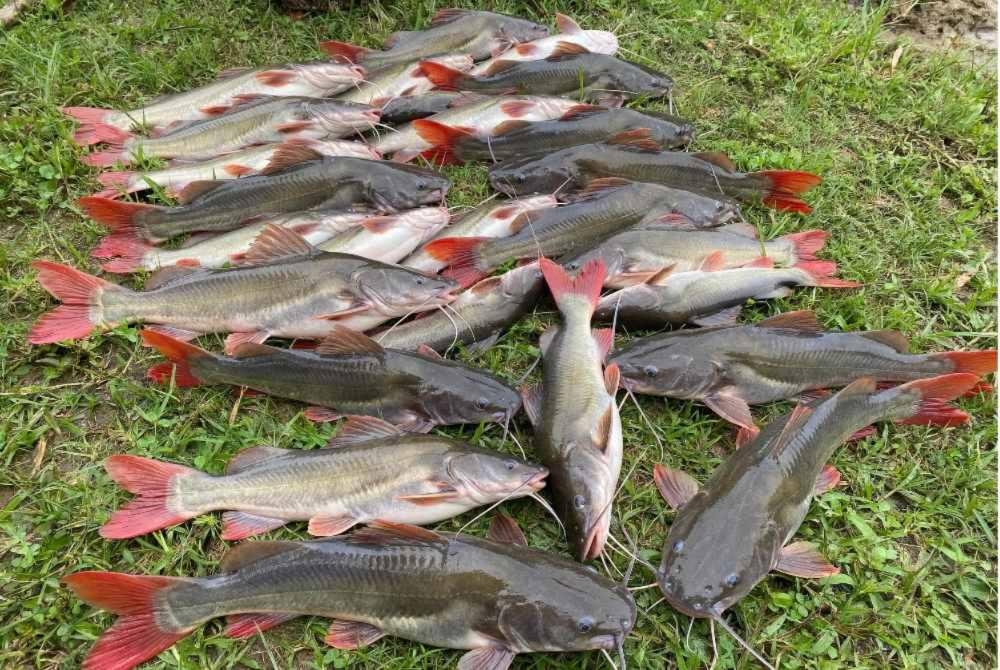
Meanwhile, a mitigation programme at Sungai Karang, Hulu Selangor, in August recorded the capture of 26 redtail catfish weighing 268.9kg.
From late 2023 until December 2025, the Malaysian Alien Fish Hunters Squad (SPIA) also recorded catches of approximately 75 tonnes of suckermouth catfish across Peninsular Malaysia.
More recently, the Pahang 1st Tawan Baung Ekor Merah Fest recorded 137 redtail catfish weighing a total of 1,046.66kg across seven locations.
Commenting on the issue, Fisheries Department director-general Datuk Adnan Hussain said the threat posed by invasive alien fish, particularly redtail catfish, required continuous action and cooperation from all parties to protect inland aquatic ecosystems.
The figures from various mitigation programmes demonstrate that catching invasive fish alone is insufficient to address the problem, highlighting the need for continuous monitoring and preventive measures to control their spread.
How do invasive alien fish spread?
Consumers' Association of Penang (CAP) president Mohideen Abdul Kader said on Nov 6 that human activities and aquaculture were among the main factors contributing to the spread of invasive aquatic species.
These include the release of unwanted ornamental fish into natural waterways and farmed aquatic organisms escaping into the wild due to floods or inadequate control measures.
Once established in new habitats, invasive species can compete with native fish for resources while potentially introducing diseases and parasites.
The threat could become more serious when crossbreeding occurs, as it may lead to genetic pollution and jeopardise the survival of local fish populations.
Although the Fisheries Act 1985 provides for prohibitions to address the threat, legislation and enforcement alone are insufficient without tackling the sources of alien fish entering natural waterways.
Ornamental fish owners also have an important responsibility to ensure their unwanted pets do not end up in rivers, lakes or dams.
Instead of releasing them into the wild, owners can seek advice from the Fisheries Department on appropriate management methods or hand them over to other fish enthusiasts with suitable pond facilities.
Ultimately, irresponsible disposal of ornamental fish can have consequences far beyond individual waterways, threatening native fish populations and disrupting the ecological balance of Malaysia's aquatic ecosystems.
Norawazni Yusof is a Sinar Harian journalist in Pahang.
Download Sinar Daily application.Click Here!