AI robot to bring learning opportunities to rural children
UMK vice-chancellor Prof Datuk Dr Arham Abdullah had previously said the university had doubled its intake quota for AI-related programmes from 60 to 120 students per intake, alongside additional allocations to strengthen its teaching workforce.

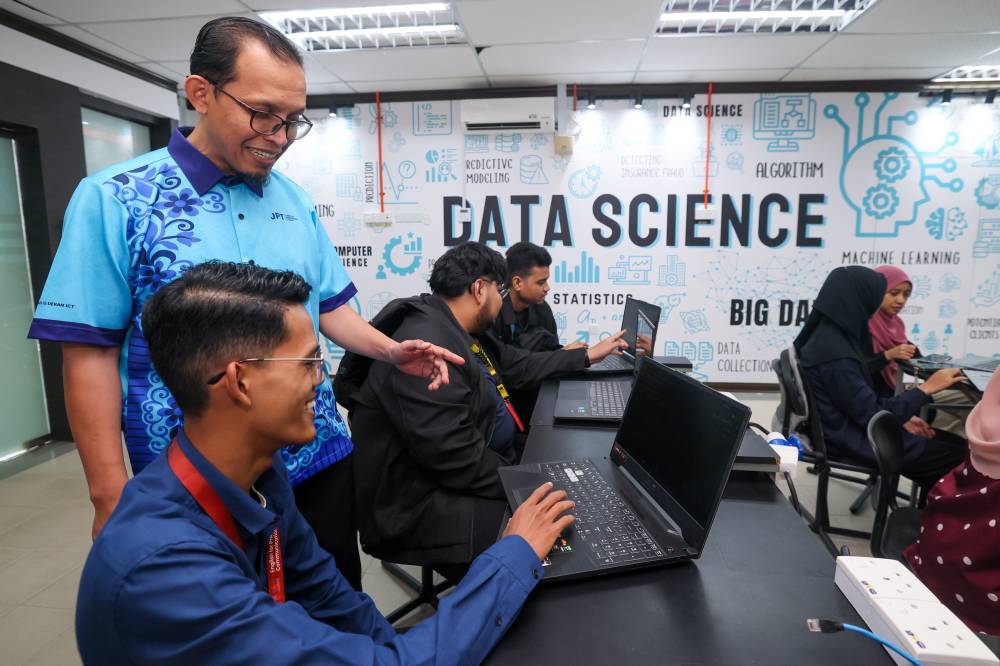
KOTA BHARU - A Universiti Malaysia Kelantan (UMK) student is developing an offline artificial intelligence (AI) function for an educational robot to help children in rural areas access learning resources without an internet connection.
Sahreen Hyqel Mohamed Zafarulla, 23, a third-year Information Technology undergraduate at UMK's Faculty of Data Science and Computing, said the final-year project aimed to turn the robot into a learning aid, particularly for teaching basic subjects such as mathematics.
The initiative is in line with the Ministry of Higher Education’s (MOHE) target of producing 30,000 AI-skilled graduates by 2030, including through increased student enrolment in AI-related programmes at public universities.
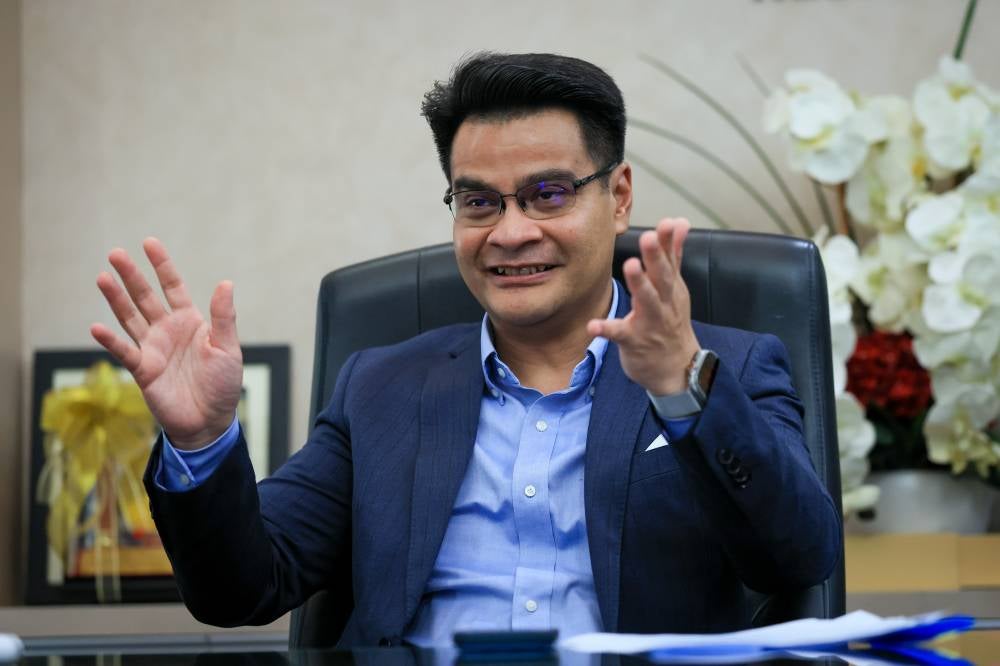
UMK vice-chancellor Professor Datuk Dr Arham Abdullah had previously said the university had doubled its intake quota for AI-related programmes from 60 to 120 students per intake, alongside additional allocations to strengthen its teaching workforce.
Sahreen Hyqel said the robot had already been developed, but its offline AI function was still being built and would be tested once completed.
"The robot is already available, but it currently requires a strong internet connection to operate.
My project is to develop an AI function that allows it to work without an internet connection, including in rural areas with limited internet access,” he said.
He said the robot would be programmed with an AI system capable of responding appropriately to users' questions without requiring an internet connection.
He hoped the innovation would give children in rural communities greater opportunities for independent learning, particularly in areas with limited access to educational facilities.
Sahreen Hyqel, who is from Penang, said one of the main challenges in learning AI was mastering mathematics, as the field required a strong understanding of calculations and algorithms to develop AI systems.
"At first, I thought AI was only about applications such as ChatGPT and Gemini.
But after studying it in greater depth, I realised the field was much broader, involving mathematics and algorithms that form the foundation of this technology,” he said.
Shahreen Hyqel said that support from lecturers and the faculty had helped students develop innovative projects and provided opportunities to participate in technology-related competitions and programmes.
He had also travelled to Japan for training in machine learning, gaining further exposure to the field of AI.
"That experience had strengthened my confidence in pursuing a career in the AI industry after graduation, given its wide-ranging opportunities and continued growth,” he added.
Meanwhile, UMK alumnus Dr Wan Ahmad Ridhwan Wan Musa, who holds a PhD in the Internet of Things (IoT), said using AI in daily tasks had accelerated system development without compromising user needs.
Wan Ahmad Ridhwan, who is also head of the Research and Innovation Section at UMK's Digital Transformation Centre, said the technology was also being used in research preparation, data analysis and the development of the university's digitalisation and AI policies.
"Previously, developing a module could take weeks or even months. Now, we can speed up the process and complete it within a few days,” he said.
However, he stressed that AI should be regarded as a tool to improve productivity rather than replace human decision-making.
Wan Ahmad Ridhwan said relying entirely on AI without verifying the accuracy of its output could compromise the quality of work, particularly in academic and research settings.
"AI certainly makes work easier, but we cannot accept 100 per cent of what it produces. We must verify the information, conduct research and ensure that the output is accurate,” he said.
His research in AI also includes developing an artificial intelligence framework to support autistic students at public universities.
Wan Ahmad Ridhwan said the research sought to incorporate the needs of autistic individuals into the development of digital systems, ensuring that the resulting technology was more inclusive and responsive to users' requirements.
The UMK alumnus recently completed his PhD in three years and five months, graduating at the university's 16th Convocation Ceremony at its Bachok campus, highlighting the importance of research and technological expertise in developing specialised talent. - BERNAMA
Download Sinar Daily application.Click Here!