Beijing says Taiwan politics don't change 'fact' there is 'one China'
China considers Taiwan part of its territory and has long threatened to use force to bring the island under its control.

BEIJING - Beijing said Monday that Taiwan's internal politics did not change the "fact" it is part of China, warning that efforts towards the island's independence were a "dead end" after it swore in new President Lai Ching-te.
China considers Taiwan part of its territory and has long threatened to use force to bring the island under its control.
It has described Lai as a "dangerous separatist" for his past comments on Taiwan's independence -- rhetoric that he has moderated in recent years.
Asked about his inauguration Monday, foreign ministry spokesman Wang Wenbin said that Taiwan independence was "a dead end".
"No matter under what guise or banner, the pursuit of Taiwan independence and secession is doomed to fail," he added.
"No matter how the internal political situation in Taiwan changes, it will not change the historical and legal fact that both sides of the strait belong to one China," Wang warned.
"The day of China's complete unification will come eventually."
As Lai took office, Chinese state media reported Beijing had imposed sanctions on three US defence companies over their sales of weapons to Taipei.
Though the United States formally recognises Beijing, it is Taipei's main partner and supplier of arms.
Wang on Monday accused "some politicians in a small number of countries" of engaging in "political manipulation... on the Taiwan issue, severely interfering in China's internal politics".
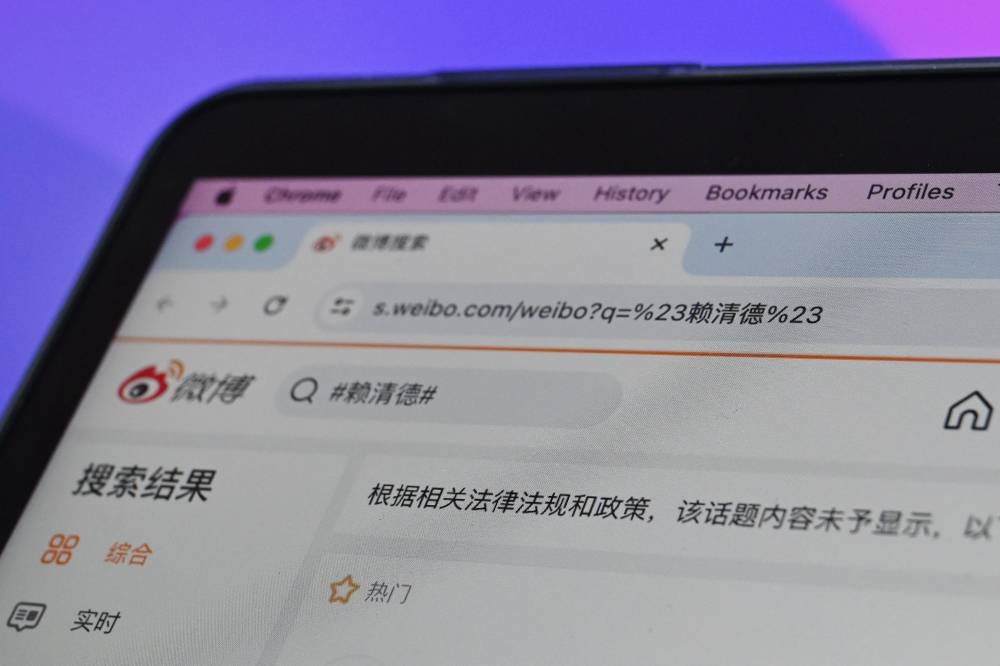
Chinese social media network Weibo also blocked hashtags referencing the inauguration, preventing them from trending on the platform used by hundreds of millions in China.
In his inauguration speech, Lai directly addressed the threat of war following years of growing pressure from China to bring Taiwan under mainland rule.
Lai said a "glorious era of Taiwan's democracy has arrived", and thanked citizens for "refusing to be swayed by external forces, for resolutely defending democracy".
Beijing's Taiwan Affairs Office -- which manages relations with the island -- slammed Lai's speech as sending a "dangerous signal", state news agency Xinhua reported.
Office spokesman Chen Binhua was quoted as saying Lai's remarks "wantonly advocated separatism, incited cross-strait confrontation and sought independence by relying on foreign support and by force".
He went on to accuse Lai of ignoring Taiwan's "mainstream public aspiration... for peace and development". - AFP
Download Sinar Daily application.Click Here!