UNFPA, UNU-IIGH strengthen Malaysia’s response to gender-based violence
The report delved into the experiences of GBV survivors navigating OSCCs, examining both structural and societal barriers, while calling for policy changes to better support survivors.


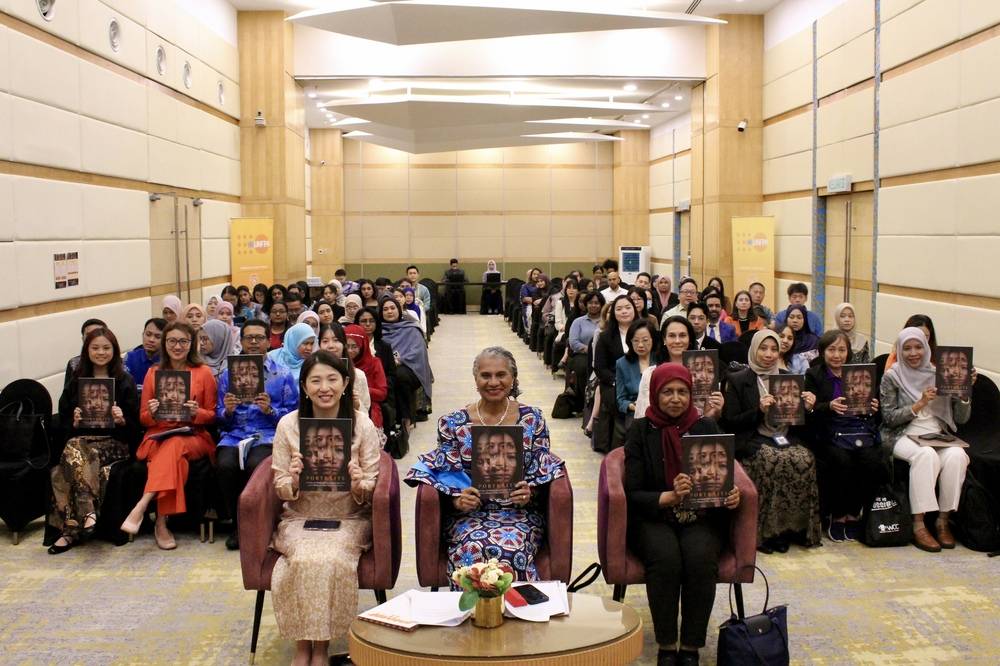
PUTRAJAYA – Malaysia’s One-Stop Crisis Centres (OSCCs) have long been a key support system for survivors of gender-based violence (GBV), but significant gaps remain in their service delivery.
A new report titled Portraits: Journeys of Gender-Based Violence Survivors across Malaysia’s One-Stop Crisis Centres, jointly released by the United Nations Population Fund (UNFPA) Malaysia and the United Nations International Institute for Global Health (UNU-IIGH), sheds light on these challenges and offers key recommendations for reform.
The report delved into the experiences of GBV survivors navigating OSCCs, examining both structural and societal barriers, while calling for policy changes to better support survivors.
The event was held earlier today at the Pulse Grande Hotel in Putrajaya.
UNFPA Country Representative for Malaysia, Dr Julitta Onabanjo commended the OSCC model but stressed the need for continued improvements.
“By focusing on survivors' experience, the findings and recommendations of this report provide an important reference for enhancing OSCCs. We recognise the challenges of coordinating a multi-sectoral response to gender-based violence and acknowledge the tireless work of the Health Ministry to ensure a survivor-centred approach through these centres.
"We look forward to working with all parties to strengthen our response and end gender-based violence once and for all,” she said.
In her keynote address, Puchong Member of Parliament (MP) and Parliament Special Select Committee for Women, Children and Community Development chairperson, Yeo Bee Yin spoke about the devastating impact of gender-based violence.
“Today, we face a heartbreaking reality: the hand that should protect, love and care for you is instead used to harm. By improving the infrastructure and processes, we can change lives—particularly the lives of those who need it most. Enhancing OSCCs requires cooperation from the government, the private sector, social workers, grassroots communities, and the public,” she said.
The report's author and research lead from UNU-IIGH Dr Claudia Abreu Lopes presented the key findings, followed by a panel discussion with experts from UNU-IIGH, the Health Ministry, the Women, Family and Community Development Ministry, and the Women’s Centre for Change Penang.
The session focused on ways to incorporate inclusive and intersectional approaches into Malaysia’s multisectoral response to GBV, ensuring comprehensive support for all survivors.
The report calls for urgent policy reforms to address gaps in Malaysia’s GBV response framework and to enhance the effectiveness of OSCCs.
As stakeholders work towards implementing these recommendations, the goal remains clear: to create a safer, more supportive environment for all individuals affected by gender-based violence.
Download Sinar Daily application.Click Here!