DAP vs PAP: What’s up with their almost identical logos?
This similarity is no coincidence.


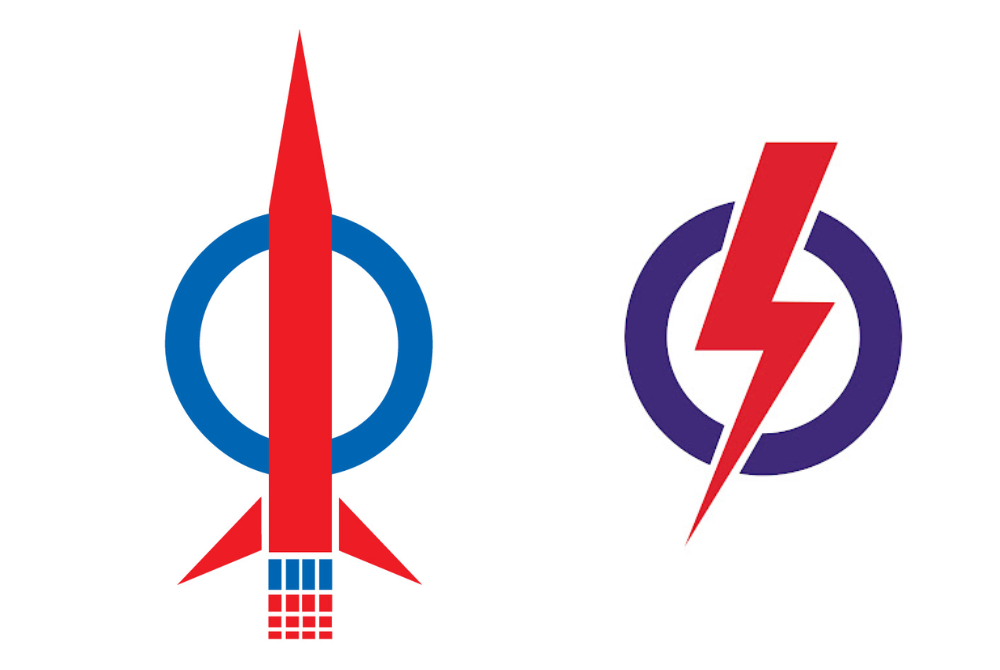
SHAH ALAM - The striking similarity between the logos of Malaysia’s Democratic Action Party (DAP) and Singapore’s People’s Action Party (PAP) has long sparked curiosity and occasional controversy, particularly among younger voters and political observers.
Both logos feature a bold red symbol set against a blue circle - DAP’s red rocket and PAP’s red thunderbolt - framed in a clean, modern style.
This similarity is no coincidence. It reflects a shared political and ideological history rooted in the turbulent pre- and post-independence era of both nations.
To understand this connection, we need to look back to the 1960s.
The People's Action Party (PAP), founded in 1954 by Lee Kuan Yew, with the primary objective of striving for Singapore's independence from British rule.
In 1963, during Singapore’s brief time as part of Malaysia, PAP extended its reach by contesting the Malaysian general elections.
This move unsettled Malaysian leaders, particularly those in Umno, as PAP’s multiracial ideology and its call for a 'Malaysian Malaysia' were seen as challenges to Malay political dominance.
The tensions culminated in Singapore’s separation from Malaysia in 1965.
After the split, PAP members and supporters remaining in Malaysia regrouped and formed DAP in 1966.
The new party carried forward PAP’s multiracial ideology and social democratic values, along with a logo that bore a striking resemblance to PAP’s.
Both logos share a circular blue background, symbolising unity and stability. However, their central elements conveyed different ideas.
PAP’s red thunderbolt represents 'action', emphasising its focus on rapid progress and effective governance.
DAP’s red rocket, on the other hand, signifies progress, modernity and a vision to propel Malaysia toward reform and accountability. The rocket’s bold imagery reflects DAP’s commitment to speed and boldness in addressing national challenges.
Over the years, both logos have undergone subtle changes, but their shared aesthetic continues to underline their historical connection.
In Malaysia, the similarity has sometimes been used by political opponents to accuse DAP of being a proxy for Singapore.
Although these accusations have faded in today’s political landscape, they occasionally resurface during election periods.
For many younger voters, the resemblance is more of a curiosity than a controversy. Yet, political analysts see it as a reminder of how symbols can encapsulate a party’s identity and historical roots.
Today, DAP and PAP have evolved in separate political directions – DAP as part of Malaysia’s reformist coalition and PAP as Singapore’s long-standing ruling party.
However, their logos remain an indication of a shared history when the political destinies of the two nations were intertwined.
Download Sinar Daily application.Click Here!