Politics of perception still rules but not the same way for everyone
In the current political landscape, politics of perception still plays a major role in shaping voter support patterns, but its influence differs by segment.
SINAR DAILY REPORTER
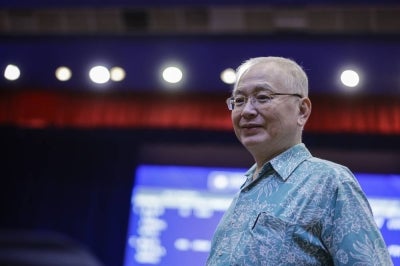
IN Malaysia’s evolving political landscape, perception politics continues to shape voter behaviour but its impact varies significantly across communities, says Ilham Centre director Hisommudin Bakar.
While national narratives often attempt to present voters as a single, uniform bloc, he said the centre’s field research shows that different ethnic groups continue to prioritise different issues, shaped by history, lived experience and socio-economic realities.
“In the current political landscape, politics of perception still plays a major role in shaping voter support patterns, but its influence differs by segment,” he said.
Among Malay voters, Hisommudin said identity and religion-based narratives remain particularly influential.
Issues that touch on religious sentiment and Malay status, he said, are more likely to trigger emotional responses, making them powerful tools during election campaigns.
For this group, perception-driven messaging can often outweigh policy discussions, especially when campaigns focus on identity-related concerns rather than governance outcomes.
In contrast, Hisommudin said the Chinese community tends to evaluate politics through a more pragmatic lens, with economic performance, governance quality and education emerging as key considerations.
Rather than identity narratives, this group is more responsive to issues that affect business conditions, public administration and long-term opportunities for the next generation.
For Indian voters, Hisommudin noted that socio-economic challenges remain central.
Issues such as poverty, social mobility and access to education continue to shape political preferences, reflecting longstanding structural concerns within the community.
“These are bread-and-butter issues that directly affect daily life,” he said, adding that they often receive less attention during high-intensity campaigns dominated by emotional or identity-based messaging.
Despite these differences, he stressed that economic pressure, particularly the rising cost of living, is a shared concern across all ethnic groups.
“Politics of the stomach is actually cross-racial and felt by all segments of voters,” he said.
However, he observed that during campaign periods, these universal issues are frequently overshadowed by narratives designed to appeal to emotion and identity, rather than practical solutions.
In a political climate increasingly shaped by emotion, identity and perception, he said nuanced analysis is essential to avoid oversimplifying voter behaviour.
As Malaysia approaches future elections, the challenge for political actors will be balancing perception-driven messaging with credible responses to the economic realities shared by voters across racial and social lines.
Download Sinar Daily application.Click Here!