Turning off Facebook made people happier during US Elections, study finds
Logging off Facebook and Instagram during elections boosted mental health, a major US study finds. Could a social media detox help Malaysians too?


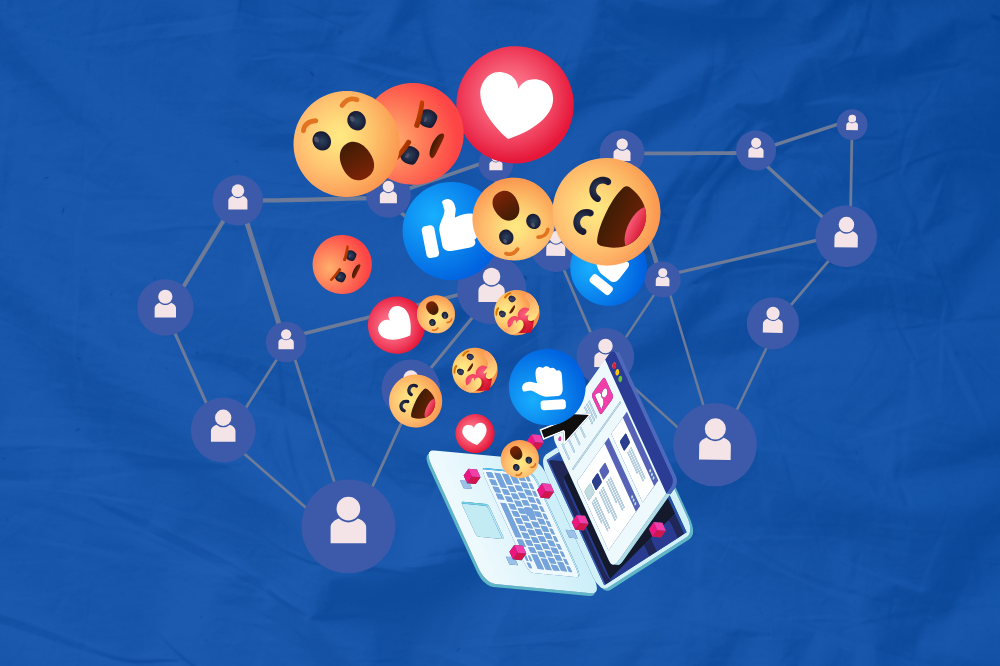
IN the heated weeks leading up to the 2020 United States presidential election, thousands of Americans did something radical: they logged off Facebook and Instagram. The result? A significant number of them reported feeling happier.
A major new study published this month revealed that deactivating social media platforms during politically intense periods led to measurable improvements in users' mental health - a finding that may resonate even beyond American borders.
Touted as one of the largest studies of its kind, involving over 35,000 participants, researchers aimed to explore the impact of social media use on stress, anxiety and happiness in the days leading up to the United States election in 2020.
“We asked people to say how often they felt happy, anxious, and depressed on a scale that included: all of the time, often, sometimes, rarely and never,” said Hunt Allcott, a professor at Stanford University and one of the lead researchers, as quoted by Newsweek.
The researchers found that the improvement in happiness was equivalent to about 4 per cent of people saying they feel happy often instead of sometimes - a meaningful but modest effect. “That effect, on its own, is statistically different from zero, but it's also probably smaller than some of social media's fiercest critics might have predicted,” Allcott told Newsweek.
The Experiment: Log Off for Six Weeks
The study, conducted by a team of researchers from various US universities in partnership with Meta (the parent company of Facebook and Instagram), involved a controlled experiment. Some participants were paid to delete either Facebook or Instagram for six weeks leading up to the 2020 vote, while others did so for just one week.
This period coincided not only with an intense election campaign between Joe Biden and Donald Trump, but also with the height of the Covid-19 pandemic. Political content was widespread online, though it only made up about six per cent of the news feed on Facebook, according to the study.
Interestingly, Facebook users over the age of 35, undecided voters and individuals without a college degree reported the greatest mental health improvements after deactivation. On Instagram, the effect was less pronounced, but women aged 18 to 24 saw the biggest boost in well-being.
The study also found no major difference in results between those who were politically active and those who weren’t thus suggesting that the mental health benefit was consistent regardless of political engagement.
But did logging off lead to a digital detox? Not exactly. Most participants simply switched to other apps instead of putting their phones down entirely.
“Temporary Relief,” Says Meta
Meta responded to the findings by noting the study took place during a uniquely stressful time.
“In the fall of 2020 amidst a global pandemic and a significant election cycle... people spent more time in front of screens, and online conversations were dominated by political, economic and medical uncertainty.
“It’s not surprising that some participants reported feeling better temporarily when they took some time away from Facebook or Instagram,” said a Meta spokesperson to Newsweek.
A Bigger Picture on Mental Health and Social Media
This study adds to growing global concern around how social media impacts mental health — a topic increasingly relevant in Malaysia too, especially as the country navigates its own political changes and general elections.
In the US, lawmakers have responded with initiatives like the Stop the Scroll Act and in New York City, some have called for classifying social networks as public health threats.
According to the American Psychiatric Association (APA), 74 per cent of Americans surveyed in May 2024 said the election was contributing to their anxiety. APA President Petros Levounis had noted that “constant news of global and local turmoil” makes anxiety almost inevitable — but that people should know they’re not alone and help is available.
While logging off Facebook did lead to lower political participation, mostly online, it did not decrease people’s knowledge about the election. Political content also decreased significantly on Meta platforms during Biden’s presidency, though these restrictions were reportedly eased after Trump’s win in November.
“We’d like to keep doing this kind of experiment at lots of different times,” said Allcott. “I’d love to do it again now, where it’s not an election but politics and events in D.C. are on people’s minds.”
A Note for Malaysians
Though this study focused on Americans, its implications are relatable globally. With Malaysia also facing its own political flux and rising concerns about youth mental health, the research raises a timely question: Could unplugging from social media — even temporarily — help us all breathe a little easier?
Download Sinar Daily application.Click Here!