Diana Danielle reflects on living with ADHD in a neurotypical world
One of Diana’s most challenging symptoms remains a distorted perception of time—something she describes vividly.
DANIAL HAKIM25 May 2025 08:00am

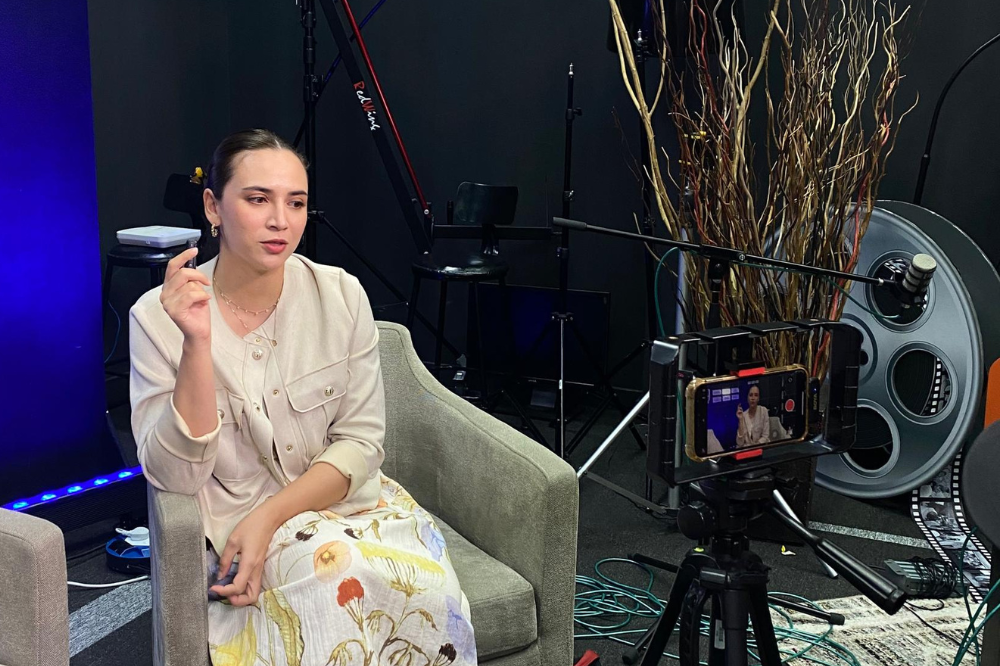
One of Diana’s most challenging symptoms remains a distorted perception of time—something she describes vividly and viscerally.

Actress and singer Diana Danielle shares what it's like living with
Initially called 'hyperkinetic reaction of childhood' and only formally recognised by the American Psychiatric Association (APA) as a mental disorder in the 1960s, ADHD is a developmental disorder characterised by an ongoing pattern of one or more of the following types of symptoms like inattention, keeping on task, or staying organised.
Long before an official diagnosis, Diana sensed her mind functioned differently. As a child, she experienced classic ADHD symptoms—chronic forgetfulness, impatience, mental restlessness, and an inability to focus for long periods.
“I was aware of my ADHD symptoms without having a name for it since I was very young.
“So I knew that I was not typical in terms of the way I behaved or the way that I was bringing myself amongst people in a social setting,” she recalled.
Back then at the age of 13 and with limited information readily available, Diana turned to the early internet for answers.
Stumbling upon a website that described her predicament at the time, she was struck with the realisation that she was not a neurotypical individual.
"I was very forgetful. My attention span was running between, you know, ten different things. I was always multitasking.
"I was always impatient, and I was always forgetting to do things that were like deadlines and stuff like that was not very good for me,” she noted.
One of Diana’s most challenging symptoms remains a distorted perception of time—something she describes vividly and viscerally.
“I also didn't have a good concept of time, I can't feel 2 hours go as it's almost as if the concept of time isn't something that I could grasp.
"I was either very early or very late and I was always demotivated until the last minute, where you know you have that sense of urgency," she said.
This is not uncommon for individuals with ADHD. Disorders that involve dopamine dysfunction—such as ADHD, Parkinson’s, and schizophrenia—are associated with time distortions.
The prefrontal cortex, responsible for executive functions and attention regulation, also plays a major role in time estimation. ADHD medications, often targeting dopaminergic pathways, have been shown to help normalise these cognitive processes.
Diana’s story also sheds light on the emotional and social impact of navigating life with undiagnosed ADHD in a society that predominantly caters to neurotypical norms.
As she describes it, her most profound struggle, she revealed, wasn’t just the symptoms but the pressure to conform and fit in the circle as a square.
“You're always on that push and pull and always struggling to fit in and working in the same way as people who are not neurodivergent, who are neurotypical.
“That was my biggest struggle. It was pretending or masking as if I was like everybody else and having to function the way that they did while also not knowing how to function the way that I should,” she mused.
In Malaysia, the estimated prevalence of ADHD ranges from 1.6 per cent to 4.6 per cent, as per the Health Ministry.
It is noted that while statistics for ADHD cases are still low, most cases of the disorder go undiagnosed, alluding to much higher numbers unaccounted for those unknowingly suffering from ADHD.
While diagnostic services exist, Diana points out that a lack of awareness and social conversation around adult ADHD makes the journey to diagnosis unclear and lonely.
“It took me a while only because we're living in a country that although we have access to it, we don't have exposure to it.
"So there are two different perspectives at play. It's like you know it's there but you just don't know how to get to it,” she said.
Diana’s candidness about her neurodivergence is helping shift the narrative in Malaysia’s entertainment and health spaces—breaking the stigma surrounding adult ADHD and mental health. Her journey shows the importance of self-awareness, education, and access to proper support systems.
Download Sinar Daily application.Click Here!