Asean stands united on US tariff, but flexibility remains for bilateral talks
Regional leaders have reached a shared understanding on how to approach the issue without compromising the sovereignty of individual member states.
WAN AHMAD ATARMIZI , KOUSALYA SELVAM , SHARIFAH SHAHIRAH
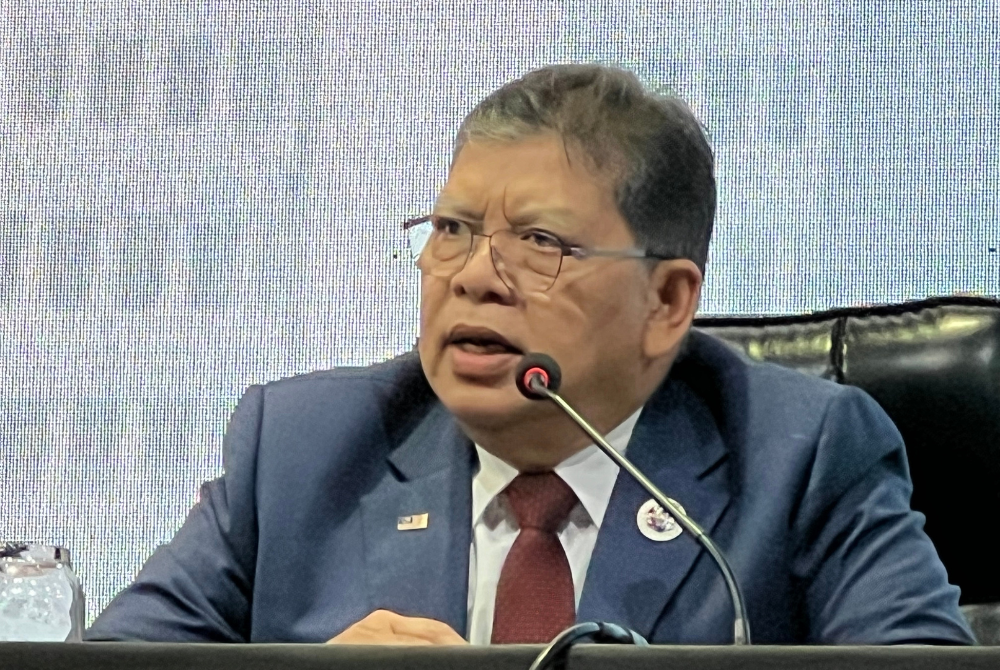
KUALA LUMPUR - Asean is responding to the evolving United States (US) tariff situation with a united yet flexible front, said Asean Inter-Parliamentary Assembly (Aipa) President Tan Sri Johari Abdul.
He confirmed that regional leaders have reached a shared understanding on how to approach the issue without compromising the sovereignty of individual member states.
“Regarding the issue of US tariffs, it appears that Asean leaders have convened and reached a mutual understanding on how to respond to this unpredictable situation.
“From what I gather, there is a collective approach among Asean countries to navigate the challenges posed by President Donald Trump’s administration,” Johari said at the 14th Asean-Aipa Leaders’ Interface during the 46th Asean Summit held at the Kuala Lumpur Convention Centre (KLCC).
Johari, who is also the Dewan Rakyat Speaker, added that although the bloc shares a common vision, it recognises the diverse economic conditions of its member states and allows them the freedom to explore bilateral partnerships if they wish.
At the same time, he highlighted that Asean countries also allow individual engagement with the US, as long as there is mutual understanding among the region’s leaders.
Malaysian Prime Minister Datuk Seri Anwar Ibrahim has taken the lead in opening discussions among regional leaders.
“Several Asean countries, including Malaysia and Vietnam, have held direct talks with the Trump administration. I believe others may have done the same. These engagements may have contributed to the US decision to delay implementing the tariffs for about 90 days
“Of course, for more accurate and detailed information, it would be best to consult the Investment, Trade and Industry Ministry (MITI). However, based on these developments, I sense that the US is reconsidering its position and taking a closer look at the broader implications,” he added.
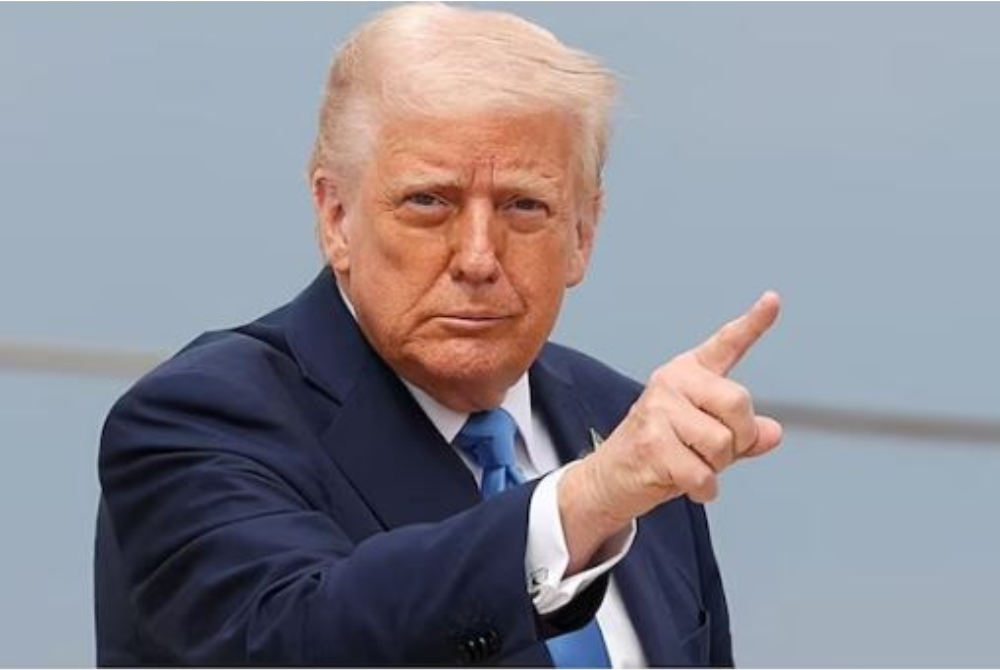
Earlier this year, Trump announced a sweeping series of tariffs targeting multiple countries and sectors, aiming to boost American manufacturing, protect domestic jobs and reduce the trade deficit.
He claimed these measures would encourage consumers to buy American-made goods and curb illegal immigration and drug trafficking from countries like Mexico and China.
On June 1, Trump proposed a 50 per cent tariff on all European Union (EU) goods, escalating from an earlier 10 per cent interim rate, citing stalled negotiations as the reason.
China faced some of the harshest penalties, with tariffs reaching as high as 145 per cent by April 9, before both sides agreed to a temporary 90-day suspension starting May 14, reducing most tariffs to 10–30 per cent.
Trump also introduced a universal 10 per cent “baseline” tariff on all imports on April 2, with higher rates for about 60 “worst offender” countries on April 9.
Canada and Mexico were hit with a 25 per cent tariff on general imports and a 10 per cent levy on Canadian energy in February. In retaliation, Canada imposed its own 25 per cent tax on US vehicles.
Other key tariffs included a 25 per cent duty on steel and aluminium effective March 12, a 25 per cent levy on foreign-made cars starting April 2 and a proposed 100 per cent tariff on foreign films announced on May 4.
The United Kingdom (UK) secured partial relief in a bilateral deal, which reduced tariffs on certain exports, including cars and steel, in exchange for lifting UK duties on US beef.
These tariffs caused major disruptions to the global economy. Markets became volatile, the US dollar declined and the International Monetary Fund downgraded its 2025 global growth forecast, warning that the US may face a recession.
Meanwhile, consumers are expected to face higher prices as companies pass on costs, cut imports or delay goods at borders, especially in industries like electronics, cars and toys.
Download Sinar Daily application.Click Here!