Fresh Off the Rafizi-Izzah Boat: When idealism inspires, pragmatism delivers - but only integrity sustains
Beneath the speeches, campaigns and headlines lies a more nuanced truth: politics is fundamentally about managing differences.


POLITICS is often seen as a battle of ideas, policies and personalities. But beneath the speeches, campaigns and headlines lies a more nuanced truth: politics is fundamentally about managing differences.
And at the heart of this management is leadership. Two dominant forms of political leadership are often contrasted: the idealist and the pragmatist. Neither is inherently better; they simply represent different paths through the thicket of governance.
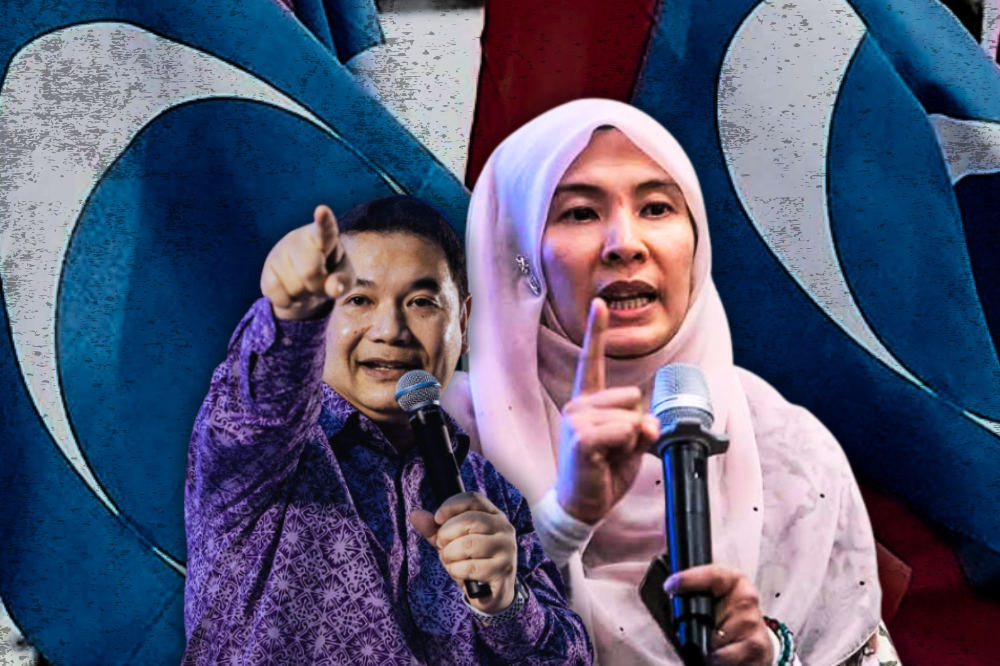
Idealistic leaders like former Economy Minister Rafizi Ramli are defined by their commitment to principles, ideals and often a transformative vision for society. They do not easily yield to political expediency, preferring to risk popularity for the sake of what they believe is right.
Their leadership is built on moral clarity and a desire to reshape the status quo.
Another instance is Nelson Mendela. Though pragmatic at times, Mandela held fast to a vision of racial reconciliation and democratic freedom in South Africa. He endured 27 years in prison without renouncing his beliefs, later emerging not with bitterness but with a clear moral vision that reshaped a nation.
Idealistic leadership often inspires.
It can challenge entrenched norms and galvanise support for long-term reform. But it can also struggle in systems that require compromise. Without negotiation, idealism risks becoming inflexible, making progress difficult in ideologically pluralistic societies such as Malaysia where we have conservative and liberal parties alike.
In contrast, pragmatic leaders like newly-elected PKR deputy president Nurul Izzah Anwar prioritise dialogue, negotiation and unity. Their strength lies not in pushing a single vision, but in harmonising competing interests. This style is especially valuable in divided or transitional societies where building consensus is crucial.
Angela Merkel also exemplified this approach. As Germany’s Chancellor for 16 years, Merkel was less known for grand ideological crusades and more for her steady, pragmatic leadership. Her ability to balance competing domestic and European pressures kept Germany stable through crises ranging from the eurozone debt debacle to the refugee influx.
Pragmatic leadership may lack the stirring rhetoric of idealists but it often achieves results by building broad support. However, they risk alienating those who seek more transformative change and can be criticised as lacking boldness or moral clarity.
Beyond style, leadership in a democracy is also defined by integrity particularly in the face of dwindling support. A crucial test of leadership is not just how a leader gains power, but how they respond when that power wanes.
When Jacinda Ardern resigned as New Zealand’s Prime Minister in early 2023, citing burnout and a belief that she no longer had “enough in the tank” to do the job justice, it was seen by many as an act of integrity. Ardern stepped down not because she was forced out, but because she believed the country deserved a leader fully able to meet its demands.
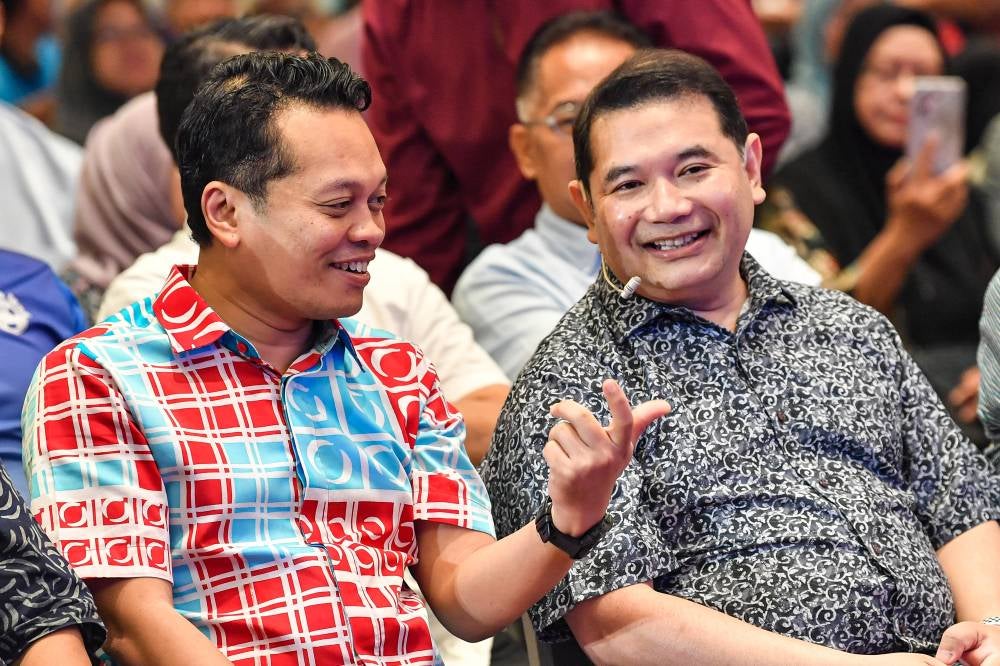
Do Rafizi and fellow PKR comrade Nik Nazmi Nik Ahmad, who is also former Natural Resources and Environmental Sustainability Minister, believe they are not deserving of being ministers because they have lost support from their party? Most likely. Is it the right thing to do? There is no clear answer except maybe it is better not to overstay their welcome like certain politicians.
In some cases, leaders who cling to office even when public or party support has evaporated is enabled by support from the establishment either the military, judiciary or party machinery. Technically legitimate, such support can raise questions about democratic accountability. Should leadership hinge on institutional backing or on the people’s will?
In the United Kingdom, former Prime Minister Boris Johnson was eventually forced to resign in 2022 after a series of scandals eroded trust within his own party. The system did not require a general election to enforce accountability but the party did. The resignation was seen as necessary to uphold the integrity of the office and the democratic process.
There is no universal rule on when a leader should step down.
Situations vary, as do systems of governance. But what matters is the leader’s relationship to the democratic process and the people they serve. If leadership becomes detached from public legitimacy, the foundations of democracy weaken.
In Islamic tradition, leadership is not merely a position of power but a sacred trust (amanah).
The Prophet Muhammad (peace be upon him) emphasised accountability, humility and service to the people. He is reported to have said, “Each of you is a shepherd, and each of you is responsible for his flock,” highlighting that leadership is fundamentally about stewardship rather than authority.
The early caliphs, particularly Abu Bakr and Umar, exemplified this ethos. Abu Bakr, upon becoming the first caliph, declared: “I have been given authority over you, but I am not the best among you.” This humility set a standard where leaders were expected to consult, be accessible, and step aside if they failed to uphold justice.
In Islam, the legitimacy of leadership is tied closely to moral integrity and the welfare of the ummah. Thus, a leader who loses the trust of the people or can no longer act in their interest is duty-bound to relinquish their position, not out of weakness but out of fidelity to the ethical foundations of leadership.
In politics, ambiguity is not a weakness. We can debate endlessly whether idealism or pragmatism is more effective. We can scrutinise the timing of resignations and argue over what “support” really means.
But often, there is no singular right answer. Leadership, like politics itself, is contextual, dynamicand deeply human.
What we should demand, however, is a leadership grounded in integrity, mindful of its role in a democratic society. Whether idealist or pragmatic, the best leaders understand that power is not a right but a responsibility.
And when that responsibility can no longer be fulfilled with legitimacy, stepping aside is not a defeat but it’s a reaffirmation of democratic values.
Syaza Shukri, PhD, is an associate professor and the current Head at the Department of Political Science, IIUM. The views expressed in this article are the author's own and do not necessarily reflect those of Sinar Daily.
Download Sinar Daily application.Click Here!