Institutional reforms must be expedited – KRPPM-IGAR
There were also proposals for the DPA to be introduced through amendments to the MACC Act by mid-2026.


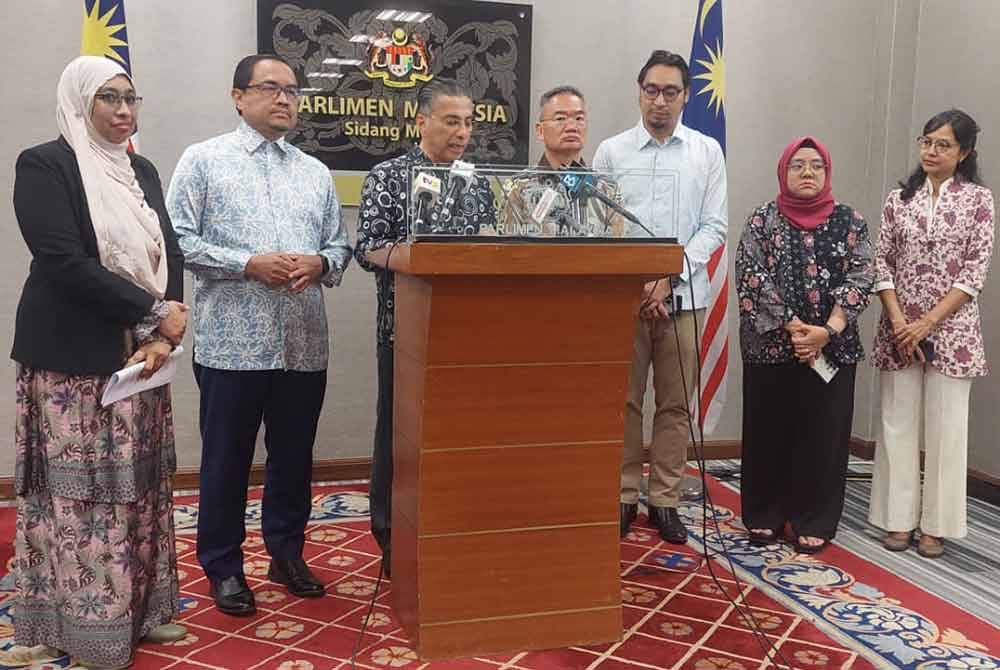
SHAH ALAM – The government has been urged to expedite several key reforms, including the drafting of a Freedom of Information (FOI) Bill, the implementation of Deferred Prosecution Agreement (DPA) and the establishment of an Ombudsman of Malaysia, in order to strengthen transparency and institutional integrity.
Malaysian Cross-Party Parliamentary Group of Malaysia – Integrity, Governance and Anti-Corruption (KRPPM-IGAR) chairman Syed Ibrahim Syed Noh said the FOI should replace the outdated Official Secrets Act (OSA) 1972, which is overly broad and no longer aligned with international standards.
"The government must take into account the recommendations that the FOI law should be based on the people’s right to information and end the excessive secrecy maintained under the OSA, which is far too general.
"Furthermore, any FOI reform must include a strong public interest clause, narrowly defined exemptions and clear procedures for declassifying information, including matters of procurement and defense,” he said.
He made the remarks during a press conference on Institutional Reform Developments and Proposals in Parliament on Thursday.
Also present was Rasuah Busters Chief Executive Officer Nurhayati Nordin.
Syed Ibrahim further suggested the establishment of an independent information commission to safeguard this right, including the power to decide on complaints, conduct audits and develop secure digital platforms.
"The commission must remain free from external influence and report directly to Parliament and the State Legislative Assemblies,” he said.
Meanwhile, Syed Ibrahim said that there were proposals for the DPA to be introduced through amendments to the Malaysian Anti-Corruption Commission (MACC) Act by mid-2026.
He said they support the proposal, provided it emphasises strong regulatory controls and effective checks and balances.
“This measure is especially needed to accelerate asset recovery and reduce trial periods.
“However, corporate admission of guilt must be made a prerequisite and the DPA should never serve as a shield for offenders to 'pay their way out' and avoid accountability,” he said.
As such, Syed Ibrahim said KRPPM-IGAR recommends several conditions, including that companies involved in wrongdoing must make a formal admission of guilt.
He emphasised that the implementation of DPAs must not protect guilty individuals and must be transparently monitored through judicial oversight, a public register of DPAs, and annual reporting.
He added the roles of the Attorney General and Public Prosecutor should be separated to avoid conflicts of interest, while the appointment of the MACC Chief Commissioner must be strengthened to ensure independence from political influence.
He also stressed the need for a specific law relating to DPAs to ensure transparency and legal certainty, rather than relying solely on amendments to the MACC Act.
On the Ombudsman Malaysia, Syed Ibrahim said they hope the institution will be established as an independent body to oversee and resolve complaints of maladministration in the public sector.
He explained that the Ombudsman could strengthen the integrity of public services and increase public confidence in the country’s complaints management system, making it an important step toward creating a system that monitors misconduct, maladministration and related issues.
Therefore, he added, several matters should be addressed, including a clear definition of maladministration, alignment with existing bodies such as the Public Complaints Bureau and the Enforcement Agency Integrity Commission (EAIC), coordination between federal, state and local governments and broader investigative powers.
“The Ombudsman must be given wide and effective investigative powers, including initiating investigations on its own, entering premises without prior notice, and accessing any documents.
“In line with this, KRPPM-IGAR also recommends a review of the definition of misconduct under the EAIC Act 700 and clearer jurisdictional divisions between the Ombudsman and ministry Integrity Units,” he said.
Download Sinar Daily application.Click Here!


