'Our leaders have failed us', Nepalese citizens push back after being neglected for years
For many citizens, it is the product of exhaustion, disappointment and the heavy weight of being ignored.


SHAH ALAM – What some call “overreaction” in protests is rarely about anger alone.
For many citizens, it is the product of exhaustion, disappointment and the heavy weight of being ignored.
When a government tries to silence its citizens, when change seems like a distant promise never fulfilled, that frustration eventually takes form, often as protest, sometimes as violence.
These scenes are not unfamiliar. Similar uprisings have erupted in recent years across the region, including in Indonesia and now Nepal, where public outrage has been fuelled by years of unmet demands and political failures.
A TikTok window into Nepal’s anger
A TikTok video that has gained more than 400,000 views offered an unfiltered glimpse into the situation in Nepal.
Shared by user @bandanaaadhikary, it showed black smoke billowing from houses allegedly belonging to political leaders, including the current Energy, Water Resources and Irrigation Minister and former Prime Minister Sher Bahadur Deuba.
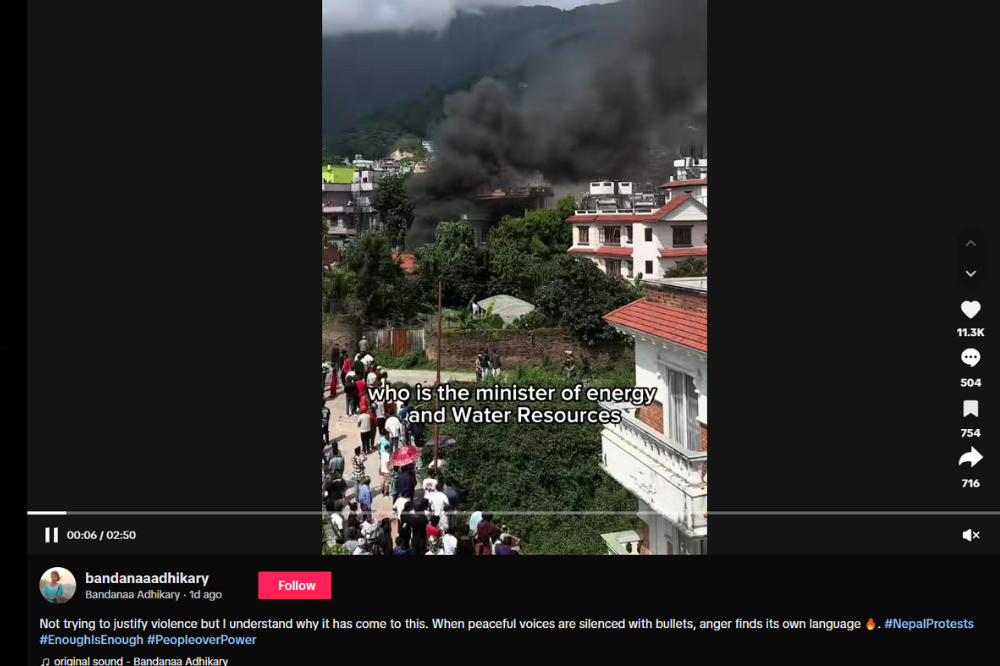
In her nearly three-minute message, the TikTok user told international viewers that while the scenes may look extreme, for Nepalese citizens they were an inevitable outcome of failed leadership.
“This is not about celebrating violence, this is about facing the reality of our nation that has been ignored for far too long.
“The fire that burned today is the reflection of our collective disappointment and that disappointment which should not have ever reached to this point,” she said in the video.
She further expressed her deep disillusionment with the political system, where she believed the government had shown no serious intention of serving the people.
She highlighted the case of Deepak Khadka, who had been appointed to a position the public strongly believed should have gone to Former Nepal Electricity Authority managing director Kul Man Ghising, someone widely respected for his dedication and service to the nation.
Instead, politicians had made choices that, she believed, prioritised power over people.
She also singled out Sher Bahadur Deuba, a leader who has repeatedly held the nation’s top office, yet in her view, brought little tangible improvement to the daily lives of Nepalese citizens.
Beyond leadership failures, she pointed to broader struggles: villagers forced to leave their homes and families in search of opportunity elsewhere, worsening unemployment, and widespread disillusionment with the political elite.
“When peaceful voices are silenced with bullets, anger finds its own language,” the caption read.
For her, the real tragedy wasn’t just the destruction, but that people felt it was the only way to be heard. What hurt most, she added, was that those in power still didn’t seem to understand why it was happening.
She referenced the peaceful protest held the day before, which ended with security forces firing on demonstrators and 19 innocent people losing their lives in a single day.
“I wish it had not come to this. I wish it had not come to death, but if the government does not listen to its people, if it continues to treat lives as disposable, then these scenes will only repeat themselves,” she added.
Nepal’s current unrest was reportedly triggered by a government ban on social media platforms such as Facebook, X and YouTube, after authorities accused them of failing to register for government oversight.
Although the ban was lifted within days, the protests escalated as anger deepened over the deaths of 25 protesters in police crackdowns, entrenched political nepotism and widespread youth unemployment.
For many Nepalese, the fires burning across the country symbolise not just physical destruction, but years of broken trust and leadership failures that continue to leave ordinary people unheard.
Download Sinar Daily application.Click Here!