Watery breast milk still nutritious, doctors dispel common myth
Every mother’s milk is unique, with nutrient composition tailored to the specific needs of her baby.

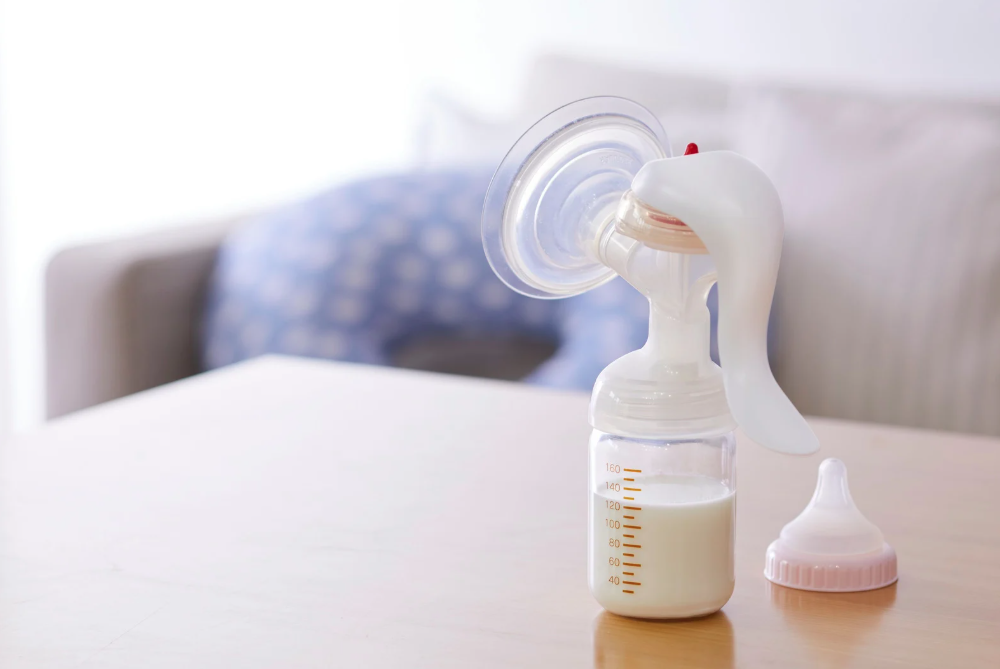
THE watery appearance of breast milk may cause concern among some first-time mothers due to the misconception that it does not contain sufficient nutrients for a baby’s growth.
This misunderstanding has led to these mothers supplementing their baby’s diet with formula milk, believing it to be more nutritious than breast milk.
Clarifying the matter, KPJ Tawakkal consultant paediatrician Dr Faisal Mohd Fadzli said although it may appear watery, breast milk is the most complete form of nutrition, especially for infants under six months old and no formula milk can match its benefits.
"It’s natural to assume that watery milk means insufficient nutrition. But breast milk is naturally lighter and more fluid in appearance, but that does not mean it lacks nutrients,” he told Bernama recently.
He added that every mother’s milk is unique, with nutrient composition tailored to the specific needs of her baby.
"For premature babies, the milk contains slightly higher nutrients to support their growth. Breast milk can ‘react’ that way because it is in sync with the mother's body and this is something no formula can replicate,” he said.
Dr Faisal said in the early stages after delivery, a mother typically produces only around five millilitres of milk per expression, but this is sufficient because a newborn’s stomach is very small, making them feel full quickly.
Statistics show that fewer than five percent of mothers face problems producing breast milk, while the majority are able to produce enough milk, even if the initial supply seems insufficient.
"Over time, as breastfeeding continues, the milk supply increases. The milk produced in the initial stage is called colostrum, which is extremely nutritious and concentrated,” he said.

In addition to being nutritionally complete, breast milk also serves as a natural protection as antibodies produced in the mother’s body are passed to the baby during breastfeeding, a benefit not found in formula milk.
"If a mother is exposed to infections or feeling unwell, her body produces antibodies and these can be transferred directly to the baby through breast milk.
"Breastfeeding also supports the baby’s emotional development as the act of latching creates an emotional bond that helps soothe the infant,” Dr Faisal said, adding that it also contributes to faster weight gain for the baby.
Breastfeeding, he explained, benefits not only the child but also the mother as it stimulates the release of oxytocin, the so-called ‘feel good’ hormone, which reduces the risk of postpartum depression.
"This hormone also helps the uterus contract more quickly, speeding up recovery after childbirth. It also reduces the risk of postpartum bleeding since the uterus shrinks faster,” he said.
Sharing her experience, mother-of-two Nur Nadia Fatihah Omar, 32, said breastfeeding created a strong bond between her and her children, especially in the early stages after birth.
"To me, breast milk is rich in nutrients that support brain and bone development, which is why I chose to breastfeed, even though I sometimes supplemented with formula at night,” she said.
For Hani, a civil servant who did not want to reveal her full name, breastfeeding remained her choice despite her work commitments as she wanted to ensure her child received the best nourishment.
"From what I observed, compared to formula milk, breast milk does not cause my baby’s stomach to bloat easily. Perhaps, it is also due to me being careful about my diet during confinement,” said Hani, who breastfed her child until the age of eight months before switching to formula milk. - BERNAMA
Download Sinar Daily application.Click Here!