The 'Healthy Living Malls' plan: Explained
How malls are becoming key to public health



SHAH ALAM - Malaysia is giving shopping malls a new lease of life by transforming them into spaces that promote healthier living.
The initiative, introduced under Bulan Malaysia Sihat Sejahtera (BMSS) 2025, aims to reshape malls into Healthy Living Malls where Malaysians can stay active, eat better, breathe cleaner air and even recycle their waste.
Health Minister Datuk Seri Dr Dzulkefly Ahmad, who launched the national celebration, said the concept is part of the ministry’s broader Agenda Nasional Malaysia Sihat (ANMS) strategy, which calls for whole-of-nation participation in building a healthier society.
Why Malls?
Findings from the Malaysia Health Literacy Survey 2023 showed that 27.05 per cent of Malaysians still have limited health literacy, while only 24.5 per cent scored excellent. The Healthy Lifestyle Index 2022 revealed that 39 per cent of adults fell into the low category.
Although health literacy levels are improving, they remain insufficient to drive healthy behaviour. With shopping malls drawing millions of visitors from families, teenagers, working adults and the elderly, the government sees them as an ideal venue to “nudge” Malaysians toward better habits.
“Malls today are not just shopping centres but also spaces for recreation, socialising and increasingly, healthy living,” Dzulkefly said, urging mall operators to support the effort.
The Healthy Living Mall Concept
The initiative integrates behavioural science to influence healthier decisions and revolves around five components:
- Stay Active — Malls will feature walking routes, playgrounds, healing spaces and regular fitness activities.
- Healthy and Safe Food — Healthier Choice Logo (HCL) products and BeSS-certified eateries will be promoted. Fruits and vegetables will be showcased at entrances, alongside dairy and other nutritious options.
- Smoke-Free Environment — In line with Act 852, smoking and vaping are banned inside and around malls.
- Recycling — In collaboration with AEON malls nationwide, Health Ministry (MOH) and MyCHAMPION volunteers will collect e-waste such as wires and electrical appliances. Proceeds will be channelled back into community projects.
- Media Promotion — Health messages will be displayed on digital screens, lifts, trolleys and via “healthy hour sales.”
Dzulkefly also called on food and beverage operators in malls to support the government’s effort by offering healthier meal and drink options.
Mall Walking Campaign
To kickstart the programme, 28 AEON malls nationwide will run a Mall Walking Campaign from Sept 1 to Sept 20, with the goal of setting a Malaysia Book of Records (MBOR) milestone for the highest number of steps walked inside malls.
The campaign is expected not only to promote physical activity but also to bring visibility to the broader Healthy Living Mall strategy.
Why This Matters Now
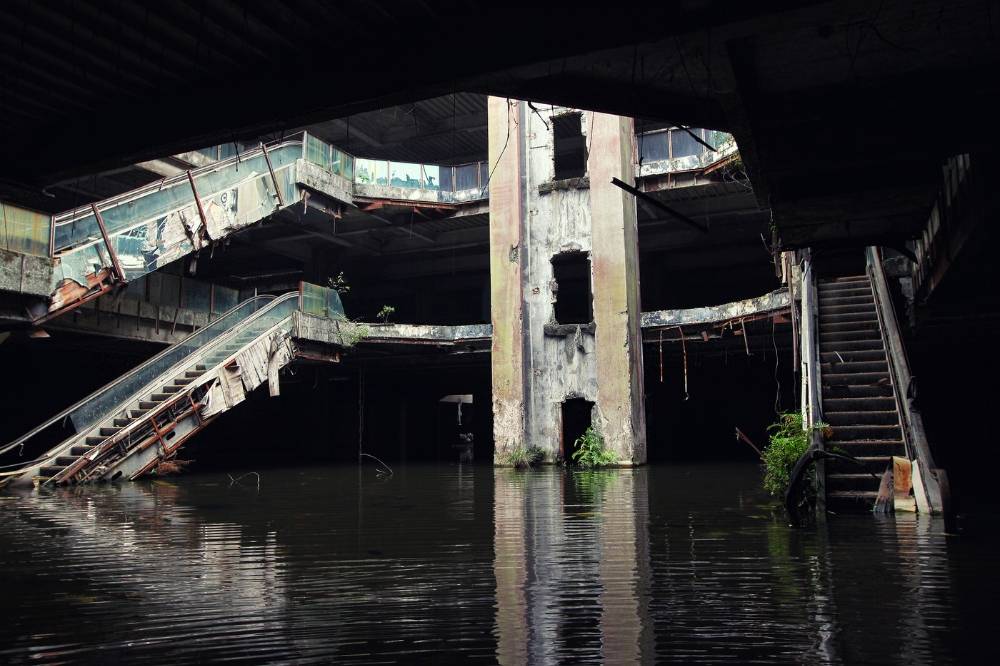
The push to revitalise malls through health promotion comes as Malaysia grapples with a growing problem of abandoned buildings and dead malls.
On July 19, civil engineering expert Associate Professor Dr Norwati Jamaluddin of Universiti Tun Hussein Onn Malaysia (UTHM) warned that abandoned buildings, often overrun by weeds, snakes and crime; were damaging Malaysia’s image, particularly ahead of Visit Malaysia Year 2026.
“These neglected structures pose safety risks to the community and spoil the visual appeal of their surroundings,” she said, adding that they reduce property values and create economic burdens for local councils.
Similarly, on Aug 27, Associate Professor Dr Muhammad Najib Razali, a retail property specialist, pointed out that Malaysia’s community malls are facing declining occupancy rates, with some falling below 70 per cent.
He linked this to oversupply, poor location choices and competition from e-commerce.
“This dead mall phenomenon is not unique to Malaysia, but is also happening in other countries,” he explained, mentioning that China and the United States (US) have also struggled with ghost malls.
Najib recommended repurposing underperforming malls into community centres, healthcare hubs or educational institutions, citing successful models in Europe.
Healthy Living Malls as a Possible Answer
With more than 1,000 shopping complexes across Malaysia, the Healthy Living Mall initiative could offer a solution to prevent malls from becoming dead spaces.
By turning them into vibrant centres for wellness and community activities, the government hopes to not only promote public health but also protect the retail sector from decline. As Dzulkefly put it, the strategy requires collaboration.
“Targeted initiatives by all parties, including shopping malls, through a whole-of-nation approach,” he said.
The Bigger Picture
Malaysia’s plan to reimagine malls as engines of healthy living ties into two pressing issues — the rise of chronic diseases linked to poor lifestyle habits and the economic drag caused by abandoned properties.
While abandoned buildings continue to signal urban neglect, the government hopes that through BMSS 2025 and the Healthy Living Mall concept, malls will be transformed into community assets that uplift both health and the economy.
Download Sinar Daily application.Click Here!