Train delays cost Malaysia over RM540 million in lost productivity, economist says
The figure is from around 10 years ago and the number may be much higher today with the increasing population of train users.
NURUL HUDA HUSAIN , TUAN BUQHAIRAH TUAN MUHAMAD ADNAN , ROSKHOIRAH YAHYA

SHAH ALAM – Malaysia is estimated to have lost over RM540 million in productivity last year, with the average time lost reaching 72 hours annually due to minor and moderate delays caused by train service disruptions in the Klang Valley.
Malaysia University of Science and Technology (MUST) economist Professor Emeritus Dr Barjoyai Bardai said the estimate was based on an urban time value of RM25 per hour according to World Bank standards, involving 300,000 daily regular train commuters during peak hours in Kuala Lumpur, Selangor, and Putrajaya.
He explained that even a one-minute delay would cause a productivity loss of about RM126,000, while a ten-minute delay could escalate to RM1.26 million.
“This calculation is based on values published by the World Bank in 2015 for the report Malaysia Economic Monitor: Transforming Urban Transport, released in June 2015, where residents of Greater Kuala Lumpur were estimated to lose between 269.9 and 487.8 million hours annually due to road traffic congestion.
“So, using the same mathematical method, we applied it specifically for train users, taking into account 300,000 regular users of the public transport service.
“What we want to emphasise here is that the figure we mention is from around 10 years ago and the number may be much higher today with the increasing population of train users.
“For me, this should be a key focus for the government to improve the existing system because these commuters are workers who contribute significantly to the productivity of the companies they work for,” he told Sinar.
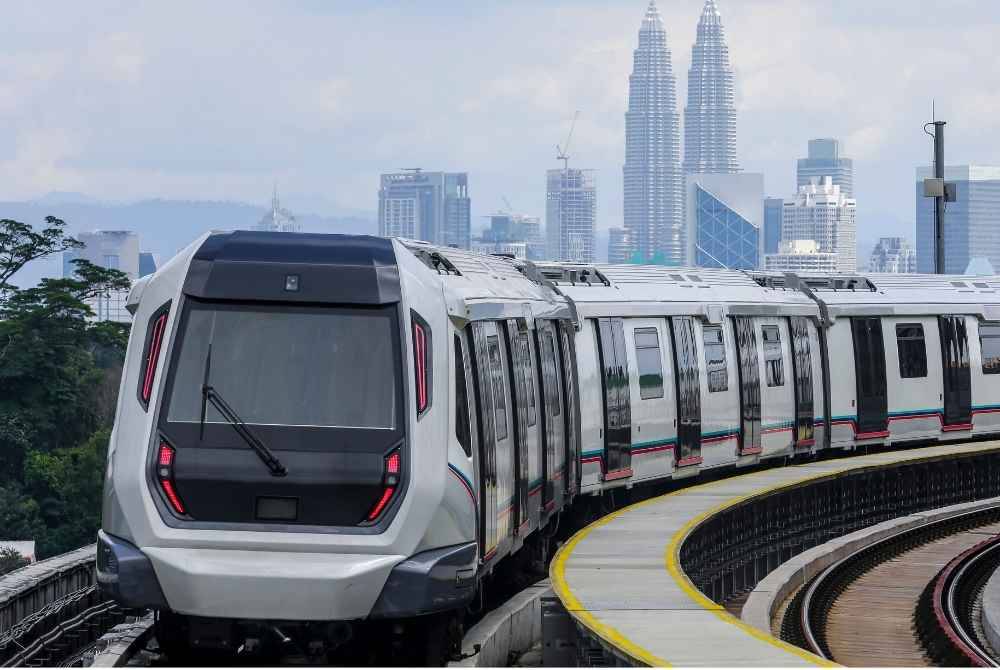
Barjoyai added that the estimated productivity loss does not yet include various indirect costs borne by commuters due to train delays and disruptions, such as additional fares for e-hailing services, childcare fees, as well as emotional stress and fatigue, which cannot be accurately quantified.
Regarding public transport improvements, he suggested several alternatives to reduce the economic burden, including providing more robust and capable bus systems covering congested urban areas, and convenient e-hailing options, such as three-wheeled vehicles, to ease road congestion and reduce the risk of workers being stranded during train disruptions.
“In addition, in the long term, it should also be addressed through work systems that allow remote work or flexible hours.
“If these measures can be implemented, they could reduce productivity losses and improve the productivity of workers in Malaysia to try to match that of other developed countries,” he said.
Islamic Science University of Malaysia senior lecturer in Economics and Banking Dr Mohd Faisol Ibrahim said the country could face productivity losses of up to RM1.89 million per day if trains are delayed by 15 minutes each day.
He said the calculation was based on an estimate of 300,000 out of nearly one million train passengers affected by the delays.
“It is a very large amount. Imagine if trains were delayed by 30 minutes in one day; the estimated productivity loss would be RM3.78 million per day.
“This figure shows the importance of managing and maintaining trains to ensure they are efficient and in good condition so that such waste can be avoided,” he said.
He added that the losses not only affect companies and the nation but also hinder the economic environment in the country’s pursuit of developed nation status.
On Nov 21, Transport Minister Anthony Loke revealed that Keretapi Tanah Melayu Berhad (KTMB) experienced 1,300 hours of delays and disruptions throughout 2025 due to cable theft, comprising 562 hours for Electric Train Service (ETS) services and 741 hours for commuter services.
However, no details were provided regarding delays on the Light Rail Transit (LRT), Mass Rapid Transit (MRT), and Monorail, which bear the main burden of daily mobility in the Klang Valley.
Download Sinar Daily application.Click Here!