New EPF initiative must be supported by complementary policies
The move aims to correct the long-held perception that savings of RM1 million are sufficient to guarantee life after retirement, when in reality this assumption is increasingly misaligned with rising living costs and longer life expectancy.

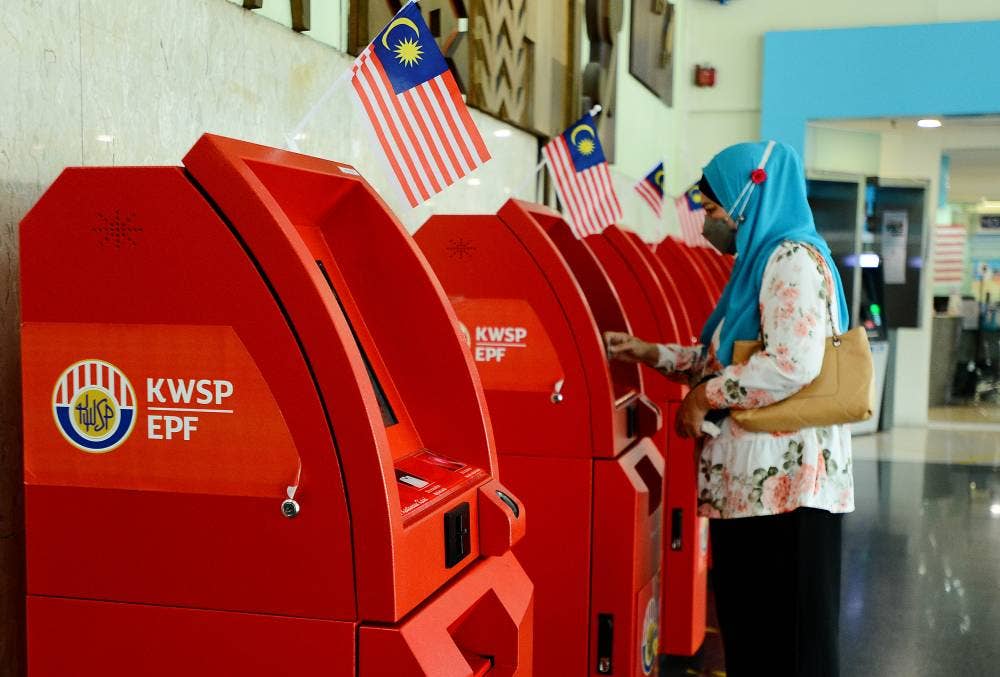
SHAH ALAM - The implementation of the Retirement Income Adequacy (RIA) Framework by the Employees Provident Fund (EPF) starting Jan 1 marks a significant shift in how retirement savings are managed and accessed by the public.
The move aims to correct the long-held perception that savings of RM1 million are sufficient to guarantee life after retirement, when in reality this assumption is increasingly misaligned with rising living costs and longer life expectancy.
Under the previous approach, large early withdrawals were allowed even though they significantly eroded retirement savings.
For example, a 50-year-old member with RM1 million in savings could previously withdraw around RM300,000, leaving a balance of RM700,000.
However, if the retirement period stretches to 30 years until the age of 80, that balance would provide only about RM1,940 per month, an amount that is increasingly inadequate when factoring in inflation, medical expenses and housing costs.
Over a long retirement period, such limited monthly income exposes retirees to financial risks in old age, particularly as basic living expenses continue to rise.
As such, through the RIA, the EPF has restructured its savings benchmarks by focusing on actual retirement needs. Members’ savings are now assessed based on the Basic and Adequate levels, with early withdrawals permitted only if the remaining balance is still sufficient to guarantee a minimum retirement income.
For members who have yet to reach the adequacy threshold, withdrawals are strictly limited or not allowed at all except for specific purposes, in line with the objective of protecting long-term savings.
However, tightening access to retirement savings also carries short-term implications, particularly for low-income households and vulnerable groups that rely on EPF savings as a source of liquidity when facing financial shocks.
Centre for Future Studies Berhad (The Future) Chief Economist Dr Mohd Yusof Saari said the RIA is indeed a step in the right direction from a retirement sustainability perspective, but its impact on the domestic economy must be managed carefully.
“RIA is good for retirement because it reduces the risk of people running out of savings in old age, but in the short term, tighter withdrawal rules could suppress domestic demand if not supported by other policies.
“If access to retirement savings is tightened without a strong social safety net, low-income households may be trapped between urgent cash needs and locked savings, potentially pushing them towards informal debt,” he told Sinar Harian.
He added that data shows the majority of contributors are at risk of depleting their retirement savings early, exposing them to poverty in old age.
“Basic Savings of around RM390,000 translates to only about RM1,300 per month over 25 years, a minimum level for survival, not a comfortable life.
“Without tightening, the cost-of-living pressure during retirement will eventually be transferred to families and the government, creating fiscal burdens and the risk of a social crisis in the next 10 to 20 years,” he said.
Yusof said that from a structural economic perspective, the implementation of the RIA is necessary as Malaysia faces population ageing, longer life expectancy and changes in the labour market that put pressure on retirement savings.
“Life expectancy is increasing but retirement savings are not growing in tandem, while the labour market is changing with more self-employed and gig workers who have inconsistent contributions.
“At the same time, the mass withdrawals during the Covid-19 pandemic eroded the savings of many members, even as the EPF remains the main retirement instrument without comparable alternative protection,” he said.
Meanwhile, economist at The Future Muhamad Zharif Luqman said tighter EPF withdrawal rules must be viewed as part of a broader policy ecosystem rather than implemented in isolation.
“The EPF functions to protect workers’ future income, while social protection is meant to address current financial needs.
“Both must move in tandem to ensure retirement policies are truly effective,” he said.
He noted that the success of the RIA depends heavily on how well it is integrated with other supporting policies, including targeted financial assistance, income-loss protection and alternative emergency mechanisms beyond the EPF.
“Closer coordination between the EPF, the Social Security Organisation (Perkeso), the Credit Counselling and Debt Management Agency (AKPK) and welfare agencies is also crucial to ensure that no one is left behind during this policy transition.
“At the same time, efforts to raise wages, productivity and financial literacy must be strengthened so that people are not only protected in retirement but are also able to build sufficient savings throughout their working lives,” he said.
Download Sinar Daily application.Click Here!


