B+ or B-? Subang MP rates Madani Government’s performance in Fireside Chat
While Malaysia’s economy appears robust on the surface, questions remain regarding its sustainability, particularly amid concerns that the ringgit has strengthened too rapidly.


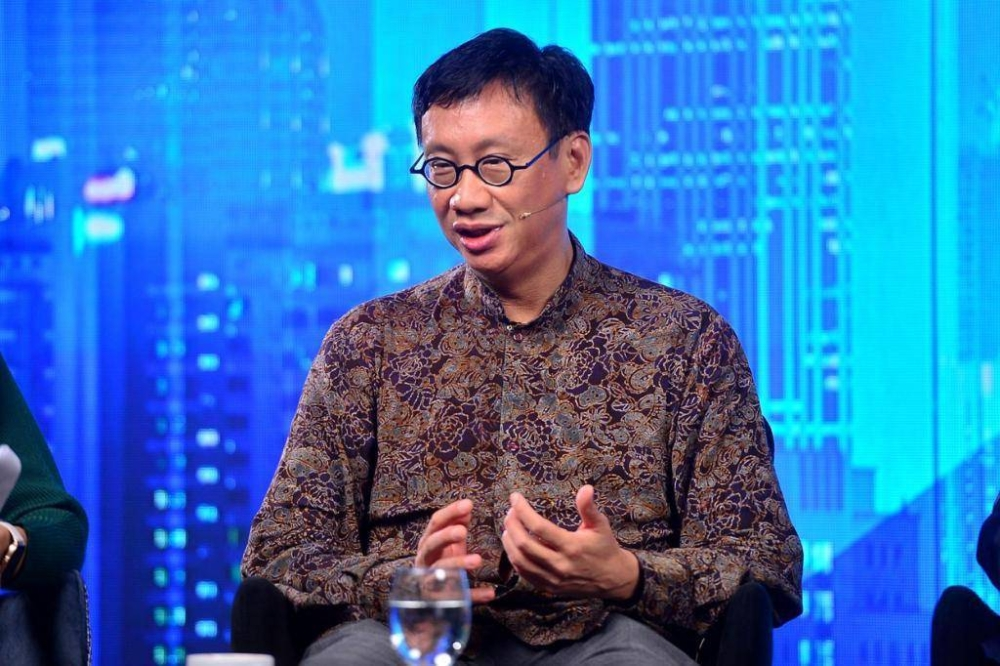
SHAH ALAM – Subang MP Wong Chen has awarded the Madani Unity Government a B+ grade for its economic performance, but only a B- for political reforms, asserting that Malaysia still requires significant structural changes to secure long-term stability.
Wong stated that while Malaysia’s economy appears robust on the surface, questions remain regarding its sustainability, particularly amid concerns that the ringgit has strengthened too rapidly.
“I would say economically, I would give it a B+. However, whether it is sustainable in the long term, we are unsure. We will know by mid-year,” he told Sinar Daily in the latest episode of Fireside Chat.
He warned that a rapidly strengthening currency could pose risks to export competitiveness. “I’m primarily worried that a strong ringgit will affect our exports,” Wong he told Sinar Daily in an upcoming episode of Fireside Chat.
Comparing Malaysia's position with Vietnam following a recent visit, he stated how Vietnamese exporters benefit from proactive currency management.
“The Vietnamese are quite good at exports. Somehow, they managed to devalue their dong by 10 to 12 per cent against the US dollar and that gives them an advantage in exports,” he noted.
Wong credited Malaysia's recent economic performance to a combination of government policy and regional geopolitical shifts.
He highlighted that investor concerns regarding neighbouring countries specifically core issues in Indonesia and political uncertainty in Thailand prior to its election, have driven capital inflows into Malaysia.
“There was all this overflow from Thailand and Indonesia coming into Malaysia, plus the AI data centre boom. All this has strengthened the ringgit,” he added, acknowledging that while policy has played a role, external factors have also been influential.
Wong was more critical of the government's progress on political reform, assigning a B- grade.
“A lot more needs to be done, including re-examining the three laws we passed and improving them quickly,” he stated, referring to the Government Procurement Act, Parliamentary Services Act, and Fiscal Responsibility Act.
On the Government Procurement Act, Wong said that while positive in principle, the legislation contains too many exemptions.
“I’m surprised the Opposition has not picked this up. As government MPs, we must be moderate but also critical of our own government because it is for the nation,” he said.
On the Parliamentary Services Act, he said implementation remains slow.
“We’ve seen very few civil servants in Parliament affected by it. I understand it may take about two more years before it comes to full fruition,” he said.
Wong also questioned the effectiveness of the Fiscal Responsibility Act, arguing that the oversight committee structure requires reform.
“The committee is made up of the government itself. How can the government monitor itself in meeting fiscal targets?” he questioned, suggesting that future amendments must introduce independent oversight. “
“An independent body would do a much better job in ensuring fiscal discipline,” he added.
Wong also identified corruption as Malaysia’s biggest unresolved challenge, despite increased enforcement actions by the Malaysian Anti-Corruption Commission (MACC).
“We see a lot of corruption enforcement actions, but they haven’t sorted out the root causes,” he said, highlighting the necessity for asset declaration laws, unexplained wealth orders and political financing regulations.
Download Sinar Daily application.Click Here!