The Gepuk Boom: What’s behind it?
Why is there a boom in the Ayam Gepuk craze?
ADAM AZRAI
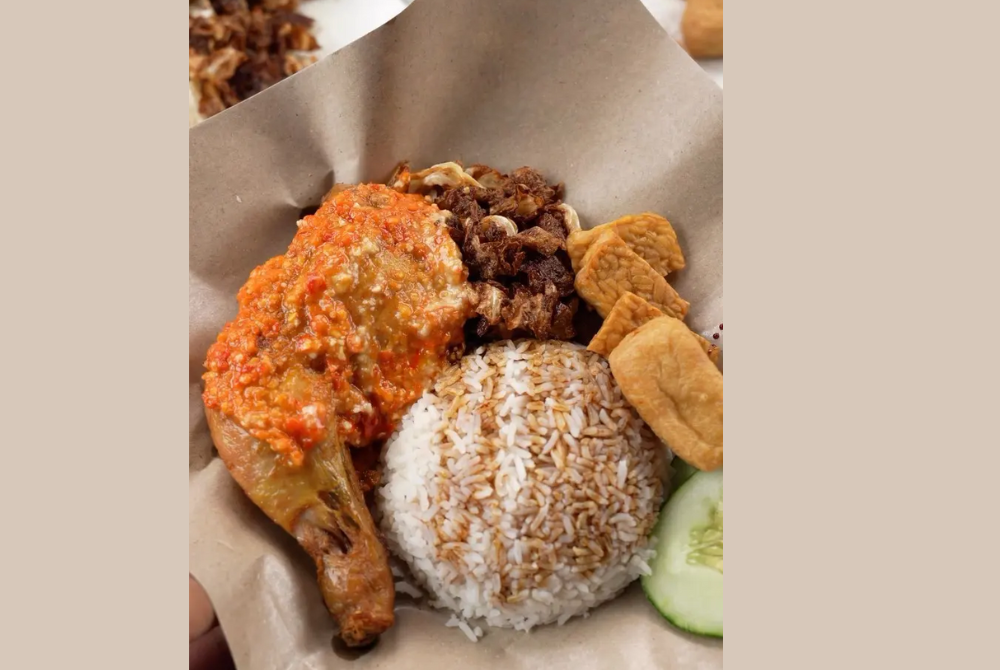
“Set Ayam Gepuk dengan Kubis Goreng, tempe lebih. Sambal pedas.”
That’s the usual order whenever I go to a store selling Ayam Gepuk.
That is, after waiting in line for 10 minutes and looking behind me in the queue, there are probably 20 more people waiting to place their orders.
The question that I always have is why?
Why is there a boom in the Ayam Gepuk craze?
Is it purely because social media plays a role or is there something deeper in it?
Let’s take a deep dive into this boom.
THE FIXED MENU
Regardless of which shop or franchise you visit, the menu for Ayam Gepuk will always be consistent.
The basic menu consists of white rice, chicken, tauhu, tempeh, cabbage and most importantly, the sambal.
Then, you have the different variation with things like pedal, and kubis goreng.
But, the idea of a fixed menu remains.
The idea is that wherever you go, you can always get the same thing no matter whether the location is in Bangi or Johor or even in Kelantan.
Now, why is this important? Why is it especially important for people who are taking their lunch break or someone who is clueless on what food to order?
Having a fixed menu, with little variation, helps people to place their order quickly as it reduces the need for thinking too much.
We can see that whenever there are so many options for food in a menu at a restaurant, people will take much longer to make their decision. Sometimes, when there is too many options in a menu, people will get overwhelmed and choose to go to a different place.
It’s the same idea of ordering the same type of coffee whenever you go to Zus Coffee or taking the same route to work, or even wearing a uniform at your workplace.
People want to make decisions faster, and the fixed menu system works when it comes to reducing people’s thinking time.
In the day and age of people have to think about every minor detail in their workplace or their personal life, thinking less has become a luxury and it is a luxury that people crave for.
SPICE TRIGGERS ENDORPHIN
People turn to spicy food as a way to escape from the pressure of working and hustling. Eating spicy food and sweating profusely is a way for people to reduce their stress levels.
Essentially, people want to sweat the stress out of their bodies.
Sounds weird, but it might be true.
This is actually a phenomenon that is often talked about by South Koreans. A writer by the name Huy-Kim Nguyen (Kim Ninja) has found that Koreans often turn to super spicy dishes when they're stressed out. In his blog, he writes:
“Korean women, in particular, are known for this habit.
You'll often hear phrases like "스트레스 받아서 매운거 먹으러 간다" (I'm stressed, so I'm going to eat something spicy).
It's such a common thing that some Korean dramas even show female characters demolishing plates of extra spicy tteokbokki or buldak after a rough day.”
The science behind it is simple and straightforward: spicy food triggers the release of endorphins - the feel-good hormones that can help combat stress. Some would also add by saying it is like a natural high that comes with the burn and heat of spicy food.
Experiencing heat and pain on your tongue is oddly therapeutic, according to South Koreans.
Maybe that case can be argued for Malaysians as well.
That’s why we can see that there are 3 levels of spice whenever we order Ayam Gepuk. “Biasa” is where the sambal is usually mixed with kacang. “Pedas” is where there’s no kacang mixed in. Some shops or franchises also offer “Extra Pedas”, in which presumably there’s more chili involved.
There are also shops that use the tagline “Pedas sampai buka baju”, which demonstrates that there is a demand for even spicier sambal among Malaysians.
I have also personally seen that people will add more sambal when they are eating because they feel that the heat is not enough and they want to have more.
Combine the heat that comes from the sambal with the scorching heat of Malaysian weather, it makes the whole ayam gepuk eating experience a sweaty but cathartic experience.
FOMO, FOMO, FOMO.
The reality is we cannot run away from the fact that social media has taken the boom to a different level. The idea of fear of missing out is a strong factor, especially with the Gen Zs as social media amplifies the desire to not be left out for something.
Brands are making contents left and right. Influencers are also playing a role by going to different stores and making food reviews with emphasis on different things such as spiciness level, juiciness of the chicken, the crunch of the kubis goreng and much more.
People want to feel a need of belonging, whether it is with a group of friends, a small lunch gathering or a community that goes for something together.
The idea of posting a story of your ayam gepuk lunch can trigger direct messages saying “bila nak belanja?” “Tak ajak” and so many different kinds of messages is a testament that people do have a fear of missing out.
The FOMO phenomenon is not limited to ayam gepuk. It covers everything under the sun from drinking matcha to owning labubus up until opening blind boxes.
Weirdly, this phenomenon is not new. I am sure the older generation also have some sort of FOMO going on during their time, but we cannot deny the amplification that social media has brought to table.
One way or another, all of us have experienced FOMO and if someone says that they are not easily susceptible to the phenomenon, maybe you can say “hmm dengar boleh, percaya jangan?”
CONCLUSION
Only time will tell how long this ayam gepuk boom will last. It could last for a long time but it can also die down as quickly as it rose.
Maybe it will last for a long time until it triggers the government to make sure the self-sustainability index (SSI) for chickens remains high.
It could also lead to the increase in price of chicken, chili and so on as the demand remains constantly high.
Time will tell what Malaysians will do, and time will also tell what the government will then do.
Adam Azrai is from Parti MUDA who often thinks about the Malaysian culture and how it affects public policy. The views expressed in this article are the author's own and do not necessarily reflect those of Sinar Daily.
Download Sinar Daily application.Click Here!