Votes are popular, cities are complicated
Elections are often treated as the ultimate symbol of democratic legitimacy; any call to expand electoral space is easily celebrated as a victory for the people. Yet governance, particularly urban governance, cannot be reduced to symbolism.
DR MOHD AZMIR MOHD NIZAH
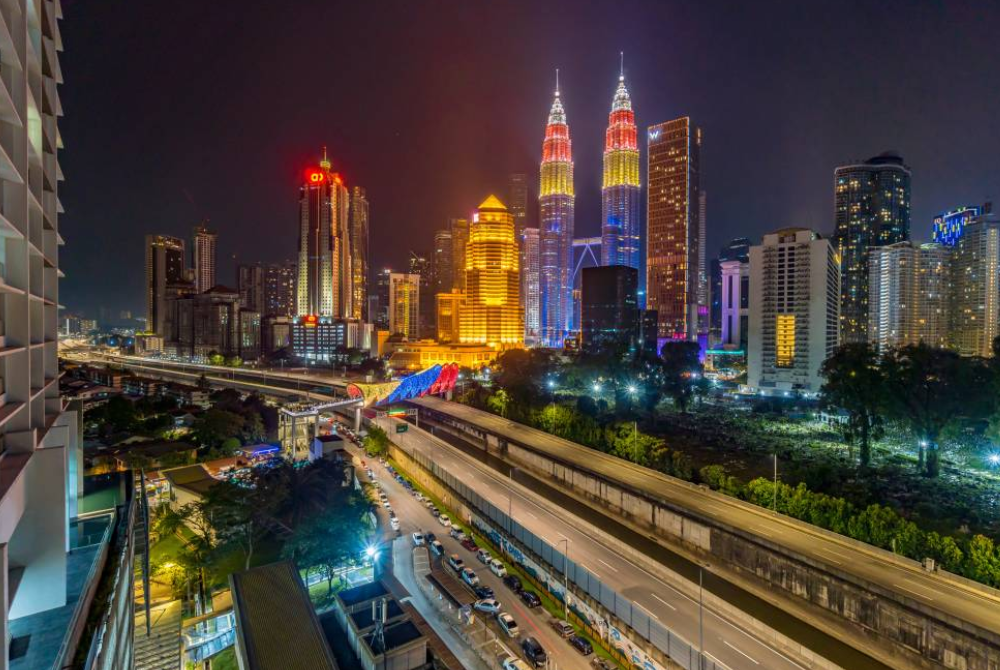
THE idea of reintroducing local government elections in Kuala Lumpur has gained renewed attention, framed as a democratic reform that promises accountability, participation, and empowerment. At first glance, the proposal appears both progressive and overdue.
Elections are often treated as the ultimate symbol of democratic legitimacy; any call to expand electoral space is easily celebrated as a victory for the people. Yet governance, particularly urban governance, cannot be reduced to symbolism. When examined carefully, the proposal risks privileging political popularity over administrative coherence, with serious consequences for the future of the capital city.
Kuala Lumpur occupies a unique position in Malaysia’s political and economic architecture. It is not merely a local authority but the federal capital, a national economic hub, and an international city competing regionally for investment, talent, and influence.
Its governance structure was deliberately designed to reflect this role. Any attempt to restructure how the city is governed must, therefore, be evaluated not only through the lens of democratic ideals but also through the lenses of institutional stability, fiscal sustainability, and long-term urban resilience.
The appeal of local elections lies in their apparent simplicity: voters choose their representatives, those representatives are held accountable, and governance improves through public pressure. This narrative resonates strongly in reform-oriented discourse.
However, urban governance is rarely simple. Cities are complex systems that require technical expertise, regulatory consistency, and long-range planning. Popular approval does not always align with sound urban policy. In practice, elections tend to reward visible, short-term initiatives while discouraging difficult but necessary decisions.
Policies related to congestion control, land-use density, assessment rates, or enforcement against illegal development are rarely popular, yet they are essential to maintaining a functional city. An elected city leadership may be tempted to postpone or dilute such measures to preserve electoral support. Over time, this compromises the effectiveness of city management.
One of the most significant implications of local elections is the transformation of the city mayor from a professional administrator into a political actor. In a federal capital like Kuala Lumpur, this shift carries risks.
Administrative leadership prioritises continuity, compliance with national frameworks, and professional standards. Conversely, political leadership prioritises visibility, alignment with voter sentiment, and electoral survival. Once city leadership becomes politicised, municipal institutions risk becoming extensions of partisan contestation.
Policy debates may be framed less around evidence and expertise and more around political positioning. This dynamic can weaken institutional trust and reduce the city's capacity to act decisively, especially during crises that demand swift, coordinated responses.
Advocates of local elections often invoke the rights of city residents, but the social reality of Kuala Lumpur complicates this assumption. The city has one of the most mobile populations in the country. Many people work in the city without living there, while many residents are temporary renters with limited long-term stakes in municipal outcomes.
At the same time, marginalised urban groups—such as low-income communities, informal workers, and migrant populations—often have the least influence in electoral politics despite being most affected by city policies. Elections based purely on residential voting may amplify the voices of more stable and affluent groups while sidelining those who rely most heavily on public services. Democratic procedures alone do not guarantee equitable outcomes.
Kuala Lumpur’s status as a federal territory introduces constitutional and administrative complexities that are often overlooked. The city council operates under federal jurisdiction, ensuring alignment with national policy priorities.
Introducing an elected mayor without redefining the relationship between federal authority and local autonomy risks creating overlapping mandates and unclear lines of accountability. Conflicts may arise when local electoral promises clash with national development strategies or fiscal constraints. Without a clearly restructured governance framework, such tensions could lead to policy deadlock or selective implementation.
Urban governance is inseparable from financial management. Cities must balance service delivery with revenue generation, often through politically sensitive mechanisms. Raising assessment rates, revising parking charges, or reallocating subsidies are necessary for fiscal health but are rarely popular. In an electoral environment, leaders may avoid these decisions to protect political capital.
Short-term populist spending may be prioritised over long-term infrastructure investment and maintenance. Over time, this erodes fiscal discipline and increases dependence on federal intervention, undermining the logic of decentralised accountability. Modern cities operate on planning horizons that span decades. Transport networks, climate resilience strategies, housing supply, and environmental management cannot be effectively governed within short electoral cycles.
Governance models that introduce frequent political turnover risk fragmenting long-term vision. Stability is not the enemy of democracy; in the context of urban governance, it is often a prerequisite for success. This debate is not about rejecting democracy. It is about recognising that democratic tools must be matched to the institutional context.
Transparency, oversight, public consultation, and performance evaluation can be strengthened without exposing the city to the volatility of partisan competition. In a political climate where reform is often equated with popularity, restraint becomes an act of responsibility. Governance in Kuala Lumpur should be based on what keeps the city going, not what gets the most cheers.
Protecting the long-term interests of the city and the country it represents is the true measure of leadership, not complying with every popular demand.
Dr Mohd Azmir Mohd Nizah is a lecturer at the Universiti Sains Islam Malaysia. The views expressed in this article are the author's own and do not necessarily reflect those of Sinar Daily.
Download Sinar Daily application.Click Here!