Average Klang Valley worker loses RM21,250 annually to traffic - Expert
This shift reframes traffic congestion as a critical national economic issue rather than a merely localised inconvenience.


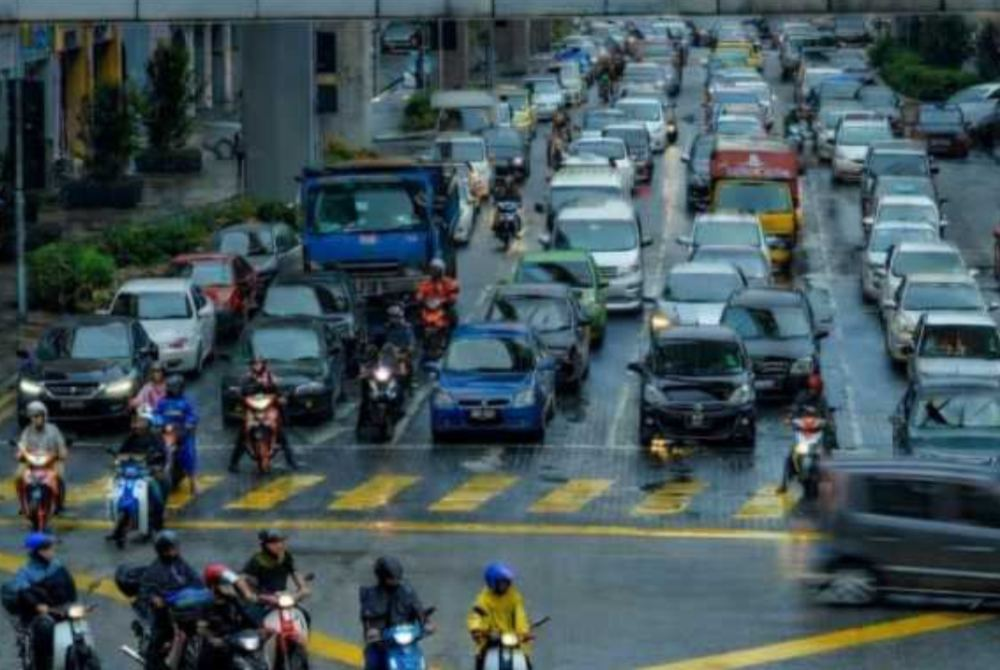
SHAH ALAM – Traffic congestion in the Klang Valley is severely draining national productivity, with each worker estimated to lose 528 hours a year, translating into an economic loss of up to RM21,250 per person.
Experts warn that if just one million urban workers face similar conditions, the country risks suffering annual productivity losses of RM21.2 billion.
This shift reframes traffic congestion as a critical national economic issue rather than a merely localised inconvenience.
The ‘Hidden Time Tax’
Senior lecturer at Universiti Teknologi Mara’s (UiTM) Centre for Chemical and Environmental Studies Dr Ismaniza Ismail stated that the situation is further compounded by its detrimental impact on mental health and emotional well-being.
The calculation is based on an average daily round-trip commute of two hours over 22 working days a month.
“Based on the current hourly productivity value of RM42.50, each worker wastes approximately RM85 a day.
“Over 250 working days a year, the total economic loss reaches RM21,250.
“This problem acts as a ‘hidden time tax’ that continuously erodes the efficiency of the national workforce. While it does not appear on a payslip, workers’ time and energy are being consumed without any productive output,” she told Sinar.
Impact on Well-being and Productivity
Ismaniza, who is also an expert in occupational safety and health, emphasised that road stress drains mental energy as drivers contend with erratic motorist behaviour and unexpected delays.
“Many are forced to leave home as early as 6.30am, even if work only starts at 8.30am, just to avoid the worst of the congestion.
“Consequently, they arrive at the office exhausted rather than ready to be productive," she said.
The situation has contributed to "urban fatigue" and "forced presenteeism"—a phenomenon where employees are physically present but unable to function optimally due to mental and physical exhaustion.
Long periods of sitting also contribute to chronic back pain and reduced time for family and personal life.
Public Transport vs Private Vehicles
The high reliance on private vehicles in Malaysia stands in stark contrast to developed nations that prioritise efficient public transport.
“In countries such as Japan, the public transport system is so efficient that the majority of the population prefers it over driving.
“In Malaysia, many still depend on cars because public transport is perceived as expensive, waiting times are long, and parking at transit stations is limited,” Ismaniza added.
The Need for Systemic Solutions
To avert a long-term productivity crisis, Ismaniza called for comprehensive policy changes, including:
- Flexible working hours to stagger peak traffic volumes.
- Structured work-from-home arrangements to reduce the number of commuters.
- Employer incentives for those who encourage public transport use.
“Integrated public transport, such as the LRT, MRT and buses, not only moves people more smoothly but also preserves mental energy and enhances psychosocial well-being,” she said. ‘
She warned that without these changes, the Malaysian economy remains "stuck on the road" instead of moving in step with national development.
Download Sinar Daily application.Click Here!


