A rare but deadly childbirth complication, what Amniotic Fluid Embolism means for mothers
It can strike suddenly during labour or shortly after delivery.



CHILDBIRTH is usually a moment of joy, yet for a small number of women it can bring unexpected danger in the form of a rare condition known as amniotic fluid embolism (AFE).
Many expectant mothers have never heard of this complication, yet it can strike suddenly during labour or shortly after delivery, with potentially life-threatening consequences.
What is amniotic fluid embolism?
Amniotic fluid embolism is a critical obstetric emergency that occurs when amniotic fluid, fetal cells or other debris enter the mother’s bloodstream during childbirth.
This may trigger an overwhelming immune response that affects the heart and lungs and can lead to sudden respiratory distress, haemorrhage and collapse of blood circulation. Because its symptoms are similar to other childbirth emergencies, no single test can definitively diagnose it, making prompt clinical assessment essential.
According to medical research, National Library of Medicine, the incidence of AFE varies globally but remains extremely rare, occurring in about 1.9 to 6.1 cases per 100,000 maternities in some studies. In practical terms, that means it might affect only a handful of women out of every 100,000 who give birth.
Survival rates have improved over recent decades thanks to advances in emergency obstetric care but AFE remains one of the leading direct causes of maternal deaths in some countries.
Risk factors for AFE are not fully understood and in many cases no identifiable cause is found, making it largely unpredictable and unpreventable. Research suggests that induction of labour, caesarean delivery and other factors may be associated with higher risk but the condition can also occur in healthy women with no known warning signs.
Maternal health in Malaysia and AFE context
In Malaysia, efforts to improve maternal health have seen a long-term decline in maternal mortality, yet complications during pregnancy and childbirth continue to pose serious challenges.
National data show that obstetric embolism, which can include conditions like AFE, was among the principal causes of maternal death in recent years. This highlights why awareness and readiness in clinical settings remain important, even for rare complications.
A personal battle: Qalisha Ray’s experience
One public figure who recently brought attention to AFE is influencer Qalisha Ray, who shared her near-death experience following childbirth.
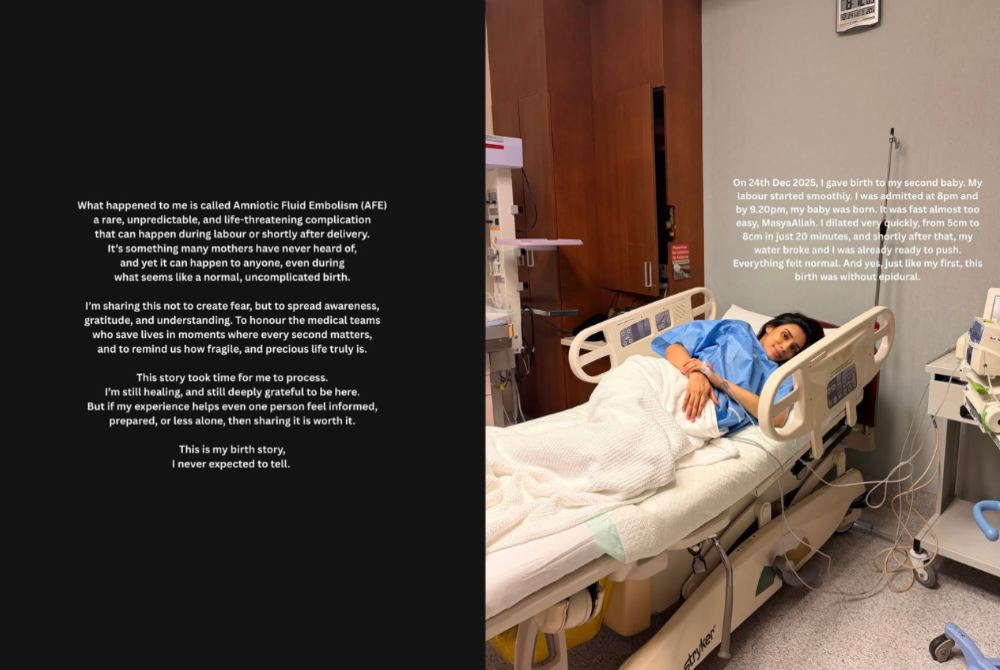
In a heartfelt post on her Instagram, she explained that her labour initially appeared smooth and uncomplicated when she went into hospital on Dec 24 last year. Just an hour after arriving, she had given birth to her second baby without pain relief and all seemed well.
But shortly after her water broke, she suddenly felt she could not breathe and experienced intense anxiety.
“Everything went blank. The next thing I remember was waking up in the ICU. I had completely lost my memory, It was like my body went on autopilot.
“I don't remember pushing my baby out, and I have no recollection of anything that happened after that moment. What I know about the rest was told to me by my husband and the doctors,” read the post.
Her medical team later told her she had developed AFE shortly after her baby was partly delivered, triggering severe bleeding and breathing failure. Doctors acted swiftly to save her life, administering multiple blood transfusions and placing her in a coma, while she also suffered temporary loss of eyesight due to lack of oxygen, an ordeal she said left her deeply shaken.
“What happened to me is called AFE, a rare, unpredictable and life-threatening complication that can happen during labour or shortly after delivery.
“I’m sharing this not to create fear, but to spread awareness, gratitude and understanding… I’m still healing and still deeply grateful to be here,” she wrote.
Qalisha praised her medical team’s quick response, saying that their training and preparedness were key to her survival and she expressed profound gratitude for those who cared for her during the crisis.
While AFE is exceptionally rare, understanding its potential can help expectant parents and healthcare providers recognise warning signs and respond rapidly when emergencies occur.
Prompt intervention, including advanced life support, oxygen therapy and blood replacement can be lifesaving and improve outcomes for both mother and baby.
Though statistics show that only a tiny fraction of births are complicated by AFE, each case underlines the importance of comprehensive obstetric care and the strength of modern medical systems in protecting maternal health.
Download Sinar Daily application.Click Here!