Umno at 80: Between Legacy and Survival
As Malaysia changes, the party that once dominated the nation struggles to redefine itself.


EIGHTY years ago today, the founders of Umno gathered to resist the Malayan Union and defend Malay political sovereignty. The party was born within the grounds of the Istana Besar Johor — a reminder that Umno’s origins were deeply intertwined with the Malay rulers, Malay nationalism and the political anxieties of a changing post-war Malaya.
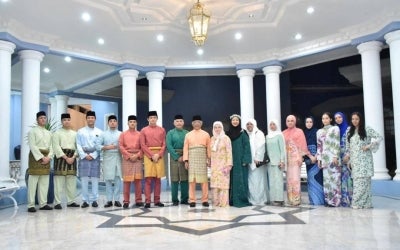
That history carries a striking resonance today and has a curious way of circling back on itself. Leaders are once again in Johor to commemorate the anniversary, even replicating the historic photograph at the palace steps.
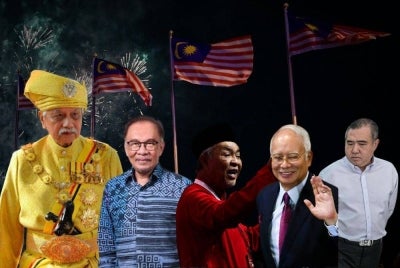
For decades, Umno stood at the centre of Malaysia’s political order, producing every prime minister from Merdeka until 2018 and shaping much of the country’s political and institutional architecture.
In 1946, it emerged as a rising nationalist movement. In 2026, it is a party confronting the consequences of its most turbulent decade: electoral decline, internal fractures and the erosion of once-unquestioned political dominance.

This reality defines Umno’s greatest challenge entering the 16th General Election.
The party is attempting something historically unfamiliar: surviving not as the unquestioned hegemon of Malay politics, but as one competitor among several.
Since the political earthquake of GE14 in 2018, Umno has endured fragmentation, corruption scandals, internal defections, ideological confusion and generational distrust.
The rise of Perikatan Nasional fundamentally altered the Malay political landscape, while younger voters increasingly view politics through economic anxieties, governance performance and practical outcomes rather than inherited party loyalty.
This is no longer the Umno that governed from a position of absolute authority. The party now operates within a coalition government led by a former rival, navigating political compromises and an electorate no longer defined by historical loyalty.
Against that backdrop, Johor has become more than a political stronghold. It represents continuity — one of the few states where Umno’s machinery, institutional relationships and traditional support structures still operate with cohesion and confidence.
In many ways, Johor reflects Umno’s original political DNA: institutional governance, administrative continuity, Malay leadership and historical proximity to royal legitimacy.
But history and symbolism alone cannot secure the party’s future.

Ahead of the 16th General Election, Umno faces perhaps its most important strategic question since independence: what kind of party does it want to become in a post-hegemonic Malaysia?
The old formula of relying on historical loyalty is fading. Younger Malaysians did not grow up emotionally attached to Umno’s Merdeka narrative. Many instead associate the party with corruption scandals, elite rivalries and the instability that defined much of the past decade.
GE16 will test more than Umno’s electoral machinery. It will test whether the party can redefine its relevance for a new political generation.
Can Umno still convince younger Malays that it represents stability, mobility and competent governance? Can it modernise without alienating its traditional base? Can it remain moderate enough for coalition politics while still being assertive enough to compete against Pas and Bersatu for Malay support?
Within the party, these tensions are already visible. One faction sees Umno’s future as a pragmatic governing partner within the Unity Government framework. Another believes the party has diluted its political identity and surrendered too much emotional ground to its rivals.
How Umno resolves this tension may shape the next phase of Malay politics itself.
Still, the party retains advantages few others possess. Its grassroots network remains among the deepest in the country. Its institutional memory is unparalleled. And unlike newer political movements, Umno understands power not only as electoral rhetoric, but as administration, bureaucracy, and statecraft.
After eight decades, Umno appears to be returning to where its story began — not to relive its past, but to rediscover its purpose.
GE16 may determine whether the party’s 80th anniversary marks the beginning of reinvention or the closing chapter of its long dominance over Malaysian politics.
Download Sinar Daily application.Click Here!