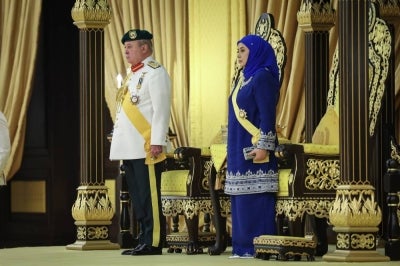
Negeri Sembilan royal dispute must be resolved through constitutional process, say experts
Any resolution to the ongoing impasse must adhere to both the Negeri Sembilan Constitution and the state's customary traditions.



SHAH ALAM - Any challenge involving the position of Negeri Sembilan's ruler cannot be viewed as an ordinary constitutional dispute as the state's unique royal system is rooted in adat, consensus and a centuries-old selection process involving its territorial chiefs.
Legal and constitutional scholars stressed that any resolution to the ongoing impasse must adhere to both the Negeri Sembilan Constitution and the state's customary traditions to preserve institutional stability and uphold the dignity of the monarchy.
Lawyer Salim Bashir said Negeri Sembilan's royal institution differs significantly from those in other states, where succession is typically hereditary.
"In Negeri Sembilan, the Yang di-Pertuan Besar is elected by the Four Undang, who play a decisive constitutional role in both the appointment and removal of the state's ruler," he said when contacted recently.
Salim noted that the current situation extends beyond a purely legal dispute and involves complex questions of adat, tradition and the honour of the royal institution.
"This is not merely a straightforward legal issue. It is a conundrum involving customary practice and the dignity of the royal house. The impasse must be resolved candidly, with reverence and respect for both the Yang di-Pertuan Besar and the state's chieftains," he said.
He said the appropriate avenue for resolving the matter would be through the Dewan Keadilan dan Undang (DKU), with a broad consensus aimed at safeguarding state stability and the welfare of the people.
While judicial intervention may be considered, Salim cautioned that such an approach could face significant challenges due to constitutional provisions that limit court jurisdiction over certain customary matters.
Meanwhile, International Islamic University Malaysia constitutional expert Professor Datuk Dr Shamrahayu Ab Aziz said the issue should be addressed strictly in accordance with the Negeri Sembilan Constitution and the state's established adat, both of which have been recognised and codified in law.
"The relevant constitutional provisions are already there, and the applicable adat has long been recognised in law and practised in Negeri Sembilan," she told Sinar Daily.
Shamrahayu stressed that the priority should be a peaceful resolution that preserves public confidence in the monarchy.
"We want this issue to be resolved peacefully because it concerns the reputation of the royal institution. Although the matter is confined to Negeri Sembilan, it also reflects on the monarchy more broadly.
"Abiding by the law and following the state constitution is therefore essential," she said.
Download Sinar Daily application.Click Here!