Flouting workers EPF contribution is not ESG compliant
Check your EPF statement every month, if the money isn’t there, it’s not a clerical error: it’s a crime.
AHMAD IBRAHIM
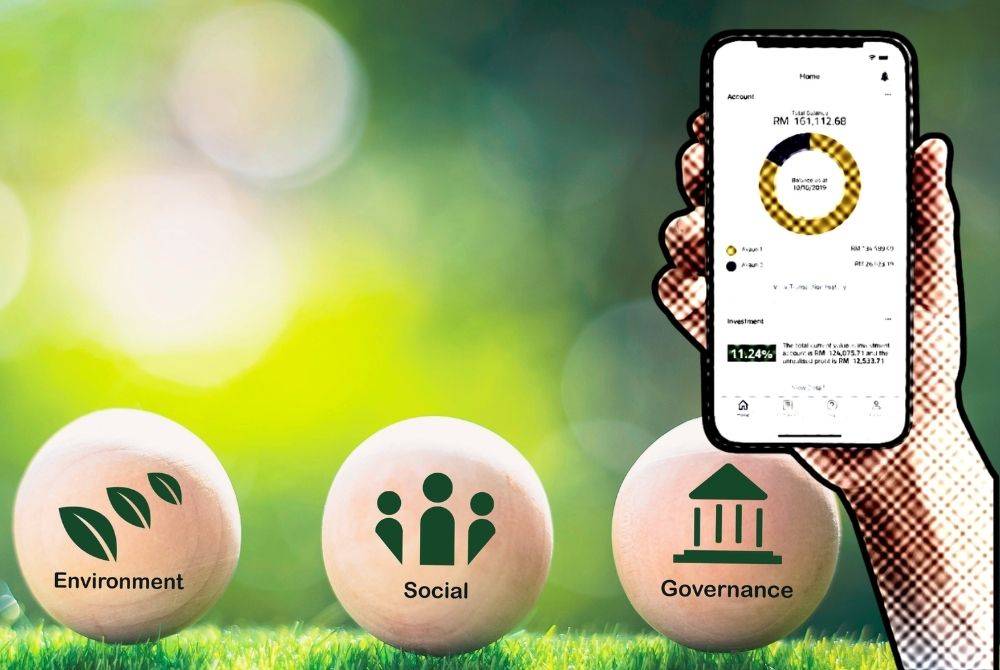
ON Environmental, Social, and Governance (ESG), companies talk passionately about carbon emissions and reforestation, yet they glance away from a far uglier reality: the quiet theft of a worker’s retirement. If a company fiddles with its carbon data, it’s a scandal. But if a company “forgets” to pay its Employees Provident Fund (EPF) contributions?
Somehow, that gets brushed aside as a “cash flow issue.” It’s time we ask a very uncomfortable question: If you aren’t paying your staff’s EPF, do you have any right to claim you are an ESG-compliant company?
Environment is the sexy part of ESG. It concerns a company’s impact on the planet. It asks: Are you a steward of the earth, or a polluter? S as in Social is the conscience. It covers relationships with employees, suppliers, customers and the community.
It asks: Are you treating people with dignity? Governance, G, is the rulebook. It covers leadership, audit structures, shareholder rights, bribery policies and executive pay. It asks: Are you running a tight, honest and transparent ship?
When a company fails to remit EPF contributions to the government on behalf of its workers, where does that fall? Unequivocally, it falls under the Social pillar. Specifically, it violates the core principle of "Labour Standards" and "Employee Welfare."
EPF is not a bonus. It is not a favour. It is deferred wages. Under the law, that 11 per cent (employee’s share) and 12-13 per cent (employer’s share) belong to the worker. When a company deducts that money from a salary but fails to send it to the EPF or simply never pays the employer’s portion, they aren’t “saving costs.” They are committing theft of social security.
This is a breach of the most basic social contract: that a day’s work deserves a secure retirement. By flouting this, a company is actively harming the well-being and livelihood of its human capital. It’s illegal.
Governments use a few tools, but the net has big holes: In Malaysia, for example, the EPF uses the Employer’s Monthly Return (Form A). This requires employers to declare contributions. The system relies heavily on self-reporting and cross-referencing with tax filings.
EPF conducts raids on businesses, checking employee payslips against bank statements and contribution records. The vast majority of cases start with whistleblower complaints. A disgruntled employee realises their EPF account hasn’t been credited for six months despite salary deductions. They file a report. Offenders face civil suits and criminal prosecution.
Yet, monitoring fails because of under-reporting, workers afraid to speak up. The penalty for stealing a worker’s future is often just a fraction of the profit saved by not paying those contributions.
It is the hypocrisy of the modern corporation. We hear companies boasting about their "Plastic Neutral" certificates. And CEOs receiving ESG awards for planting 1,000 trees. Meanwhile, in the back office, the cleaning staff, employed by a third-party contractor, haven’t seen an EPF credit in four months. That is not ESG. That is cosplay.
If the Governance pillar allows the finance department to "borrow" employee statutory payments to cover operational costs, that governance is rotten. If the Social pillar doesn't have a zero-tolerance policy for late EPF payments, the social score should be zero.
What must change? We need to stop treating ESG as a marketing department project and start treating it as a compliance and ethics floor. For workers: Check your EPF statement every month. The i-Akaun app is free.
If the money isn’t there, it’s not a clerical error; it’s a crime. Report it to the EPF and Labour Department immediately. For consumers: Ask the hard question. Before you buy from that fashion brand or eat at that restaurant chain, search online: "Company X EPF issue." If they steal from their staff, they don’t deserve your Ringgit.
For regulators: Name and shame publicly. The current list of companies with unpaid EPF contributions should be a public registry. Shame is a powerful disinfectant for greed. For CEOs: If your HR or Finance head suggests delaying EPF remittance to "manage liquidity," fire them on the spot. That suggestion is not financial strategy; it is a proposal to commit larceny against your own people.
The "Social" in ESG is not about having a nice diversity poster in the break room. It is about the raw, unsexy, difficult work of paying people what they are legally owed, on time, every time.
If you aren’t paying EPF, you aren’t a "distressed business." You are a violator of human dignity. Stop looking at the green trees. Start looking at the red zeros in the retirement accounts. That is the true test of a company’s character. ESG without statutory compliance is just a lie with a PowerPoint slide.
Professor Datuk Dr Ahmad Ibrahim is affiliated with the Tan Sri Omar Centre for STI Policy Studies at UCSI University and is an Adjunct Professor at the Ungku Aziz Centre for Development Studies, Universiti Malaya. The views expressed in this article are the author's own and do not necessarily reflect those of Sinar Daily.
Download Sinar Daily application.Click Here!