Technology alone cannot solve Malaysia’s NRW challenge without sustained investment, federal support – SPAN
The federal government plans to implement the National NRW Reduction Programme from 2026 to 2030 and other initiatives aimed at reducing water losses nationwide.


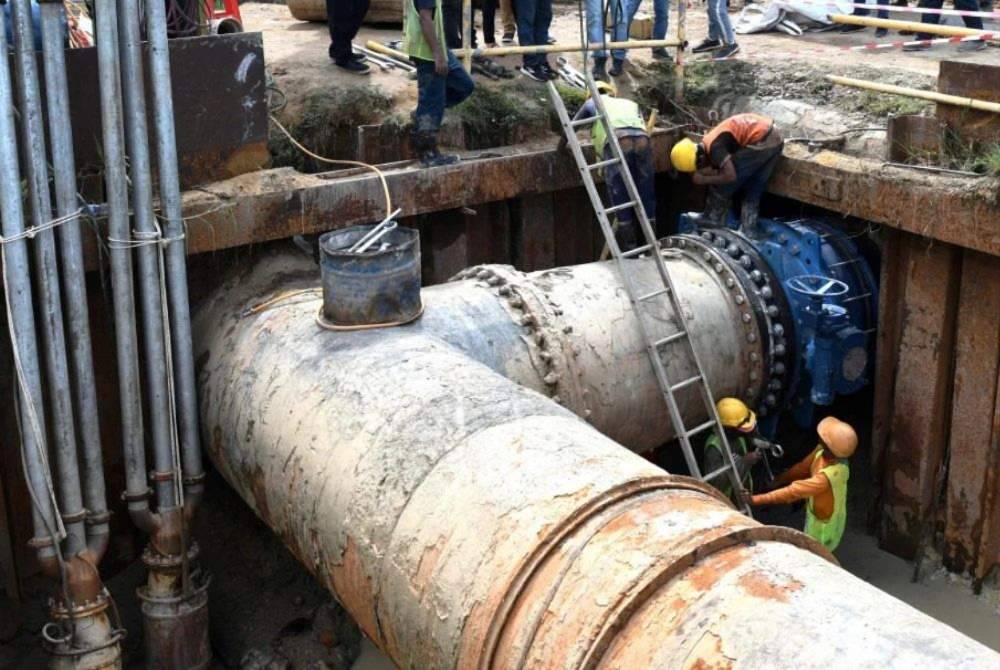
SHAH ALAM – Water operators across Malaysia are increasingly adopting technology and operational best practices to reduce Non-Revenue Water (NRW), but sustained investment and federal support remain critical as many operators lack the financial capacity to implement comprehensive long-term reduction programmes.
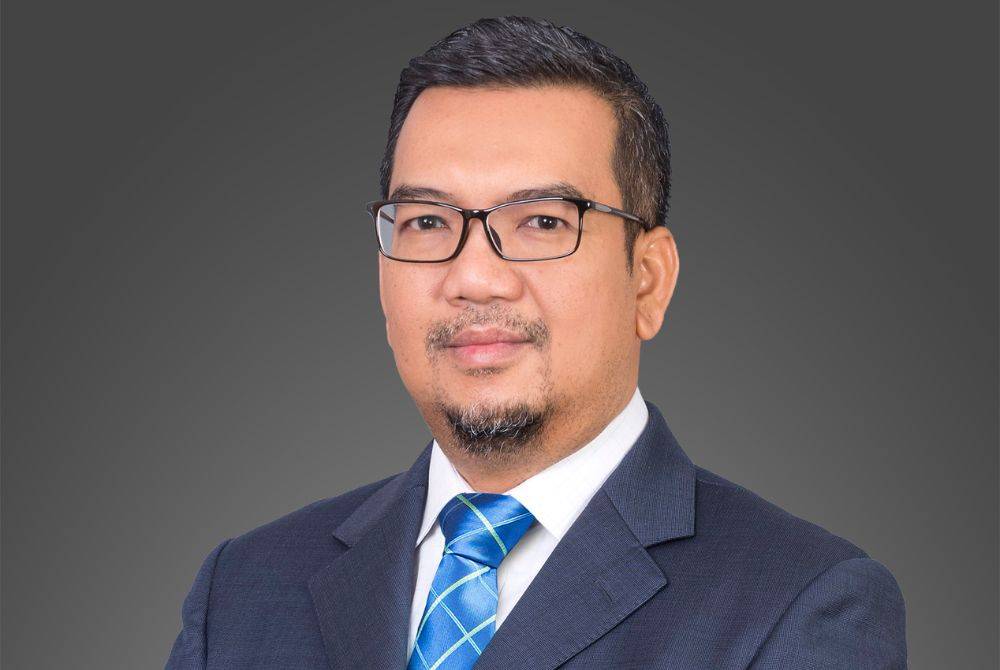
National Water Services Commission (SPAN) chief executive officer Datuk Ahmad Faizal Abdul Rahman said NRW reduction is fundamentally the responsibility of state water operators and must be integrated into daily water supply operations.
“NRW reduction is fundamentally the responsibility of state water operators and should be part of their daily operations.
“This includes activities such as leak detection, prompt pipe burst and leak repairs, pressure management, meter replacement, monitoring district metered areas, improving billing data and investigating suspected illegal connections or meter tampering.
“However, reducing NRW requires significant investment and continuous implementation. Many operators do not have the financial capacity to fund comprehensive, long-term programmes on their own.
“This is why federal support is important,” he said in an interview with Sinar Daily.
To help address these challenges, the federal government plans to implement the National NRW Reduction Programme from 2026 to 2030, providing funding for critical pipe replacement works and other initiatives aimed at reducing water losses nationwide.
As the regulator, SPAN monitors operators through key performance indicators, performance reports, audits, business plan reviews and technical engagements to ensure NRW reduction efforts remain on track.
Faizal said water operators are increasingly deploying technologies such as leak detection equipment, district metered areas (DMA), pressure management systems, smart meters, hydraulic modelling, Geographic Information System (GIS) mapping, Supervisory Control and Data Acquisition (Scada) systems, telemetry and digital monitoring tools.
However, the effectiveness of these technologies varies depending on financial resources, technical expertise, asset information and the readiness of existing infrastructure.
According to Faizal, advanced digital solutions can only deliver meaningful results when supported by strong asset management and reliable data.
He identified GIS mapping and DMA implementation as two critical foundations of effective NRW management.
“Accurate mapping allows operators to understand the location, size, material, age and condition of critical assets such as pipes, valves, meters and reservoirs, enabling better planning for replacement, leakage control and pressure management.
“Meanwhile, DMA allows networks to be divided into smaller zones, making it easier to monitor flow and pressure, identify high-loss areas, detect abnormal water usage and evaluate the effectiveness of NRW reduction efforts,” he said.
Faizal cited Selangor and Johor as examples of states where technology, backed by strong operational practices, has helped improve NRW performance.
In 2025, Selangor recorded an NRW level of 26.8 per cent, while Johor recorded 24.0 per cent, both significantly below the national average of 34.4 per cent.
“This shows that technology can significantly contribute to reducing NRW when supported by reliable data, proper monitoring and effective operational response,” he said.
The issue has attracted growing attention from water sector experts, who have warned that Malaysia’s NRW problem remains a major national challenge.
Former SPAN chairman Charles Santiago previously told Sinar Daily, about 35 per cent of treated water, valued at an estimated RM2 billion annually, was lost before reaching consumers, largely because of ageing infrastructure, including deteriorating asbestos cement (AC) pipelines.
He noted that approximately 39,000 kilometres of pipelines require replacement and called for stronger political commitment, sustainable long-term financing and closer coordination between federal and state authorities to accelerate infrastructure upgrades.
Meanwhile, Universiti Putra Malaysia water engineering expert Associate Professor Dr Syazwani Idrus said NRW losses were caused not only by ageing infrastructure but also by leaks, faulty meters, illegal connections and untracked water usage.
She stressed the importance of adopting technologies such as smart meters, acoustic leak detection systems, pressure management tools and predictive analytics alongside infrastructure improvements to achieve meaningful and lasting reductions in water losses.
Download Sinar Daily application.Click Here!