Melaka polls: High number of women candidates reflects political parties’ openness
The opportunities given to women to contest in the election demonstrate that party leadership is no longer judging candidates solely based on gender

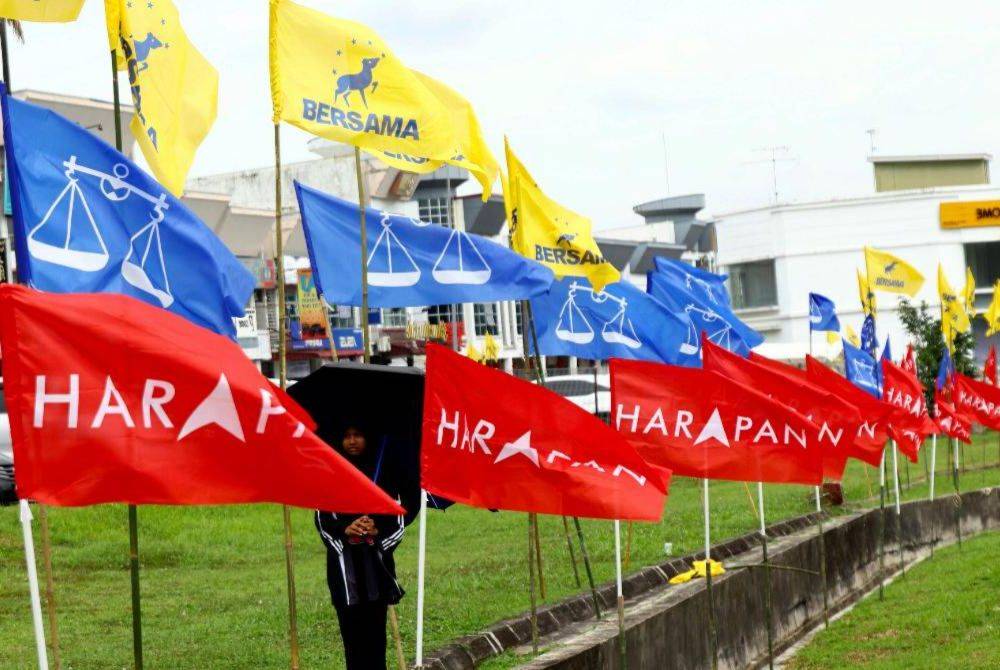
MELAKA - The large number of women contesting as candidates representing several political parties in the 16th Melaka state election reflects the parties' openness in providing women with greater opportunities to play a bigger role in political leadership.
The opportunities given to women to contest in the election demonstrate that party leadership is no longer judging candidates solely based on gender, but rather on their credibility and ability to bring about change in society.
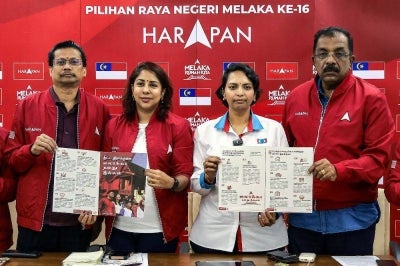
In this election, Pakatan Harapan (PH) is fielding the highest number of women candidates at six, followed by Barisan Nasional (BN) with four, Parti Bersama Malaysia (Bersama) with two, and one candidate each from Parti Pribumi Bersatu Malaysia (Bersatu) and Parti Bumiputera Perkasa Malaysia (Putra).
Universiti Teknologi MARA (UiTM) Melaka Branch’s Communication and Media Studies Faculty senior lecturer Dr Shafezah Abdul Wahab said the percentage of women candidates in this election rose to 17.7 per cent, compared with approximately 14 per cent in the previous state election.
She noted that the trend was encouraging, although progress remained slow, as most contesting parties appeared to be fielding women candidates merely to meet a minimum quota, with the exception of Parti Keadilan Rakyat (PKR), which had achieved 33.3 per cent women representation among its candidates in this election.
"If we look at the current political landscape, the practice of tokenism, or fielding women candidates merely to meet a quota, is becoming less common. Political parties now appear to be recognising the merit and credibility of women leaders.
"That is why we can see them having the confidence to field women candidates in highly contested seats such as Machap Jaya, Kelebang and Rim, rather than merely placing them in constituencies where their chances of winning are limited," she told Bernama.
Elaborating further, Shafezah said the main challenges facing women candidates stemmed from patronage within male-dominated party structures, campaign funding constraints and public perceptions, particularly in rural areas where conservative attitudes remained prevalent.
However, she said that based on the current political landscape in Melaka, most voters no longer considered gender a determining factor when choosing their representatives, but instead placed greater emphasis on a candidate's accessibility and track record of service.
"This actually gives women candidates an advantage in championing issues close to the people's hearts, such as the cost of living and family welfare, making their approaches more readily accepted by grassroots communities.
"An increase in the number of women elected would encourage the formation of a more inclusive state executive council, helping to break the traditional monopoly of certain portfolios, rather than restricting women to welfare and women's affairs portfolios alone.
PH candidate for the Taboh Naning State Legislative Assembly (DUN) seat, Junainah Sahat, 41, said women possessed their own abilities, creativity and strengths that could contribute to development and administration, demonstrating that they were equally capable of shouldering leadership responsibilities.
"When we lead or work, we should be evaluated based on the progress and achievements we deliver, not our gender. Women have ideas just like men, and every individual has their own strengths," she told Bernama.
Affectionately known as Ajue, Junainah, who previously focused on entrepreneurship, said her decision to establish a firm foothold in politics had received support from her family, particularly her husband, Hafiz Omar, 45.
The mother of six said women's involvement in politics also came with various challenges, particularly in balancing family responsibilities with commitments to society.
However, she said women needed to manage their time wisely and organise their responsibilities to ensure that political involvement did not result in their family obligations being neglected.
"For example, during the campaigning period, the schedule is certainly quite hectic. However, I will ensure that my children's needs, particularly their education and safety, are not neglected and that they remain under the supervision of someone I trust," she said.
Meanwhile, PH candidate for the Kelebang DUN seat, Farzana Hayani Mohd Nasir, 26, said women's participation as candidates in the election not only opened up opportunities for them in politics but also provided a platform to bring women's welfare and economic issues to the decision-making level.
Farzana Hayani said among the issues that concerned her were the challenges faced by women, particularly housewives managing large families while dealing with financial constraints, such as a family she had visited recently.
"Recently, we visited a housewife who is looking after eight children, while her husband works only as a security guard. So, we want to explore ways to increase her household income," she said.
Better known as Nana, Farzana Hayani said that as the only woman among the four candidates contesting the Kelebang DUN seat, she also wanted to focus on the needs of young women, including those who were housewives and had family caregiving responsibilities.
She said young women also faced various challenges, particularly those living far away from their families or having to shoulder the responsibility of caring for family members.
Apart from women's issues, Farhana said attention was also being given to youths, fishermen and farmers, with a grassroots approach adopted to understand the community's problems firsthand before seeking solutions together with the relevant agencies.
The Election Commission has set Nov 14 as polling day, with early voting on Nov 10. - BERNAMA
Download Sinar Daily application.Click Here!