Behind the screen, a predator awaits
Posing as a peer was among the tactics used by perpetrators to build relationships and gain victims' trust before exploiting them.


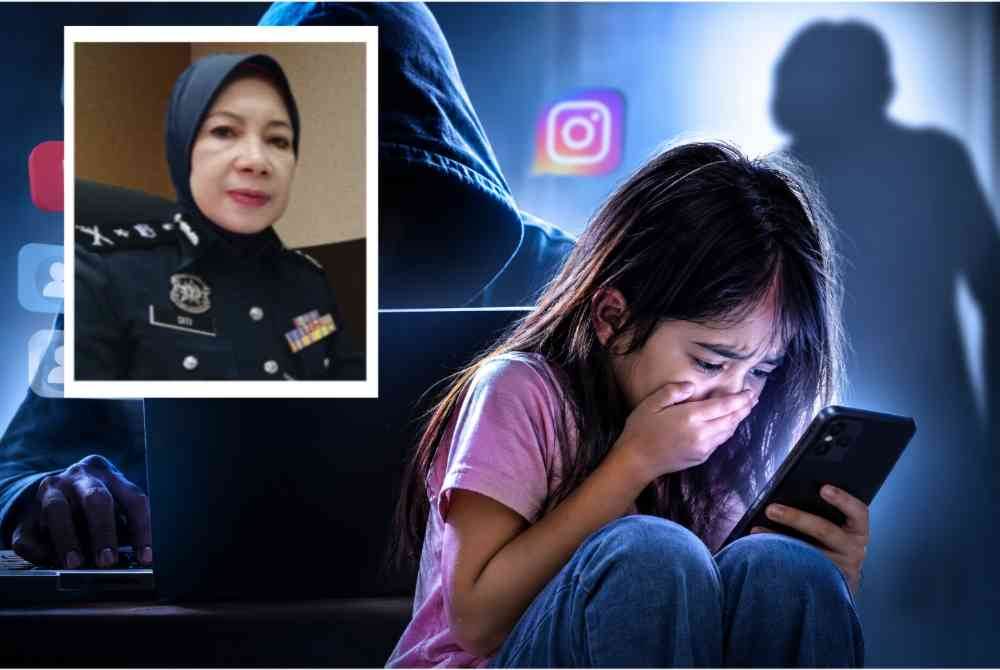
KUALA LUMPUR - Starting with casual conversations about video games or personal problems, children risk falling victim to sexual exploitation online when individuals posing as their peers gain their trust.
Federal Criminal Investigation Department, Sexual, Women and Child Investigation Division (D11) principal assistant director, Senior Assistant Commissioner Siti Kamsiah Hassan said posing as a peer was among the tactics used by perpetrators to build relationships and gain victims' trust before exploiting them.
She said perpetrators would usually identify children's interests first, including video games, before claiming to share the same interests to establish a connection.
“Children who enjoy playing video games, for instance, may be approached by individuals who claim to have similar interests.
“The perpetrators then present themselves as friends who understand the victims' interests or as individuals who can offer support when they face problems,” she said in a special interview with Sinar Harian recently.
She said after gaining the children's trust, perpetrators would gradually steer conversations towards more personal matters, including asking about physical development, menstruation and bodily changes before requesting pictures from the victims.
She added that to further reinforce their disguise, perpetrators would offer to share their own pictures to convince victims that they were communicating with someone of their own age.
“However, the disguise can be exposed when police conduct investigations using phone numbers and WhatsApp communications, allowing them to identify the individual's true identity,” she said.
Siti Kamsiah said relationships that initially appeared to be friendships could also develop into romantic relationships when perpetrators offered to become the victims' boyfriends or girlfriends.
“When victims begin to trust the relationship, perpetrators start requesting sexual material before using the pictures or personal information shared with them as tools to blackmail the victims.
“The material then becomes a means of blackmail, allowing the suspects to continue exploiting the victims,” she said.
On the scale of the threat, Siti Kamsiah said Royal Malaysia Police (PDRM) data from 2017 to June 12, 2026 recorded 13,053 cases of sexual crimes against children, with 1,021 cases linked to various online platforms.
“The threat to children does not only come from strangers but can also involve people within their own social circles.
“PDRM's analysis of 13,271 relationships showed that acquaintances made up the largest category at about 47 per cent, followed by family members at 23 per cent and strangers at about 19 per cent.
“This makes it more difficult to identify threats because perpetrators can build an image of themselves as trusted individuals before exploiting the relationship,” she said.
During the same period, PDRM data also recorded 13,592 perpetrators, about 99 per cent of whom were male, while more than 60 per cent of the victims were aged between 13 and 18.
Child sexual abuse material sold for as little as RM30
Besides deceiving children into sharing sensitive pictures, sexual exploitation has also expanded to the buying and selling of Child Sexual Abuse Material (CSAM) for profit.
Siti Kamsiah said that through Op Pedo, police had detected approximately 100 to 200 cases under Section 8 involving the buying and selling of such material.
She said some cases also involved groups of children who engaged in selling the material after obtaining it from the internet.
“They obtained the material from the internet and then sold it for around RM30 to RM50,” she said.
She said the small transaction amounts made it difficult for authorities to detect the activities, while e-wallets were among the payment methods used because the children involved did not have bank accounts of their own.
In efforts to combat the crime, she said investigations also faced challenges in obtaining information from overseas platform providers, a process that required time and Mutual Legal Assistance (MLA).
She said the process of establishing evidence had also become increasingly complex as digital evidence could be stored across various electronic devices, including mobile phones and computers.
“Investigations also require digital forensics expertise. The biggest challenge lies in establishing evidence in online sexual crimes, particularly today when such crimes also involve technology and the internet,” she said.
Apart from technical challenges, she said victims' emotional state could also affect investigations, as they might feel afraid, struggle to recount what happened or refuse to revisit their experiences.
On the progress of cases, PDRM data from 2018 to June 2026 recorded 12,782 cases, of which 7,224 were charged in court, 2,894 were classified as no further action (NFA), 1,199 were kept under consideration (KIV) and 1,465 remained under investigation.
She said the case resolution rate during the period stood at 88.5 per cent.
However, she stressed that the number of cases brought to court could not be equated with the number of convictions, as court decisions depended on the facts, evidence and proof presented during trials.
Prevention starts at home
In addressing the threat of online sexual crimes, Siti Kamsiah reminded parents not to assume that their children were safe simply because they spent their time at home.
Instead, she said children's online activities also needed attention, as perpetrators could approach victims without requiring any physical encounter.
“Most parents think that when their children do not leave the house, it means they are safe.
“However, supervision today is no longer limited to monitoring their physical movements. Parents need to pay attention to their children's emotions and mindset,” she said.
She said parents should therefore know who their children were communicating with, understand the digital platforms they used and remain alert to any changes in their behaviour.
At the same time, she said open communication between parents and children was essential to ensure that children felt safe sharing their problems, including when they received suspicious messages or requests for pictures from individuals online.
Siti Kamsiah also reminded families not to withdraw police reports or stop cooperating with the authorities simply because the suspected individuals involved were acquaintances or family members.
“At the same time, families should not withdraw reports or stop cooperating with the authorities simply because the individuals suspected of committing the offences are acquaintances or family members.
“If they do not come forward to lodge police reports, they could be allowing the crimes to continue,” she said.
Download Sinar Daily application.Click Here!