David versus Goliath in Paya Rumput: Rafie Ahmad’s challenge against the PM’s political secretary
The contest has the character of a David versus Goliath clash, at least in terms of political standing and the backing of the national leadership.

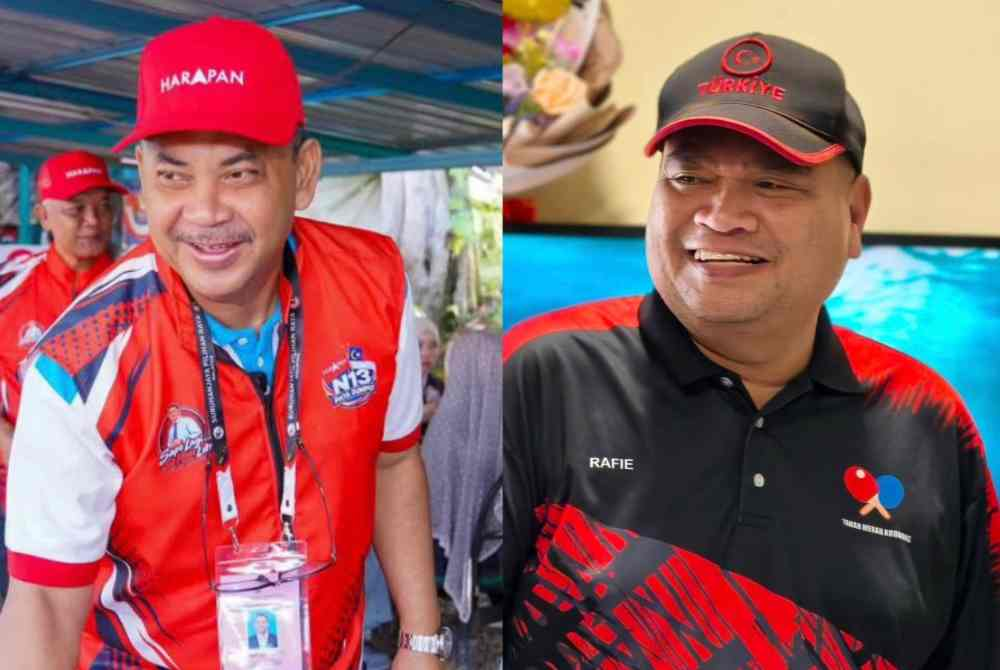
IN the 2026 Melaka state election (PRN), the N13 Paya Rumput state seat has emerged as one of the most interesting to analyse.
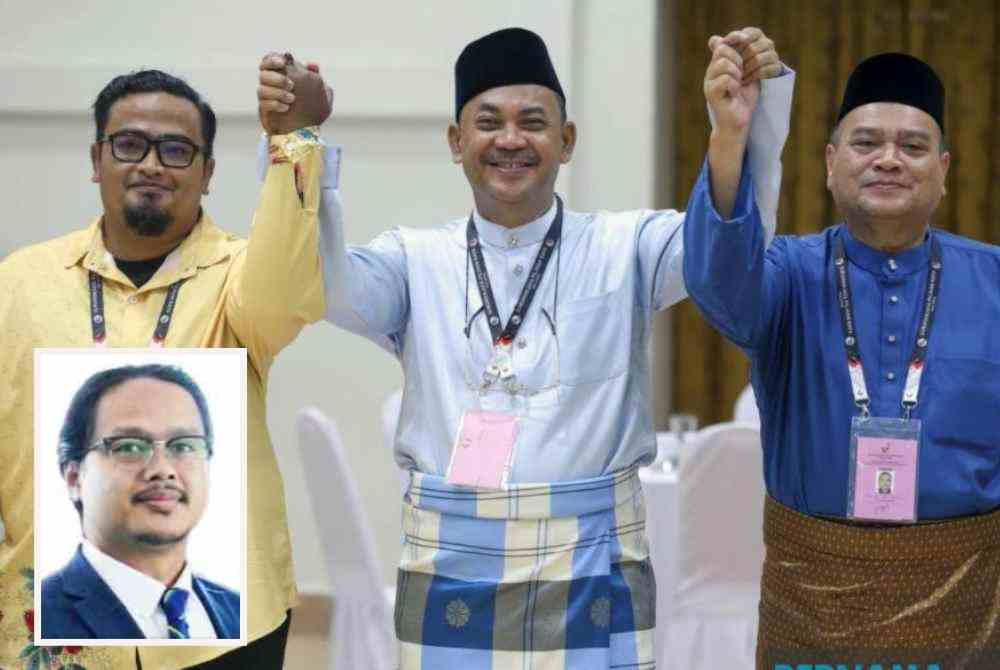
The three-cornered contest pits Rafie Ahmad, 58, the Pas candidate representing Perikatan Nasional (PN), against Datuk Azman Abidin of PKR-Pakatan Harapan (PH) and Abdul Rashid Abu Bakar of Bersama.
The contest has the character of a David versus Goliath clash, at least in terms of political standing and the backing of the national leadership.
Azman is no ordinary candidate. He is political secretary to Prime Minister Datuk Seri Anwar Ibrahim, as well as PKR Federal Territories chairman and PKR Bandar Tun Razak division chief.
Rafie, meanwhile, is an entrepreneur who has long been active in Pas leadership and community service in the area.
PH’s top leadership became involved in Azman’s campaign early. On Oct 26, PKR secretary-general Datuk Seri Saifuddin Nasution Ismail officiated the PH operations room for the Paya Rumput seat in Krubong.
The event also involved PKR leaders such as Ginie Lim and Adam Adli Abd Halim.
The prime minister himself campaigned in Taman Seri Krubong on Nov 5, stressing the importance of electing a representative with a direct link to the Prime Minister’s Office to ease development matters.
On Nov 8, his wife, Datuk Seri Dr Wan Azizah Wan Ismail, was also present to show support for Azman and urged the PKR machinery to step up efforts to reach voters.
The presence of such high-profile leaders reflects Paya Rumput’s political importance to PH. It also shows the campaign’s capacity for mobilisation and its substantial financial resources.
Against this backdrop, the interesting question is how far the advantage of connections in Putrajaya can be translated into voter confidence at the local level.
Rafie is not a new candidate in Paya Rumput
Unlike Azman, who is contesting an election for the first time, Rafie has experience as the Pas candidate in Paya Rumput in the 2018 general election (GE).
He then secured 1,552 votes, or 7.2 per cent, in a contest won by Mohd Rafiq Naizamohideen of Bersatu-PH. Although the result showed Pas’s limited support in 2018, Rafie’s involvement did not begin only with this state election.
Originally from Lubok China, he has lived around Paya Rumput for nearly three decades and has long been involved in politics and community work.
He helped set up the Pas Cheng branch and is now deputy chairman of Pas Tangga Batu. More importantly, after Bakri Jamaluddin won the Tangga Batu parliamentary seat in GE15, Rafie was given the responsibility of developing the Tangga Batu Parliamentary Service Centre.
He not only helped establish the centre but also managed its operations, planned programmes, secured funding and coordinated assistance for residents.
This experience should be distinguished from mere campaigning experience. Running a service centre requires knowledge of administrative procedures, coordination with government agencies, resolving complaints and the ability to secure resources to help the community.
The record provides a basis for assessing Rafie’s ability to carry out public service at the constituency level, even though he has never been a state assemblyman.
Corporate experience and higher education
Another important dimension is Rafie’s academic qualifications and professional experience, which may be less well known to people outside Tangga Batu.
Rafie not only holds a Master of Business Administration (MBA) from Asia e University but also has a second master’s degree, a Master of Corporate Communication from Universiti Putra Malaysia (UPM).
He is due to receive the degree at a convocation ceremony on Dec 5. He also holds an Executive Master in Management, has technical training in gas inspection in Vancouver, Canada, and a Diploma in Islamic Worldview (Tasawur Islam) from ILHAM.
His career began as a production supervisor at Sony TV in Bangi in 1990, before he moved into technical sales, instrumentation and industrial equipment.
He later worked with Transwater API, Hexamas and Burgmann Malaysia before becoming a director of Menara Cekal Sdn Bhd in 1999.
His business involves supplying mechanical, instrumentation and safety equipment and managing projects for industrial clients, including the oil and gas sector.
The combination of technical experience, company management, client relations and project delivery has given him exposure to the real economy, particularly the challenges facing business and industry.
This background is highly relevant in the context of Paya Rumput, which includes fast-growing residential areas, commercial centres, industrial areas, traditional villages and working communities.
Community involvement before becoming a candidate
Besides his corporate career, Rafie was chairman of Masjid Ar-Rahman in Tanah Merah, Krubong, deputy chairman of Surau Al-Qadr and was involved in running SRITI Al-Fattah and Pasti Al-Islah.
He now heads the NGO Prihatin Melaka, which carries out welfare and community work.
Many of his campaign activities can be seen on his Facebook posts, including visits to the sick, distribution of food kits to asnaf (eligible zakat recipients), a free engine oil change programme for youths, breakfasts with residents, visits to night markets and meetings with traders of various races at Cheng Avenue.
In one post, he said: “I do not want to be a candidate who only appears on posters.” He also stressed the need for services that are easy to reach, quick to act and not a burden on people already busy making a living.
This approach is in line with Rafie’s concern for traffic congestion, flash floods, drainage systems and the need for public amenities following the growth in housing areas.
Rafie has also reportedly held discussions with developers and relevant agencies so that new developments do not burden existing drainage systems and infrastructure.
His approach focuses more on continuity in solving problems and coordinating development with population growth.
Rafie’s character: Trustworthy, humble and family as his strength
Behind his corporate experience and academic qualifications, Rafie’s personal side has also drawn attention. In an interview with HarakahDaily, he admitted he was more comfortable working behind the scenes and helping others than chasing political position.
He left the decision on his candidacy entirely to the party leadership.
For Rafie, a position is not something to be asked for but a trust that must be carried out when given.
This principle was also reflected in his Facebook post for National Integrity Day: “Trust is not something that can be asked for, but must be built and preserved through actions.”
Even more touching is his close relationship with his family. The father of five admitted that his wife and children have been the main source of strength throughout his life and political journey.
According to a report, his wife stopped working in 2009 for health reasons, leaving Rafie to shoulder the responsibility as the family’s main breadwinner while running a business that does not always promise a steady income.
When he received the offer to be a candidate, he sought the views of his eldest child, who works at Jakim, before performing the istikharah prayer three times.
In a Facebook post on nomination day, he shared the moment of receiving his wife’s greeting and kiss on the hand, writing: “Your prayers are my strength, your love is my spirit.”
Rafie also admitted that he usually enjoys having breakfast and meals with his wife and children, but has had to cut back on time with them during the campaign.
Rafie’s thinking is also shaped by religious values, social responsibility and the concept of blessings (keberkatan). Although he has been in business for more than three decades, he believes material success is not fully meaningful unless it benefits society.
In an interview titled “Rafie: Blessings, people’s welfare the main agenda”, he spoke about the ups and downs of his business and his belief that helping others is part of life’s responsibility.
On Facebook, he stressed that knowledge helps a person understand problems, experience helps find solutions, and trust reminds a person of their purpose and whom they represent.
This approach translates into his aim of making things easier for people busy earning a living, rather than leaving them to go back and forth to get help.
Views on his character have also been voiced by people who have worked closely with him.
Ramlan Ahmad, Tangga Batu parliamentary coordinator for the Pantai Kundor state seat, described Rafie as someone who is easily moved by others’ plight and willing to raise funds to buy laptops for poor students.
Another service centre staff member, Anuarul Kamil Mohammed Sauffee, described him as calm but firm, easy to discuss matters with and caring about staff welfare, including when they fall ill.
The assessments of those closest to him give an idea of his leadership style, although his effectiveness in political office can only be judged by actual performance if he is given the mandate.
For Rafie himself, the trust of leadership is not merely about position or power but about how knowledge, experience and compassion can be translated into a better life for the community.
Support from Umno leaders and the BN machinery
Pas-BN cooperation is another important dimension of Rafie’s campaign. Among the most notable developments is the willingness of former Pantai Kundor assemblyman Datuk Nor Azman Hassan to help him campaign at Cheng Garden Avenue.
According to a report on Nov 2, Nor Azman said his longstanding friendship with Rafie and the political cooperation between the two coalitions led him to join the campaign activities.
On Oct 31, Beruas Umno division chief Datuk Dr Azhar Ahmad and Tangga Batu Umno leader Datuk Wira Sazali Muhd Din were also listed as speakers at a talk with Rafie in Taman Rambai Jaya.
Sazali, a former Paya Rumput assemblyman, appeared at several small-group talks and house-to-house activities with the PN machinery.
Others involved were Abdul Shukur, Tangga Batu UMNO information chief; Syed Asfarizal Syed Salim and Haji Khairudin in the talks; and Perak Umno speakers such as Nazmi Md Zain and Hasri Abdul Karim.
Interestingly, Rafie’s approach is not limited to Pas-Umno cooperation. On Nov 3, he also held an informal meeting and discussion with the Tangga Batu MCA division chief, showing efforts to build ties with the BN component party representing the Chinese community.
Rafie also engages traders and residents of various races at Cheng Avenue. In his Facebook post, he stressed that Paya Rumput is a shared home for all communities regardless of race and religion.
This cross-racial outreach was also shown in Rafie’s meeting with the Indian community at the Tangga Batu Umno division office, also attended by Dr Balachandran, the Pas Supporters’ Congress (DHPP) central information chief.
At the meeting, he mingled warmly, exchanged views and listened first-hand to the voices of the Indian community.
Rafie also delivered early Deepavali greetings when meeting the community, before sharing festive greetings in Malay, English and Tamil on Facebook.
He said differences in race, culture and religion should not stand in the way of good relations and mutual respect.
A Nov 3 report in The Star titled “BN’s groundwork opens doors for PN’s Rafie” also drew attention to this cooperation.
Rafie acknowledged that the Wakil Rakyat Untuk Rakyat (WRUR) programme run by Melaka Chief Minister Datuk Seri Ab Rauf Yusoh, together with the efforts of the previous incumbent, Datuk Rais Yasin, provided a foundation for continuing to resolve residents’ issues.
He also said coordination of the campaign involving UMNO, MCA and MIC was going well.
Overall, these developments show real cooperation between the Pas and BN machineries, alongside Rafie’s efforts to reach out to the Malay, Chinese and Indian communities.
From economic development to people’s welfare
Another aspect worth noting is the six offers put forward by Rafie for the Paya Rumput seat. Unlike large-scale development promises, they focus on the specific needs of the community, covering small entrepreneur development, digital training for women, recreational facilities, Technical and Vocational Education and Training (TVET) and job opportunities for youths, free tuition and a public complaints system.
According to Rafie, each offer has a different objective and target group, showing an effort to link the economic development agenda with family well-being and the effectiveness of community services.
The first offer, small entrepreneur development, is closely tied to Rafie’s more than three decades in industry and business.
Paya Rumput has industrial areas, trading centres and small enterprises with the potential to provide economic opportunities for residents.
His experience in company management, marketing and industry relations could be used to help traders understand financial management, product marketing and business networks.
The second offer, digital training for women, addresses the need to strengthen household economies, particularly for housewives, single mothers and women who want to earn an income without leaving their family responsibilities.
Online marketing training, use of e-commerce platforms and digital business management are among the approaches that could be considered.
The third offer, on recreational facilities, relates to the growth in housing areas and the need to provide safe, family-friendly recreational spaces suitable for children and the elderly.
The fourth offer, TVET and job opportunities for youths, has its own importance because Paya Rumput has industrial activity but still faces questions over job opportunities and income levels.
With Rafie’s experience in the technical, oil and gas and corporate management sectors, skills training programmes could be linked to the real needs of local employers. Approaches such as joint industry training, job placement and skills upgrading have the potential to give young people career pathways.
The fifth offer, free tuition, focuses on the education of children from families facing financial constraints, particularly the B40 group.
Such a programme could help reduce families’ education costs if implemented systematically with the support of teachers, volunteers and local educational institutions.
The sixth offer, the public complaints system, is directly linked to Rafie’s experience managing the Tangga Batu Parliamentary Service Centre. A system that is easily accessible, with complaint records, liaison officers and monitoring mechanisms, could help speed up the coordination of solutions to residents’ problems with local authorities and relevant agencies.
In the Paya Rumput context, such a system is highly relevant to the flash floods, drainage and traffic congestion issues Rafie has raised before.
He has stressed the need to identify flood-prone areas, inspect drainage systems regularly and work with the Drainage and Irrigation Department (JPS), the Public Works Department (JKR) and local authorities (PBT).
The proposed complaints system could therefore serve as a channel to monitor follow-up action.
Overall, Rafie’s six offers combine three dimensions of development: strengthening household economies, developing human capital and improving community services. The offers are also linked to his professional experience and community work.
Voter composition and the challenge of vote transfer
Paya Rumput has 46,521 voters for the 2026 state election, making it one of the largest state seats in Melaka. Based on current data, about 62.4 per cent of voters are Malay, 28.9 per cent Chinese and 6.1 per cent Indian.
Voters aged 18 to 39 make up about 56.8 per cent of the electorate.
This composition shows the importance of issues such as jobs, cost of living, housing, traffic, education, safety and community facilities.
Rafie’s corporate experience and higher education provide a relevant background to discuss these issues, potentially making him more acceptable to young voters and multiracial communities.
In the 2021 state election, BN won Paya Rumput through Datuk Rais Yasin with 6,830 votes, compared with 6,201 for PH and 3,972 for PN. The combined BN and PN votes reached 10,802, which is 4,601 more than PH.
However, the figures must be interpreted with caution. The number of voters has risen by 20,066 compared with 26,455 in 2021.
In addition, the candidates, coalitions and political circumstances have changed. The PN and BN machineries therefore still need to work hard to ensure that a large share of BN votes can be transferred to the Pas candidate.
The parachute candidate: From Putrajaya to Paya Rumput
Although born in Kuala Linggi, Melaka, Azman can be seen as a parachute candidate in terms of local political involvement, as much of his professional and political career was built outside his home state.
After attending school in Kuala Sungai Baru, he moved to Kuala Lumpur and spent more than 20 years in the capital markets industry before entering politics full-time.
Azman was political secretary to Selangor Menteri Besar, the late Tan Sri Khalid Ibrahim, from 2012 to 2014, before holding the post of political secretary to the prime minister.
He is also PKR Federal Territories chairman and Bandar Tun Razak division chief in Kuala Lumpur.
Interestingly, Azman himself admitted that his candidacy in Paya Rumput was made on the prime minister’s suggestion.
PH’s campaign machinery was strengthened through the operations room launch on Oct 26, which involved PKR secretary-general Datuk Seri Saifuddin Nasution Ismail.
However, being the prime minister’s political secretary does not necessarily mean a candidate is closely known to the community in an area he is newly contesting.
Indeed, a Suara Keadilan report itself acknowledged that some voters still do not know Azman well.
On Nov 9, Azman said he was trying to visit every part of Paya Rumput to introduce himself and win residents’ trust.
This shows the challenge facing a candidate with national political influence who is still building direct ties with the local community.
In the short campaign period, Azman has put forward various offers, including building affordable homes, expanding Technical and Vocational Education and Training (TVET), solving flood problems and using artificial intelligence (AI) to coordinate traffic lights and reduce congestion.
He also highlighted his close ties with the prime minister and federal agencies as an advantage in speeding up development.
However, the key question is how far these promises are backed by implementation plans, clear allocations and a deep understanding of the problems Paya Rumput residents have long faced.
The comparison with Rafie shows the differences in background and experience between the two candidates. Rafie has lived in Paya Rumput for nearly 30 years, contested the seat in 2018 and been involved in managing the Tangga Batu Parliamentary Service Centre after GE15.
Azman, in turn, has experience in political administration and a wider federal government network.
The clash ultimately raises the question of whether voters will prioritise local service experience or a candidate’s ability to leverage ties with the nation’s administrative centre, while also weighing credibility, policy offers and track records.
Bersama and the contest for PH’s traditional votes
The presence of Abdul Rashid Abu Bakar of Bersama adds another element to the contest. He is not a candidate without political experience. He is a syariah lawyer who was permanent chairman of PKR’s Angkatan Muda Keadilan at the national level from 2018 to 2025 before joining Bersama in May 2026.
His PKR background opens the possibility that he has ties with some of the political networks and supporters who were once with PH.
A three-cornered contest could therefore lead to competition for votes from the same groups.
Although Abdul Rashid may draw new voters, fence-sitters or voters from other coalitions on the strength of his own credibility, some of his votes may come from those who previously supported PH.
This could add to the challenge for Azman in the contest for voter support.
Potential role in the state administration
Like Muhammad Ridzuan Mohd Sarif in Bukit Katil, who has a professional background in public health, Rafie Ahmad offers a different kind of experience in business, corporate management, industry and community welfare.
His experience running companies for more than two decades, his master’s-level qualifications and his direct involvement in managing the Tangga Batu Parliamentary Service Centre provide a basis for assessing his administrative and leadership experience.
If Rafie is elected assemblyman and his coalition forms the state government, that experience could be a basis for consideration for state executive council (Exco) portfolios such as entrepreneur development, investment, industry, economy or community development.
The combination of technical knowledge, project management experience and community involvement is among the relevant qualifications for carrying out such responsibilities.
Ultimately, the David versus Goliath analogy reflects the difference in institutional influence and national leadership support received by the two candidates.
Azman has a direct link to Putrajaya and the open support of the prime minister and top PH leadership, while Rafie brings a record of nearly three decades living in the area, experience running community services and ties with the Pas-BN machinery.
These factors set the stage for an interesting contest. Based on observations of grassroots developments since the campaign began, the writer believes Rafie has a chance of winning.
If that happens, Paya Rumput voters will have a representative who is hoped to carry their voice and help solve various local problems.
*Aizuddinur Zakaria is a political analyst and adjunct professor at Kolej Universiti TATI. The views expressed in this article are the author's own and do not necessarily reflect those of Sinar Daily.
Download Sinar Daily application.Click Here!