The quiet battle for Melaka’s 28 seats
The campaign may be subdued, but BN, PH and PN are working to win over voters whose loyalties may no longer be as predictable as before.



MORE than a week into campaigning for the Melaka state election, there has been little of the political fireworks usually associated with an election.
Instead, candidates have spent much of their time going from house to house, visiting markets and coffee shops, meeting residents and explaining their promises.
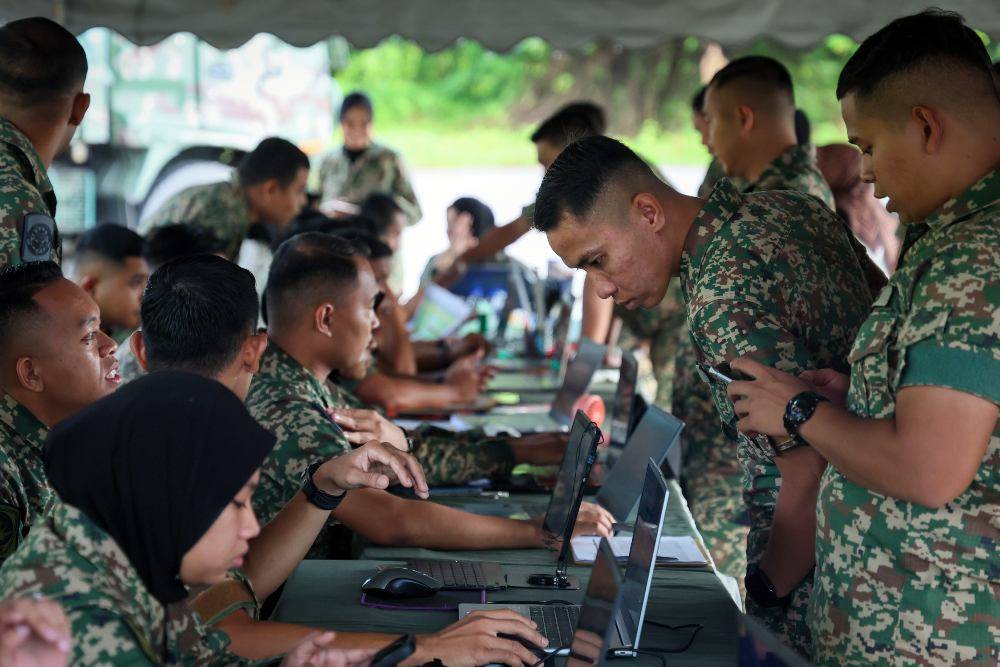
Today marks another phase of the election, with uniformed personnel casting their early votes ahead of polling day on November 14. Their ballots will be counted alongside those cast on Saturday.
But a quiet campaign does not necessarily mean voters are satisfied, just as a friendly reception does not mean a candidate has secured their support.
With 79 candidates contesting 28 seats, the battle is very much alive. What makes this election interesting is not simply the contest between political parties, but the different challenges each faces in winning over an electorate that may be reassessing old loyalties.
For Barisan Nasional (BN), the task is to defend its record. The coalition won 21 seats in the 2021 state election and is now seeking another mandate, this time working with Perikatan Nasional (PN) under the Muafakat Melaka arrangement.
Chief Minister Datuk Seri Ab Rauf Yusoh has claimed that his administration fulfilled 97 per cent of the promises made in BN’s previous manifesto.
That is a strong claim, but it also invites scrutiny. Voters will want to know what those promises have delivered in practical terms, from better roads and drainage to improved public services, jobs and opportunities for local communities.
For incumbents, past performance can be an asset. It can also become a liability when improvements have yet to reach the people who need them.
PN faces a different test. It must determine whether its supporters are willing to accept candidates from the other side of the political divide.
Cooperation between Umno and PAS at the leadership level does not automatically translate into support at the ballot box.
For Pakatan Harapan (PH), the challenge is to convince voters that it can offer a credible alternative. It won five seats in 2021 and is now contesting 24, with an ambitious target of expanding its presence in the state.
PH chairman Adly Zahari acknowledged that the coalition still has work to do. After assessing voters' responses and the strengths and weaknesses of its candidates, he said the next task was to convince voters to give the coalition their support.
That is perhaps one of the more telling remarks of the campaign. Introducing candidates and explaining policies are only the beginning. The harder task is turning recognition into confidence, and confidence into votes.
PH is also trying to reach beyond its traditional support base. Its candidates have been raising issues ranging from the cost of living and employment to housing, fishermen's welfare and environmental concerns.
The coalition also finds itself in an unusual political position. It is challenging BN in Melaka while sharing power with the same party at federal level. Voters may well ask what sets the two sides apart in the state and what a PH-led administration would do differently.
Then there is Bersama, which is fielding 16 candidates and combining grassroots engagement with livestreamed ceramah and reform pledges. Its presence adds another dimension to an already crowded contest, particularly among voters looking for alternatives to established political parties.
Smaller parties and independent candidates face an uphill battle. Without the machinery, funding and established networks of the larger coalitions, they must rely more heavily on personal relationships and local credibility.
There is also a generational challenge. Candidates are increasingly turning to TikTok, Facebook and livestreams to reach younger voters, but digital visibility does not necessarily translate into votes.
Some candidates have acknowledged the importance of social media while maintaining that direct engagement remains essential. Meeting residents, they say, allows them to hear concerns firsthand and understand what matters to their communities.
For voters, however, political manoeuvring matters less than everyday concerns.
The cost of living, employment, housing, traffic congestion, roads, drainage and flood mitigation remain pressing issues. Melaka's tourism ambitions and development plans must also translate into better livelihoods and opportunities for local communities.
The real test is whether the manifestos of the respective coalitions and parties offer practical answers, with clear commitments on funding, implementation and accountability, or simply another round of election promises.
BN, PH and PN are each trying to prove something different. BN wants voters to endorse its record, PH wants to establish itself as a credible alternative, while PN must show that political cooperation can translate into votes.
For now, candidates may be counting handshakes and encouraging responses. But the only count that matters is the one at the ballot box this Saturday. That is where the real mood of Melaka will be revealed.
Download Sinar Daily application.Click Here!