Political marriages, uneasy partners and voters: Melaka's 10 defining battles
From Umno's cooperation with PAS to Bersatu's separate contests, Saturday's results could expose the strengths and weaknesses of political realignment


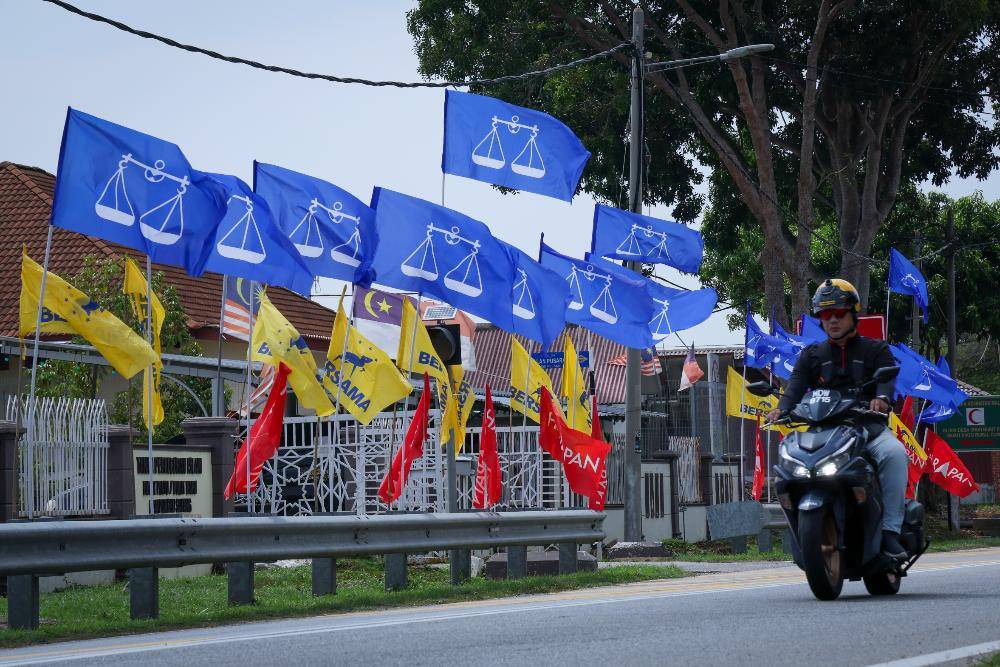
When Melaka voters head to the polls tomorrow (Saturday, Nov 14), the battle for the 28 state seats will offer more than a verdict on which coalition gets to govern the state.
It will also provide an insight into how much the political landscape has shifted since the last state election in 2021, particularly following the electoral cooperation between Barisan Nasional (BN) and Perikatan Nasional (PN), the emergence of Parti Bersama Malaysia (Bersama) and Bersatu's decision to contest separately in several constituencies.
While the overall seat count will determine who forms the next state government, the results in several closely watched constituencies could reveal much more about voter sentiment, party machinery and whether political arrangements negotiated at leadership level can translate into support at the ballot box.
Some contests involve prominent political figures, others feature multi-cornered fights that could produce unpredictable vote distribution, while several marginal seats will test the strength of party machinery and local support.
The 10 constituencies worth watching are:
1. Tanjung Bidara
Caretaker Chief Minister Datuk Seri Ab Rauf Yusoh's contest in Tanjung Bidara is arguably one of the most politically significant. He faces PKR's Mohd Yunazri Mustamiri in a straight fight, defending a seat he won by just 364 votes in 2021.
Beyond retaining his constituency, the result will be closely watched as an indication of Ab Rauf's personal standing and the effectiveness of BN's campaign machinery.
A larger majority would strengthen his position, while a close contest would invite questions about the extent of support for the state leadership.
2. Ayer Keroh
Ayer Keroh presents one of the more interesting four-cornered contests, involving incumbent DAP assemblyman Kerk Chee Yee, Gerakan's Michael Gan, Bersatu's Mohd Hamnaim Mohamad and Bersama's Muhaimin Lau.
With a mixed electorate comprising substantial Malay and Chinese communities, the constituency is an important test of DAP's ability to retain cross-community support.
The contest also provides an opportunity to assess Gerakan's appeal, Bersatu's position among Malay voters and whether Bersama can attract support from voters looking for an alternative.
3. Bukit Katil
Former chief minister and incumbent assemblyman Adly Zahari faces a four-cornered contest against PAS candidate Ridzuan Sarif, Bersama's Dr Aliza Che Amran and independent Abu Bakar Sabudin.
Adly retained the seat in 2021 with 41.6 per cent of the vote, in an election where the division of support among competing parties shaped the outcome.
This time, BN-PN cooperation changes the political scenario.
Can Adly's personal standing and constituency record withstand a more consolidated challenge, while Bersama's participation adds another dimension to the distribution of votes?
4. Paya Rumput
Paya Rumput is an important constituency for assessing whether BN-PN cooperation can work at grassroots level. PH's Datuk Azman Abidin, who is the political secretary to Prime Minister Datuk Seri Anwar Ibrahim, faces PAS candidate Rafie Ahmad and Bersama's Abdul Rashid Karimi.
Will traditional Umno supporters transfer their votes to a PAS candidate? Will PAS supporters reciprocate by backing BN candidates in other constituencies?
Azman’s performance will be closely watched as a test of PH's ability to win support beyond its traditional voter base.
5. Pengkalan Batu
With a previous majority of just 131 votes, Pengkalan Batu is among the constituencies where even a small shift in support could change the result. BN's Siti Aisyah Mahmood faces DAP's Jason Tze-Xi Nathan, Bersatu's Datuk Norhizam Hassan Baktee and Bersama's Goh Han.
The presence of Norhizam, a former assemblyman, adds a personal dimension to the contest, while the four-way competition makes the distribution of votes particularly difficult to assess.
6. Sungai Udang
Sungai Udang is another constituency worth monitoring, given its sizeable military and security personnel electorate. BN's Datuk Rais Yasin faces Bersatu's Major (Rtd) Abdullah Mahadi and Bersama's Ridzuan Rahman.
PN won the seat in 2021 with a majority of 530 votes. This time, BN will be looking to recover the constituency under a different political arrangement.
The result could offer clues about Bersatu's remaining electoral strength and BN's ability to rebuild support in an area with a distinctive voter profile.
7. Bemban
Bemban presents an unusual contest involving PN-Wawasan's Dr Yadzil Yaakub, Bersatu's Muhammad Rabaie, Bersama's Dr Solehin Saleh and independent Abd Halim Said.
The separation between Bersatu and the PN candidate makes this constituency particularly interesting.
The result will indicate whether Bersatu can retain support independently or whether its previous electoral strength was largely tied to its partnership with PAS and the wider PN machinery.
8. Serkam
Serkam recorded a winning margin of just 79 votes in 2021, making it another constituency where the result could be decided by a relatively small shift in support.
BN's Datuk Azman Abdullah faces PKR's Muhammad Faiq Azman and Bersama's Muhamad Saffie Md Yasan.
BN is seeking to defend the seat with a new candidate, while PH and Bersama will attempt to challenge its position.
The extent to which Bersama affects the distribution of votes could be an important factor.
9. Merlimau
Umno Youth chief Datuk Dr Muhamad Akmal Saleh's contest in Merlimau is among the more closely watched battles, given his national political profile and standing within Umno.
Akmal faces Amanah's Rahayu Hamzah in a straight fight, defending a seat he won comfortably in 2021 with a majority of 3,248 votes.
Beyond retaining his constituency, the result will offer an indication of whether Akmal's outspoken political positioning and appeal among Umno's grassroots translate into electoral support.
A convincing victory would reinforce his standing within the party and strengthen his political credentials, while a reduced majority could raise questions about whether his national profile has translated into broader voter appeal.
10. Duyong
Duyong is another constituency worth watching, particularly because of its narrow winning margin in the 2021 election.
BN incumbent Datuk Mohd Noor Helmy Abdul Halem faces DAP's Poo Long Suan in a straight fight, defending a seat he won by just 200 votes previously.
The constituency will test whether BN can consolidate its support under the new political arrangement, particularly among voters who may have reservations about its cooperation with PN.
For PH, the contest presents an opportunity to overturn a marginal seat and demonstrate that it can remain competitive against BN even without a multi-cornered contest.
The result could also provide an indication of whether BN's local machinery and incumbent advantage are sufficient to withstand a direct challenge from DAP.
Taken together, the 10 constituencies offer a useful snapshot of the competing political challenges.
Tanjung Bidara will test Ab Rauf's personal standing, while Merlimau will put Akmal’s political appeal under scrutiny. Ayer Keroh and Bukit Katil will reveal whether PH can defend its support base. Paya Rumput and Sungai Udang will provide an indication of whether BN-PN cooperation works beyond the leadership level, while Bemban will test Bersatu's ability to stand independently.
Pengkalan Batu, Serkam and Duyong, meanwhile, could demonstrate how smaller parties, marginal constituencies and multi-cornered contests influence the electoral arithmetic.
The election also carries implications beyond Melaka. Political parties will be examining the results for lessons on coalition cooperation, candidate selection, grassroots mobilisation and changing voter preferences ahead of the 16th General Election.
Ultimately, the seat count will determine who governs Melaka. But the margins, turnout and distribution of votes may tell a more revealing story.
The bigger question is whether voters will endorse a political arrangement negotiated by party leaders, or reject it at the ballot box. Saturday's results will show whether BN-PN cooperation is a workable electoral partnership in Melaka as it did in Negeri Sembilan, whether PH remains competitive and whether established parties can convince voters that they are still relevant to their concerns.
Download Sinar Daily application.Click Here!