Altantuya case: Mongolia makes four demands to Malaysia
Mongolia calls for fair court proceedings, fresh evidence to be examined and greater accountability nearly 20 years after her death
KOUSALYA SELVAM
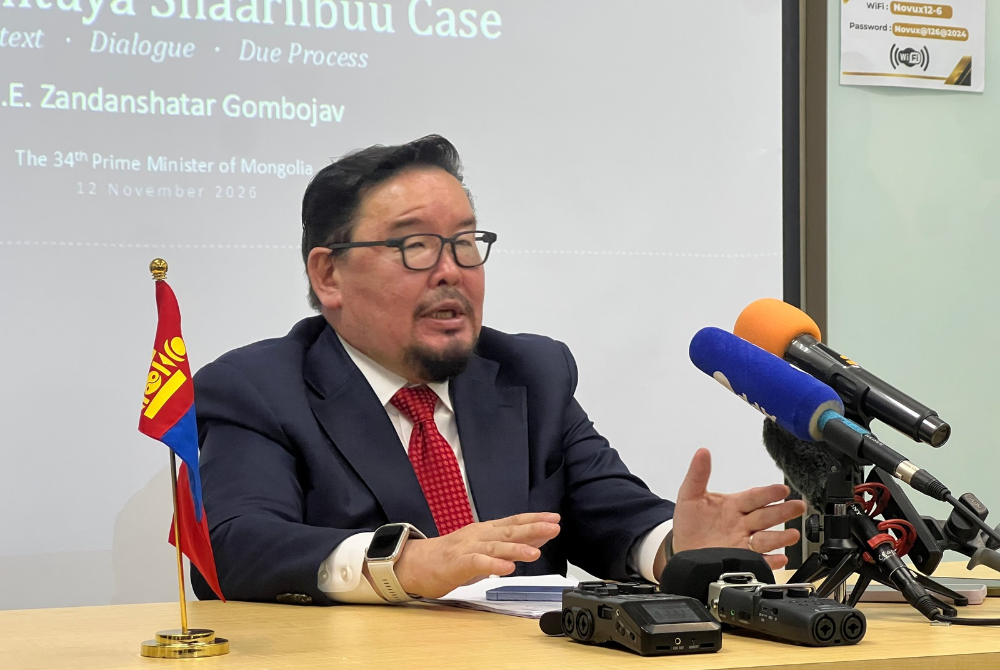
KUALA LUMPUR – Mongolia has made four formal demands to Malaysia over the murder of Mongolian national Altantuya Shaariibuu, including calls for fair court proceedings, the examination of new evidence and greater accountability in the case.
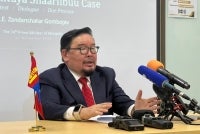
Former Mongolian Prime Minister Gombojavyn Zandanshatar said the requests had been conveyed through diplomatic and legal channels as Altantuya's family continued to seek answers nearly 20 years after her death.
The four demands include a fair and transparent hearing of the family's legal challenge against the Court of Appeal's decision, arrangements for convicted former police officer Sirul Azhar Umar to testify in the civil proceedings, prompt examination of new or previously unexamined evidence, and an official written update on the case.
Speaking to reporters, Zandanshatar said Mongolia wanted the family's challenge against the Court of Appeal's decision to be considered fairly and transparently, based on facts and without political or other external interference.
On Sirul, who is currently in Australia, he said Mongolia wanted lawful avenues for him to give evidence in the civil proceedings, alongside stronger dialogue between Malaysia and Australia on his possible return, the serving of his sentence and the possibility of obtaining his testimony.
However, he clarified that Mongolia was not seeking anyone's extradition.
"Mongolia does not seek anyone's extradition. Any arrangement for Sirul's return must comply with both countries' laws and include appropriate legal procedure and effective assurances against extradition," he said.
Zandanshatar also called for newly discovered or previously unexamined evidence to be examined promptly, with updates provided to Altantuya's family through their legal counsel.
The fourth demand was for an official written update on the proceedings and a substantive response to Mongolia's requests.
He said the family deserved clear information about what had been investigated, what decisions had been made and what steps would follow.
Despite raising the matter, Zandanshatar said Mongolia valued its friendship and partnership with Malaysia, stressing that the issue was being raised openly and respectfully.
"Mongolia and Malaysia are friends. We respect each other. We raise this matter openly and respectfully because we value that friendship," he said.
He added that a fair resolution was important not only to Altantuya's family but also to maintaining trust between the people of both countries.
Zandanshatar said Mongolia had pursued the matter through diplomatic and legal channels, with its Foreign Ministry delivering formal diplomatic demarches to Malaysian ambassadors in Bangkok and Beijing.
Mongolia does not have a resident embassy in Kuala Lumpur and has been handling diplomatic engagement through its missions in the two regional capitals.
Altantuya, 28, was murdered in Malaysia in October 2006. She was a mother of two young sons.
Two former police officers, Azilah Hadri and Sirul Azhar Umar, were convicted of her murder. Sirul later fled to Australia.
Her family subsequently filed a civil suit against several parties, including the Malaysian government, seeking accountability and compensation over her death.
On Dec 16, 2022, the Shah Alam High Court found the defendants liable and ordered them to jointly pay RM5 million in damages to the family.
However, on Jan 20, 2026, the Court of Appeal set aside the RM5 million award, reducing the damages to RM1.4 million. It also ruled that the government was not vicariously liable for Altantuya's death, as the two former police officers had acted outside the scope of their duties.
Altantuya's family subsequently filed an application for leave to appeal to the Federal Court against the Court of Appeal's decision. The hearing was rescheduled to Oct 27, 2026.
Zandanshatar said the family had spent years pursuing justice while dealing with grief and unanswered questions.
He also referred to the family's concerns over how relevant evidence and accounts had been investigated, saying their requests for information deserved clear responses.
"Altantuya can no longer speak for herself. That is why we must continue to speak for her dignity and her family's lawful rights," he said.
Download Sinar Daily application.Click Here!