Taking shelter under trees during thunderstorms can be dangerous. So, where is it safe?
Former Sarawak Fire and Rescue Department director Khirudin Drahman shares common shelter mistakes and safety tips to protect yourself from lightning strikes
YASMIN ROSLI
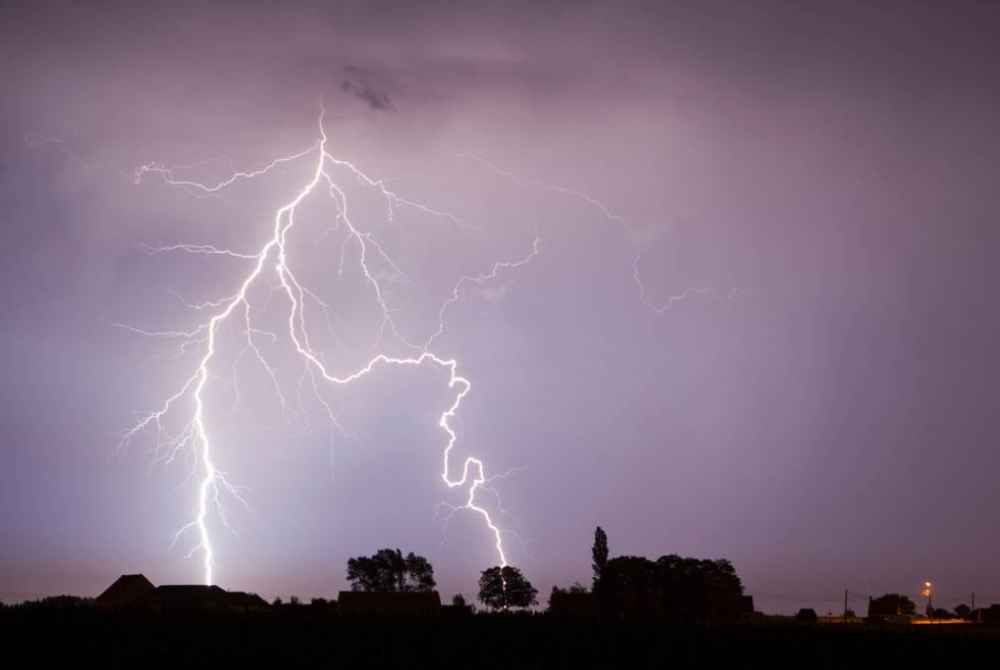
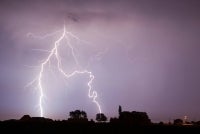
A SUDDEN downpour may send people rushing for shelter under the nearest tree or roadside shelter, but doing so during a thunderstorm could put them at greater risk of being struck by lightning.
Former Sarawak Fire and Rescue Department director Datuk Khirudin Drahman, now principal director of fire engineering consultancy firm SSL Borneo, said he had encountered several lightning-related incidents during his service, including cases that resulted in fatalities.
He recalled an incident involving four boys who had gathered under a tree during heavy rain before being struck by lightning.
In another incident, six people were killed when lightning struck a football field while they were playing.
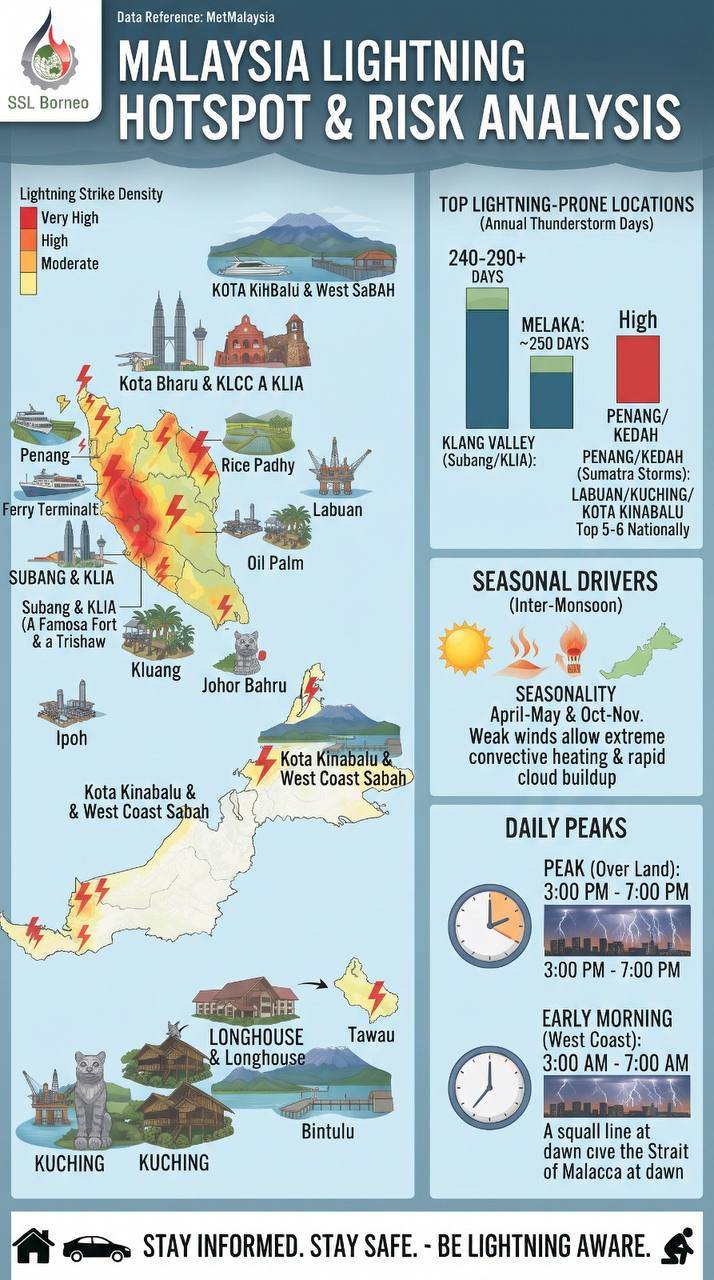
Khirudin said Malaysia recorded an average of 180 to 260 thunderstorm days annually, based on a METMalaysia journal.
He identified the Klang Valley and several locations along the west coast of Peninsular Malaysia, including Melaka, Penang, particularly Bayan Lepas, Kedah, Ipoh and Kluang, as areas with significant lightning activity.
In East Malaysia, he highlighted Labuan, Kuching and the west coast of Sabah, where coastal conditions and sea breezes could contribute to thunderstorm activity.
Why trees are dangerous during thunderstorms
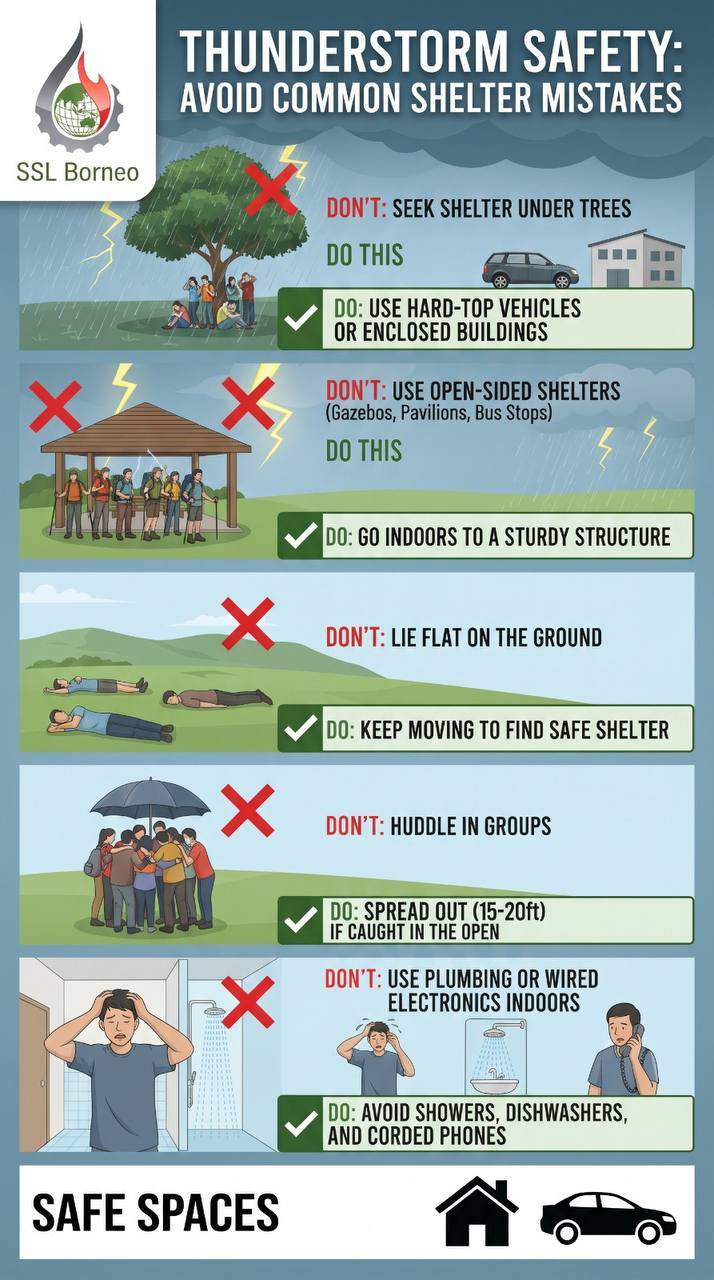
Khirudin said seeking shelter under trees, particularly tall or isolated ones, was among the common mistakes people made during thunderstorms.
He said lightning tended to strike prominent objects in exposed areas, making trees dangerous places to seek shelter.
Open-sided shelters, particularly those without proper walls, electrical wiring or plumbing, were also unsuitable.
He warned against taking shelter in tents and open-air campers, as they offered little protection from lightning. Wet fabrics could also carry electrical currents along the ground.
Gathering closely in groups was another risk, as people could be exposed to the same dangerous ground currents during a lightning strike.
He also advised against lying flat on the ground, as electrical currents from lightning could travel across the surface.
Where to find safe shelter
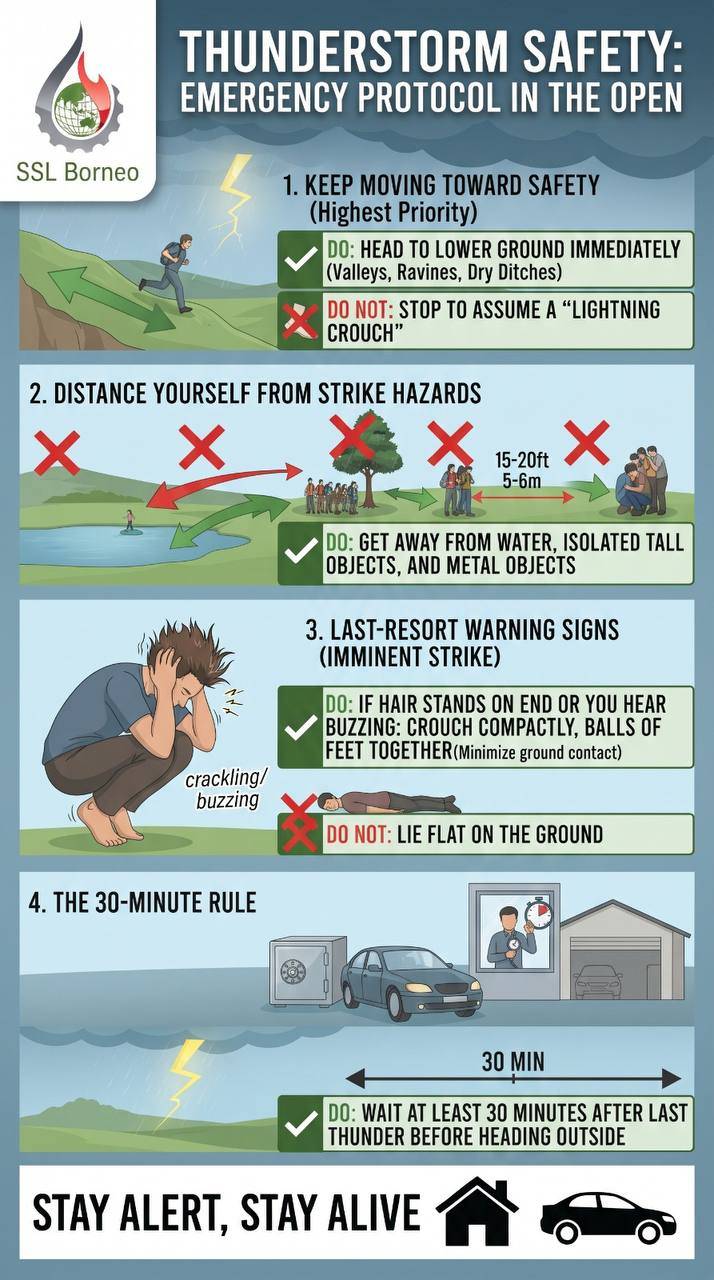
For those caught in open areas such as fields, beaches or paddy fields without proper shelter nearby, Khirudin said they should move towards a safer location while staying away from exposed areas and potential lightning strike hazards.
He advised the public to seek shelter in fully enclosed buildings with proper electrical wiring and plumbing.
Those inside buildings should stay away from windows and doors, avoid contact with concrete walls and refrain from showering or using wired electrical appliances during thunderstorms.
For those seeking shelter in vehicles, he recommended hard-topped vehicles with all windows closed.
He also advised occupants to avoid touching metal frames or using electrical devices connected to chargers while inside the vehicle.

When is it safe to go outdoors again?
Khirudin stressed the importance of observing the 30-minute rule before resuming outdoor activities.
He advised the public to wait at least 30 minutes after hearing the last thunder before going outside again.
Check weather updates before heading outdoors
Khirudin said lightning activity was commonly recorded between 3pm and 7pm, while April to May and October to November were periods when the public should remain cautious.
He said weak winds and intense daytime heating could contribute to rapid cloud formation, increasing the risk of thunderstorms.
Those planning outdoor activities such as fishing, hiking, camping and playing football should check weather reports and understand the conditions at their intended destinations before setting out.
Khirudin recommended several platforms for monitoring approaching thunderstorms and lightning activity, including the MyCuaca mobile application, which provides location-based push notifications, as well as METMalaysia's official portal and social media channels.
The public could also refer to global real-time lightning maps to monitor lightning activity.
For critical operations involving petrochemicals, aviation and utilities, he highlighted specialised monitoring systems such as myMETdata and the TNB Research Lightning Detection Network.
He advised people to identify the nearest suitable shelter before starting outdoor activities rather than wait until a thunderstorm arrived before deciding where to go.
Download Sinar Daily application.Click Here!