Trump's Gaza control proposal: A new chapter in US foreign policy or neo-colonialism?
Critics argue that the future of Gaza should be guided by Palestinian self-determination, among other key factors.


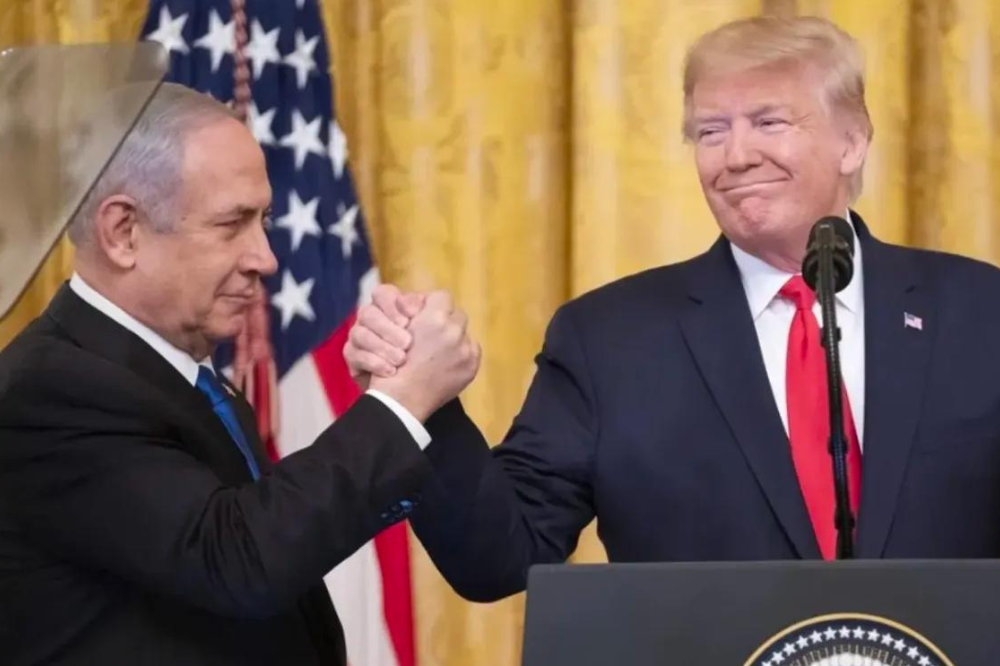
SHAH ALAM - Donald Trump’s recent proposal for the United States to take control of Gaza, following the widespread destruction caused by Israel's actions under Prime Minister Benjamin Netanyahu, has sparked strong opposition from world leaders and international organisations, including Malaysia.
Critics argue that the future of Gaza should be guided by Palestinian self-determination, among other key factors.
Trump’s foreign policy has often been shaped by economic and strategic interests and his intention to reclaim Gaza—potentially using American military forces—raises concerns that such a move would primarily serve US interests, not the Palestinians.
Many critics warn that this could escalate violence in the region.
The proposal has also been widely condemned as a violation of international law and Palestinian sovereignty.
Trump reportedly justified the plan by stating that Washington’s control over Gaza would facilitate reconstruction efforts following Israel’s military campaign.
However, this rationale has failed to convince critics, who see the proposal as further encroachment on Palestinian land.
Another point of contention is Trump’s statement about permanently relocating Palestinians.
If Palestinians are coerced into leaving their homeland and are then denied the right to return, this would amount to forced displacement, which prolongs the actions of Israel and breaches international law, according to critics.
International Reactions
Middle Eastern and Islamic Nations
- Malaysia: The Malaysian government has firmly rejected Trump’s proposal, asserting that Palestinians have the right to remain in their homeland. Malaysia stands by a two-state solution and urges the international community to oppose unilateral actions that threaten Palestinian sovereignty.
- Egypt and Jordan: As key players in Middle Eastern peace efforts, both nations denounced Trump’s plan. Their leaders stressed the importance of resolving the Palestinian issue through international law and ensuring Palestinian self-determination.
- Turkiye: President Recep Tayyip Erdoğan condemned Trump’s statement, warning that any attempt to take control of Gaza would only increase tensions in the region.
Western and European Reactions
- United Kingdom, France and Germany: These European nations rejected Trump’s proposal, reaffirming their support for a negotiated two-state solution as the best path to peace.
- United Nations (UN) and European Union (EU): Both institutions reiterated that Gaza is an integral part of Palestine and any attempt to forcibly remove its people would violate international law.
Malaysia’s Stance and Domestic Response
Prime Minister Datuk Seri Anwar Ibrahim reiterated Malaysia’s stance, aligning with other Muslim-majority nations in rejecting Trump’s proposal. Malaysia has long been a staunch advocate for Palestinian rights and opposes foreign intervention in Gaza.
Experts have pointed out that the US proposal prioritises business interests over genuine reconstruction efforts.
The Malaysian Consultative Council of Islamic Organisations (Mapim) described Trump’s remarks as neo-colonialism under the guise of support, calling on the UN and the Organisation of Islamic Cooperation (OIC) to take immediate action against the plan.
Download Sinar Daily application.Click Here!


