Diagnosed with autism at 20, now a PhD holder: Dr Chai Jing Yun is breaking barriers
She opens up about her journey, from what led her to seek a diagnosis to how she navigates life and career with newfound self-awareness.
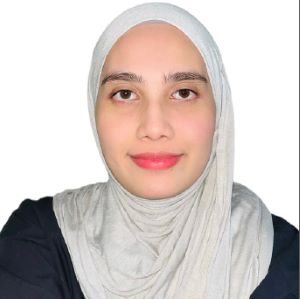


Who says autism is a barrier to success? Meet Dr Chai Jing Yun—a PhD holder who’s proving that neurodivergence is no obstacle to academic and professional excellence.
Diagnosed with autism at 20, a relatively late age within the ASD community, Chai has been defying expectations ever since. She opens up about her journey, from what led her to seek a diagnosis to how she navigates life and career with newfound self-awareness.
Studies show that many people go undiagnosed with autism, often at the expense of their physical and mental well-being. Chai was nearly one of them but fortunately a school counselor, recognising the deeper issue at play, referred her to a psychiatrist.
After multiple assessments, she was initially suspected of having Asperger’s syndrome—a term once used in the ASD community but now phased out. Eventually, she received an official autism diagnosis.
However, acceptance didn’t come easy. For over two years, she wrestled with denial, unable to fully embrace her neurodivergence. It wasn’t until she connected with other autistic individuals and recognized her own symptoms in them that she finally made peace with her diagnosis.
Today, Chai, now 33, is thriving—no longer in denial, but fully attuned to what she, as an autistic person truly needs, rather than conforming to neurotypical expectations. Her story is a powerful reminder that many people diagnosed with mental conditions struggle with acceptance. But knowledge is key—learning about one’s condition can be the turning point in finding self-acceptance, proper support, and a path forward.
Another challenge that she faced during her phase of diagnosis for autism was sharing the result with others. She said that it took over six years to openly share her diagnosis and began her self-advocacy journey shortly after.
"I only disclosed my diagnosis when absolutely necessary, such as when seeking university accommodations," Chai said.
She emphasised the importance of understanding the condition that has affected someone, especially autism, because it "has allowed me to understand myself better—especially my strengths, challenges, and ways to cope or ask for help," she said.
"I've also become more open to accepting things I can't control," she added, suggesting that, as an autistic person, not everything would be within control, as other conditions allow people to be, such as having medication to treat anxiety.
Commenting on the negative aspects of late diagnosis, she said being diagnosed early would have prevented someone from suffering during childhood due to the lack of support for their behaviour. For Chai, she had selective mutism growing up.
"Looking back, I would have preferred an earlier diagnosis. Growing up, I suffered a lot, particularly due to childhood trauma and the lack of support for my selective mutism," she specifically said.
However, she noted that autism was not widely understood before, and there were no appropriate interventions as there are now, preventing parents or teachers from fully grasping the impact of not carrying them out for affected people.
"I don't think any parents or teachers at the time would have fully grasped the immense sensory stress experienced by a seven-year-old girl in a large primary school, especially one who couldn’t express her fear and trauma because she herself was confused and lost," Chai shared.
She advised early diagnosis for people who are struggling with something in their lives because of their behaviour.
If something feels not quite right, I would encourage them to consider seeking a diagnosis. It can offer clarity and provide a sense of direction, guiding them towards the right people and support," she said.
However, Chai acknowledges that not everyone may be ready for a diagnosis—just as she once struggled with hers—and, in some cases, “not everyone necessarily needs one.”
She explained that she knows adults who, despite being diagnosed, didn’t find it particularly helpful. The reality is that autism support remains fragmented and underfunded, leaving many in the community without adequate resources. Financial constraints and limited access to specialists also mean that some people simply cannot afford a diagnosis or the necessary support that follows.
When asked whether getting an autism diagnosis is easier today, she admitted that significant challenges remain. Beyond autism, she pointed out that many other conditions—such as anxiety, depression, and personality disorders—often go undiagnosed as well.
Chai highlighted several key barriers to early diagnosis, including a lack of awareness, diagnostic bias, limited accessibility, high costs, and the persistent stigma surrounding mental health and neurodiversity. These factors, she emphasized, continue to prevent countless individuals from receiving the recognition and support they deserve.
Clarifying the autism condition, she said that someone does not typically develop autism later in life but rather it is a lifelong neurodevelopmental condition.
"Some people may only recognise their autistic traits in adulthood, leading to late diagnosis. They would mask or adjust themselves to fit societal expectations prior to diagnosis," she said.
Upon adjusting to the diagnosis during the early phase, she said that the kind of support that helped her came from medical professionals, psychiatrists, and therapists, though some of them were unfamiliar with autism in adults.
"Their willingness to learn and adapt their approach made a tremendous difference in my journey. They are the people who advocated for me when I was at my lowest and completely lost," she added.
"I was also fortunate to have structured support during my university years. Not everyone has that privilege, which is why broader societal acceptance of autism and professional training are so important," she said.
Upon diagnosis, too, she said that she was able to understand her needs and limitations, which taught her to set boundaries, especially in social situations that might expose her to overwhelming sensory stimuli.
She said that in the past, she would usually struggle with social events or certain sights, sounds, and crowds, but understanding her condition allows her to plan accordingly and pace herself, which is something that she has been consistently learning.
"I also use practical aids like earplugs to help manage sensory overload, and I drive my car so that I always have a safe place to retreat to if things become too overwhelming. These strategies help me feel more in control and less stressed in my daily life," she added.
MAKING FRIENDS
Chai said that connecting with people with a similar condition has helped her reach an "unspoken understanding."
"We don't expect forced small talk, we communicate directly, and we respect each other's sensory needs. We have chat groups where I can share moments, like crying over something that might seem small to others, and find similar experiences without judgment.
"We also bond over our shared interests, such as Lego, plushies, and Disney. However, not all autistic people will relate to each other in the same way, as each person’s experience, needs, and preferences can be different," she said.
"With neurotypical friends, it can sometimes be more difficult for me to explain my needs and experiences than it is for a neurotypical person. There’s often a level of misunderstanding, and I have to put in more effort to bridge that gap.
"But when neurotypical people are willing to listen and learn, the connection can be just as strong," she added.
ADDRESSING STIGMAS
Chai said that autistic people often receive the stigma of not being able to handle stress or pressure well, as they are "too sensitive or fragile." However, she said that it is not true, and although they have to handle stress differently, people don't have to feel like they are walking on eggshells when talking to them.
"Also, being autistic doesn’t mean we reject every social event. Instead, we prefer to select and plan our social activities based on our comfort levels and capacity at that time.
"It’s important that people let us decide how and when to engage socially, rather than making assumptions about our preferences and excluding us from events right away," she said.
She added that another harmful stereotype was the belief that autistic individuals could not grasp leadership and could not be influential leaders or hold high managerial positions because they were poor at communication and social interaction.
"This misconception often leads to us not being given the chance to demonstrate our leadership abilities. It’s incredibly frustrating when people assume we can’t contribute and don’t give us the opportunity to prove otherwise," she said.
When talking about how different levels of autism on the spectrum affect them, she said that this distinction does not help or oversimplify autism.
"Terms like “mild” or “high-functioning” are unhelpful and oversimplify autism," she said, adding that many from the ASD community would avoid these labels because they failed to capture the full range of abilities and challenges a person might experience.
"It's more useful to discuss specific needs and strengths, rather than reducing people to levels. For example, I often hear people say I am “high-functioning” or that I only “suffer” from mild autism. However, they don’t see the struggles I face with basic executive functioning, which they would consider ‘low-functioning.’
"Calling me ‘high-functioning’ or ‘mild’ undermines the real need I have for certain services and support and dismisses my struggles," she said.
She added that personally knowing many autistic individuals who were non-speaking but highly expressive in other ways made her develop that perspective.
"I, too, experience situations where I shut down and become non-speaking. Instead of using labels like 'high-functioning' or 'mild,' it's better to describe an autistic person’s specific needs and abilities—or simply refer to them as 'autistic,'" she said.
Being identified as an autistic adult who holds a full-time job, she would still require support with social communication, especially when verbalising her opinions, and appreciates being prepared before any changes to events.
LOOKING AHEAD
"Life post-diagnosis has been both easier and more challenging," Chai said.
Despite understanding her condition better and being able to advocate for her needs, she said that the challenges of understanding also include unlearning years of internalised ableism and masking prior to diagnosis. "The more I read and learn, the more I realise how much I don’t know," the medical bioscience PhD holder said.
She emphasised that the understanding of autism—its ideology, models, terminology, and evidence-based approaches—continues to evolve, especially as more autistic voices are being heard and research expands.
"This means that even as autistic individuals, we constantly have to unlearn and relearn. Identifying as autistic and disclosing my diagnosis also comes with the responsibility of advocating for myself, whether in university or the workplace. I believe the 1990s might be among the first pioneers of autistic self-advocacy in modern workplaces and families," she said.
"Looking ahead, I see myself continuing my advocacy work, with a particular focus on building a more inclusive workplace, as that is the phase of life I am currently navigating," she said, emphasising the importance of creating an inclusive workplace for autistic individuals.
She hopes to see a more unified autistic community in Malaysia—not one that is divided by late-diagnosed adults, parents, different levels of support needs, or neurodivergent subgroups, but rather a collective that advocates for neurodiversity as a whole.
"Just as we accept diversity in race and religion without ranking one above the other, I hope for a future where neurodiversity is embraced with the same level of respect and inclusion," she concluded.
Download Sinar Daily application.Click Here!