House arrest for Najib "a matter of when, not if," says political experts
The analyst from University of Tasmania's Asia Institute attributed this impending move to "too strong" pressure from Umno grassroots.


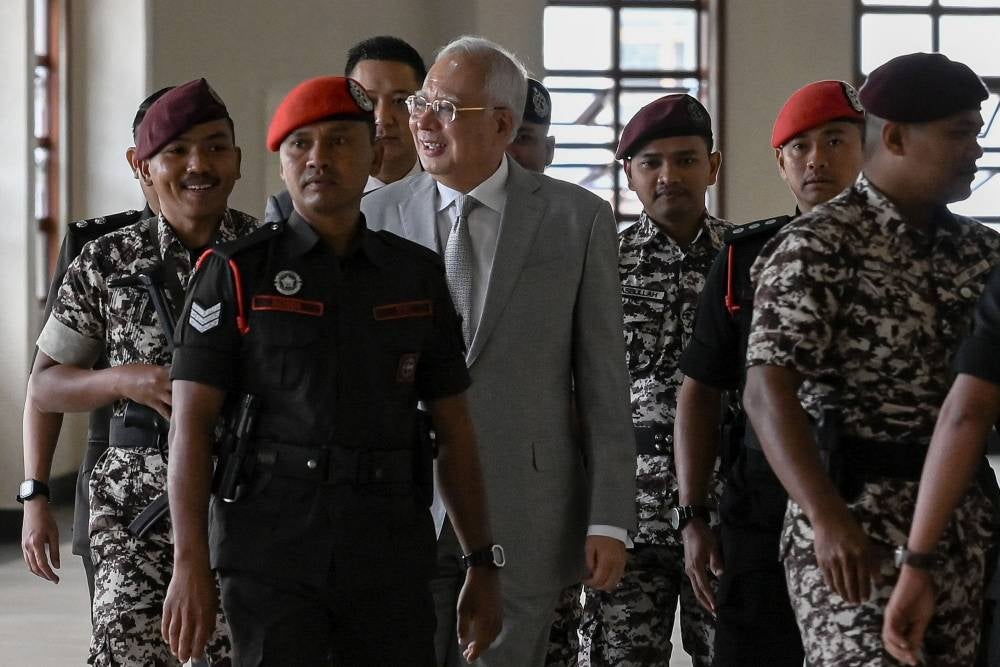
SHAH ALAM – The possibility of former prime minister Datuk Seri Najib Razak being granted house arrest is a matter of "when, not if" and is likely to occur next year once he has served a sufficient portion of his sentence, according to political analyst James Chin.
The analyst from University of Tasmania's Asia Institute attributed this impending move to "too strong" pressure from Umno grassroots.
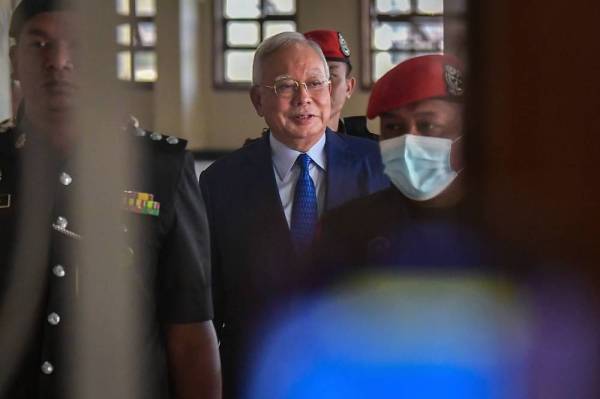
Chin said the shift towards house arrest could be traced to the former king, Al-Sultan Abdullah Ri’ayatuddin Al-Mustafa Billah Shah's, addendum to Najib’s royal pardon.
"Yes, it will happen, when it will happen is a different issue, but it will happen, probably next year, when Najib has served the required minimum time before eligibility for house arrest. It will happen because the pressure from Umno grassroots is too strong," he told Sinar Daily.
Chin warned that the political consequences could be significant, as many Pakatan Harapan supporters and Malaysians concerned about the 1Malaysia Development Berhad (1MDB) scandal are likely to view the move as evidence of preferential treatment for Najib.
"Pakatan Harapan supporters and those who are very concerned about 1MDB will see this as a very negative move because it will be perceived as Najib being given special treatment,” he said.
He added that Prime Minister Datuk Seri Anwar Ibrahim would likely deflect blame.
“Anwar will say this is out of his hands, that it was the decision of the former King.
"Once you invoke the King’s name, it becomes challenging for people to criticise without it being seen as seditious," he said.
Chin also stated that while Najib’s case could be raised during the upcoming Sabah state election, it is unlikely to be a decisive factor.
“The major issue in Sabah is still the ‘Sabah for Sabahans’ sentiment,” he said.
Meanwhile, political analyst Associate Prof Dr Syaza Shukri offered a more cautious take, suggesting that Najib’s release remains politically risky for the government.
“I don’t think the government would allow his release because there would be many angry Malaysians.
"Those calling for Najib’s release are only Umno members and supporters. They don’t represent the entire country, but they are using political pressure,” she said.
She added that any decision would require the consent of the Yang di-Pertuan Agong and adherence to due process.
“If they allow Najib’s release, it would be political suicide for PH. Their supporters will be furious. And if he is released, Perikatan Nasional (PN) will use it as evidence that PH is not serious about fighting corruption,” she said.
Commenting further, O2 Research head Anis Anwar said the speculation places Anwar in a politically delicate position.
He said any decision related to Najib’s sentence will have to balance two equally high-stakes calculations.
"On one hand, there is the need to preserve the fragile cooperation with Umno, a key pillar of the unity government.
"On the other hand, there is the risk of alienating Pakatan Harapan's own voter base, many of whom have held firm expectations around judicial accountability and institutional reform since GE14," he said.
Anis stressed that the government’s best strategy is to frame any leniency towards Najib as a legal or constitutional obligation, rather than a political concession.
“If this framing works, Umno can claim institutional vindication while PH can maintain its stance that it was merely upholding due process.
"Until this pathway is available, the government will delay any final decision, allowing legal institutions to absorb political pressure,” he added.
Download Sinar Daily application.Click Here!


