What is 'Bloquons tout'? The new grassroots movement paralysing France
The nationwide protests, which targeted transport, schools and major roads, came just days after Prime Minister François Bayrou announced drastic austerity plans and subsequently resigned.


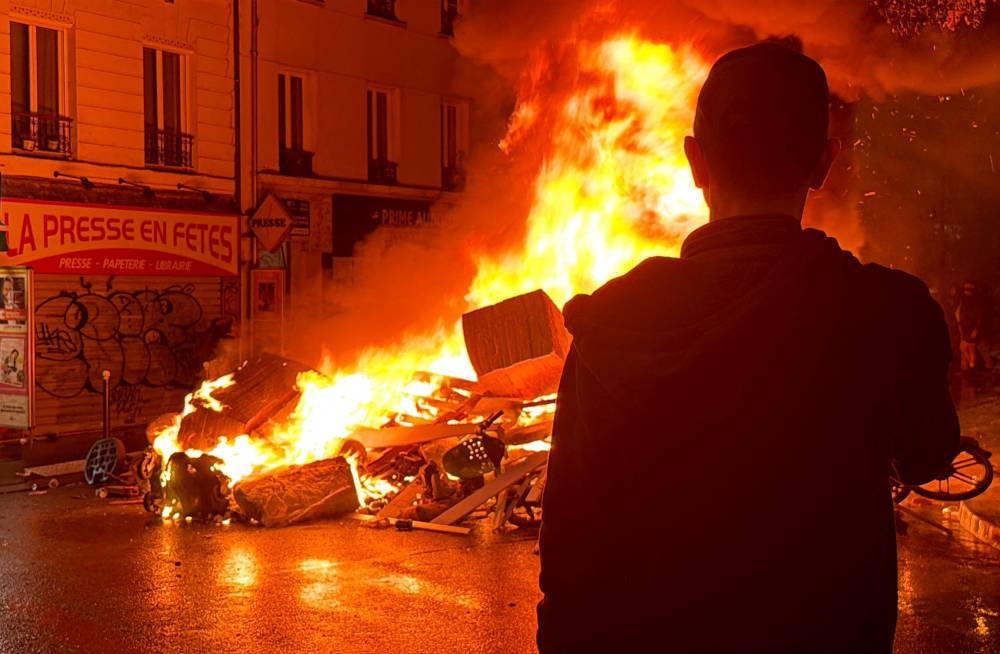
FRANCE is facing another round of upheaval as a viral grassroots campaign called “Bloquons Tout” (“Block Everything”) spilled into the streets on Sept 10.
The nationwide protests, which targeted transport, schools and major roads, came just days after Prime Minister François Bayrou announced drastic austerity plans and subsequently resigned.
The unrest was triggered by Bayrou’s 2026 budget plan, which aimed to cut €43.8 billion from the national budget.
Among the most controversial measures were proposals to eliminate two national holidays, freeze pensions, and reduce health care funding. Bayrou’s plan was unveiled against a backdrop of high inflation and mounting public frustration over living standards.
The "Bloquons Tout" campaign first surfaced on social media in May and steadily gained support over the summer.
It was a leaderless protest wave calling for nationwide civil disobedience against the government's austerity measures.
Unlike the more structured Yellow Vests demonstrations of 2018, this movement lacked formal leadership but had still drawn widespread participation.
The pressure from public discontent mounted until Bayrou resigned, paving the way for Defence Minister Sébastien Lecornu to take over as prime minister.
The resignation came just two days after Bayrou had called for a parliamentary confidence vote.
According to the Interior Ministry, about 200,000 people joined demonstrations across France, while the CGT union estimated turnout at more than 250,000.
Outgoing Interior Minister Bruno Retailleau reported that nearly 200 arrests were made nationwide, including 132 in the Paris region.
He also accused "the far-left movement" of having "confiscated" what had begun as a grassroots online mobilisation.
Authorities deployed 80,000 police and gendarmes, including 6,000 in Paris.
Protesters attempted to block train stations, highways, schools and public spaces.
In Paris, rubbish bins were set alight, barricades were built and tram tracks were blocked, particularly around Porte de Montreuil.
Police used tear gas to disperse demonstrators near Gare du Nord, one of Europe’s busiest train stations and also closed entrances as crowds tried to force their way inside.
Tensions ran high around Place du Châtelet and Place des Fêtes, though these areas remained relatively calm compared to other flashpoints.
The SNCF rail operator confirmed that two acts of sabotage disrupted train services.
Cable damage between Marmande and Agen delayed travel between Bordeaux and Toulouse, while another incident near Toulouse cut off service between Saint-Cyprien and Colomiers.
Roads were also blocked near Rennes, Nantes, Poitiers and Aix-en-Provence.
In Lille, demonstrators obstructed the A1 motorway, while the Confédération Paysanne agricultural union used tractors to block highways, including the A20 near Chambéry, Bourges and Albi.
Despite the clashes, public sympathy remained significant.
An Ipsos poll found that 46 per cent of French people supported the "Bloquons Tout" campaign, including many left-wing voters but also more than half of far-right National Rally supporters.
The protests had therefore drawn together a wide political spectrum united by frustration with austerity.
The Sept 10 demonstrations were not enough to bring France to a complete standstill, but they did expose the depth of discontent as the country transitioned from Bayrou’s short-lived government to Lecornu’s leadership.
With unions planning larger strikes on Sept 18, France was on the verge of a prolonged confrontation reminiscent of earlier protest waves.
The question then was whether "Bloquons Tout" would fade as a viral outburst or develop into a sustained challenge to the political establishment.
Download Sinar Daily application.Click Here!


