From May 15 to Oct 7: What the media failed to tell us
To Palestinians, Oct 7 was not an isolated act, nor the start of a tragedy.
REVDA SELVER
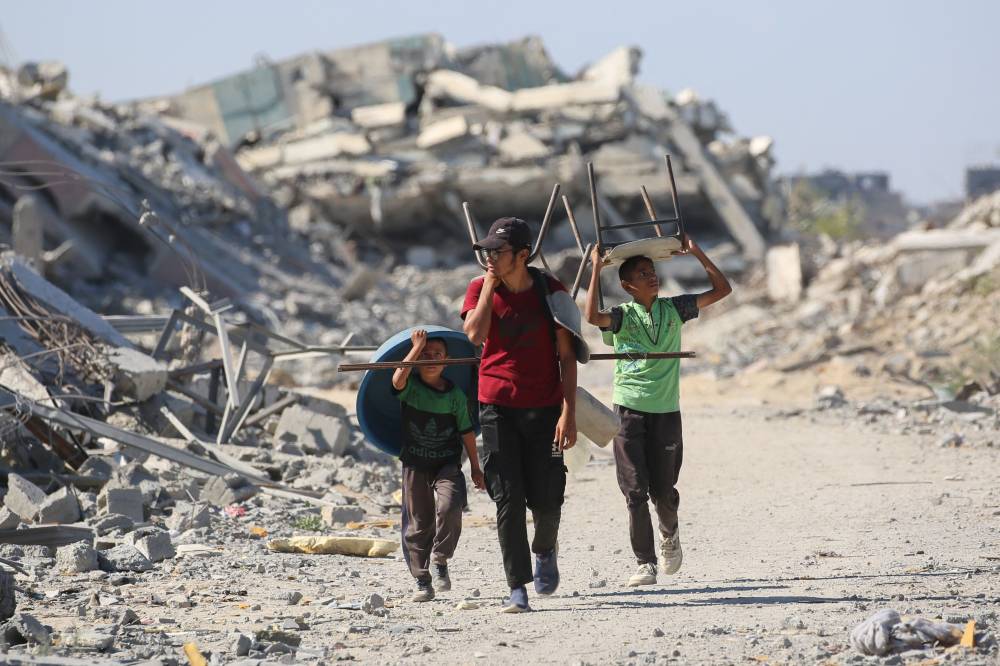
The story of Palestine did not start on Oct 7, 2023 - it began on May 15, 1948, and it continues till today.
Beyond the Myth of Beginnings
For much of the world, Oct 7, 2023, has been framed as the day violence in Gaza began as if history itself started that morning. This narrow framing, repeated in headlines and official statements, erases more than seven decades of dispossession, massacres, and resistance that define the Palestinian experience.
To Palestinians, Oct 7 was not an isolated act, nor the start of a tragedy; it was a rupture that shattered political myths, exposed long-suppressed truths, and forced the world to confront the reality of occupation.
It was a day that rebalanced narratives, revealing both the fragility of Israel’s power and the strength of Palestinian perseverance.
The Historical Continuum: From Deir Yassin to Gaza
The events of Oct 7 belong to a continuum that stretches back to 1948 the year of the Nakbah. The massacres at Deir Yassin, Abu Shusha, Tantura, Lydda, Saliha, Al-Dawayima, and others marked the systematic cleansing of Palestinian villages. Each massacre was not an aberration but part of a deliberate colonial project of erasure and domination.
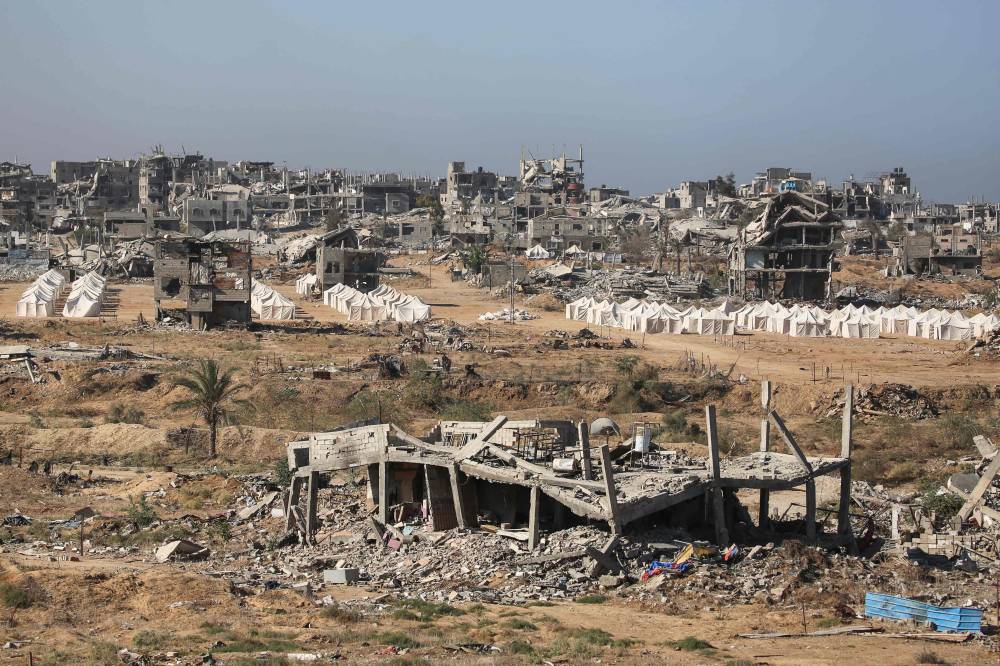
The decades that followed from Qibya (1953) and Kafr Qasim (1956) to Sabra and Shatila (1982) and the Ibrahimi Mosque (1994) — reveal an unbroken pattern of Israeli violence.
The Gaza wars of 2008, 2012, 2014 and 2021, and the repression of peaceful protesters during the Great March of Return (2018–19), are continuations of that same policy of collective punishment.
Oct 7 cannot be understood apart from this history. It was a manifestation of a people’s enduring struggle under decades of siege, occupation, and systemic dehumanization.
The Political Outcomes of Oct 7
1. The Collapse of the “Invincible Army” Myth
For decades, Israel cultivated the image of an undefeatable army; technologically superior, strategically flawless and morally upright. October 7 dismantled that illusion.
The sudden breach of the Gaza barrier exposed deep structural failures in Israel’s intelligence, military command and sense of control. It proved that no amount of military dominance can secure a system built on injustice.
2. The Exposure of Israeli Crimes
In its declared “response,” Israel unleashed one of the most brutal campaigns of collective punishment in modern history. Entire neighbourhoods, hospitals, schools, and refugee camps were bombed.
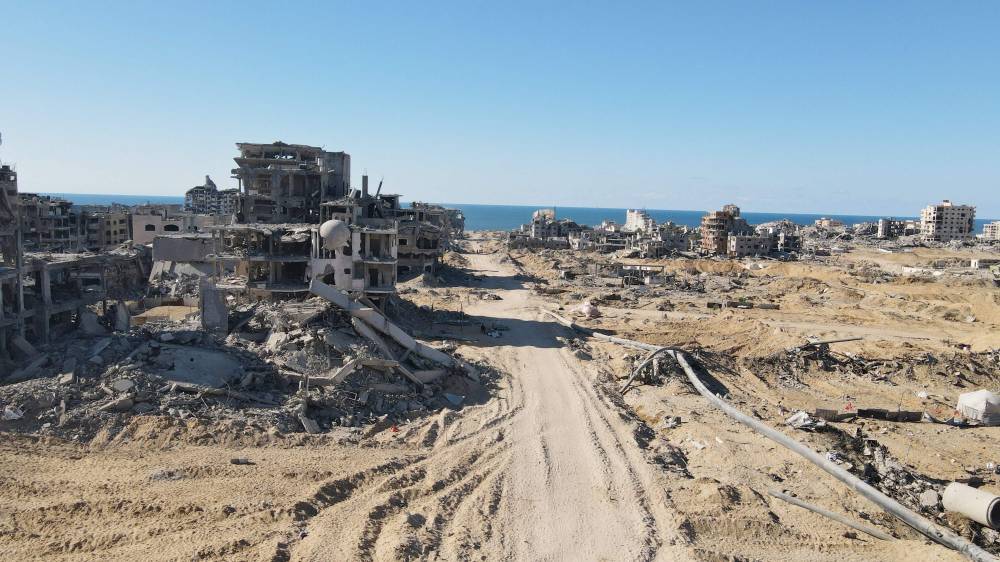
Journalists, doctors and children were killed in unprecedented numbers. The world witnessed what Palestinians had long endured; a state that operates with impunity, weaponizing suffering under the pretext of self-defence.
3. The Global Empathy and Solidarity Movement
What followed was a moral awakening. Millions across continents marched for Gaza, demanding a ceasefire and an end to occupation. From Kuala Lumpur to Johannesburg, London to New York, the Palestinian cause re-emerged not as a regional issue but as a global moral compass.
4. Diplomatic and Political Isolation of Israel
The scale of Israel’s aggression created diplomatic consequences. Countries in the Global South and even some in Europe began distancing themselves from the Israeli narrative.
This shift was visible on the world stage: delegations walked out during Prime Minister Benjamin Netanyahu’s speech at the United Nations, a symbolic act of protest against Israel’s ongoing atrocities.
Meanwhile, Netanyahu himself took a significantly longer flight route to New York for the UN General Assembly, deliberately avoiding the airspace of several European countries.
Flight-tracking data showed his plane following the Mediterranean route rather than the more direct continental path, a stark illustration of Israel’s growing diplomatic isolation. Once unchallenged in Western capitals, Israel now faces mounting scepticism and calls for accountability.
5. The Wave of Recognition of the Palestinian State
The months that followed saw a historic shift: several European nations, including Spain, Norway, and Ireland, officially recognised the State of Palestine.
Today, the State of Palestine is recognized as a sovereign nation by 157 UN member states, representing 81 percent of the international community. This marks not only a diplomatic but a symbolic shift: the world’s rejection of Israel’s monopoly on truth and legitimacy.
6. The Exposure of Western Media Complicity
If Oct 7 shattered Israel’s myth of invincibility, it also dismantled the illusion of Western journalistic objectivity. Western media engaged in a four-stage process of propaganda that revealed more about their biases than Gaza’s realities.
First came disinformation and misleading content — typified by viral yet unverified claims such as “Hamas beheaded 40 babies,” amplified by Fox News, CNN, and The New York Post, later proven false.
Even The Times of London misused photographs of Palestinian children to evoke sympathy for Israeli victims, turning misinformation into emotional manipulation.
Second, outlets created pre-attack legitimacy — framing Israel’s aggression as “self-defence.” The BBC and others repeated unfounded claims that hospitals and schools were used as “Hamas tunnels,” conveniently justifying bombings before they even occurred. This rhetorical groundwork normalised what international law defines as war crimes.
Third, came the dehumanisation of one side’s victims. Western coverage humanized Israeli victims with names and stories, while Palestinians were reduced to mere numbers. This asymmetry — portraying one side’s suffering as personal and the other’s as abstract — subtly legitimised mass killing.
Fourth was the shadowing of the perpetrator. Linguistic bias became a moral weapon: Israelis were “killed,” Palestinians merely “died.” Israeli strikes became “blasts” or “explosions.” Even when journalists were targeted, responsibility was blurred behind passive phrases like “an army statement expressed regret.”
Through this systematic framing, Western media sanitized Israeli crimes and shaped public perception in favour of the oppressor.
Yet amid this information warfare, a multivocal counter-narrative emerged. Independent platforms such as Anadolu Agency and Al Jazeera exposed fabricated claims and documented on-the-ground atrocities.
On social media, Gazans themselves became self-journalists capturing bombings, loss, and survival in real time. Their courage pierced the blackout Israel tried to impose by cutting telecommunications during its most intense bombardments.
This citizen-led journalism, amplified globally forceing the world to confront unfiltered truth. It proved that no censorship or propaganda can silence a people determined to testify to their own suffering.
A Personal Reflection: Witnessing the Battle of Narratives
As a media practitioner from the Global South, this past year has been a lesson in information warfare. The battle over truth has been as fierce as the one on the ground. Each image, headline, and word carries political weight. What we witnessed was not only a military assault on Gaza but a global campaign to control perception.
Yet the Palestinian narrative has emerged stronger. Despite censorship and disinformation, it is now Palestinians; journalists, survivors, and ordinary citizens who are telling their own story. The silence has finally been broken.
To understand Oct 7 is to recognise it not as a beginning, but as a breaking point in a century-long struggle for liberation. The tragedy that followed exposed the moral bankruptcy of those who equate colonization with security and resistance with terror.
If the world learned anything since that day, it is that truth cannot be bombed into silence.
The Palestinian struggle is not a reaction to a single event; it is the ongoing pursuit of dignity, justice and freedom. A struggle that began long before Oct 7 and one that will continue until Palestine is free.
Revda Selver is Friends of Palestine Public Relation and Media Executive. The views expressed in this article are his own and do not necessarily reflect those of Sinar Daily.
Download Sinar Daily application.Click Here!


