World #QuranConvention: Majority of world population controls only a fraction of global wealth - Expert
A small fraction of the population holds a disproportionate share of global assets, investments and capital markets.


KUALA LUMPUR – Around 80 per cent of the world’s population controls just six per cent of the estimated RM916.6 trillion global wealth, highlighting the widening economic inequality across the globe.
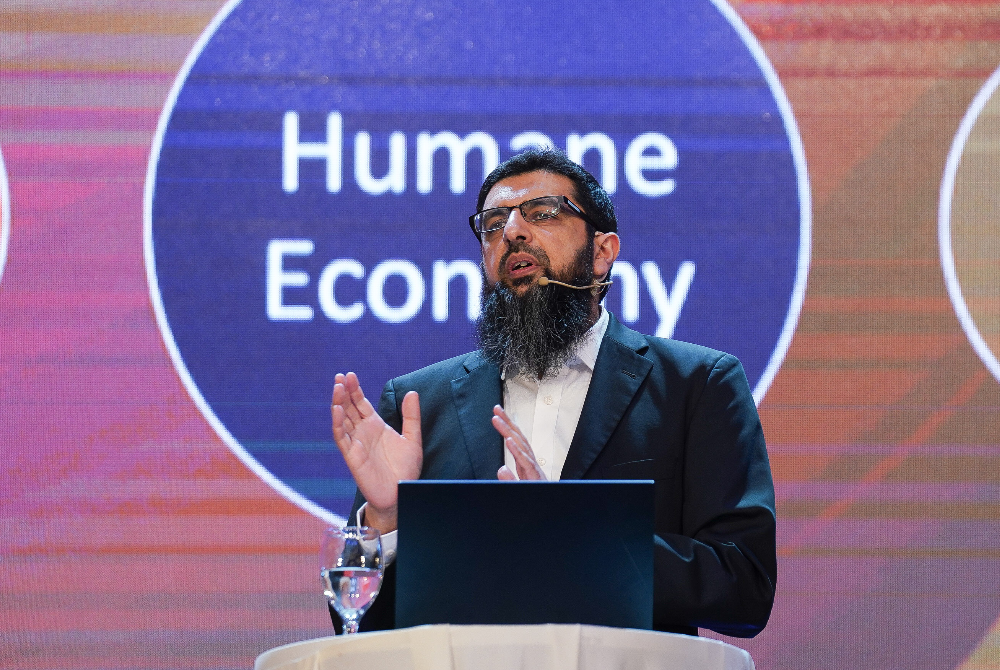
Oxford Intellect chief executive Dr Imran Alvi said this economic disparity has expanded due to shifts in market structures and wealth concentration among the elite.
He explained that a small fraction of the population holds a disproportionate share of global assets, investments and capital markets.
“Only one per cent of the elite own 43 per cent of the world’s wealth. This means 300 individuals possess more wealth than three billion people,” he said.
Imran said this during the Economy Based on Humanity: A New Paradigm keynote session, at the World #QuranConvention 2025 held at the Perdana Hall, Ministry of Investment, Trade and Industry, on Saturday.
He added that the gap between countries has also widened historically when examining global economic development.
“Two hundred years ago, elite nations were only three times wealthier than poorer countries. By the end of the colonial era, this gap had increased to 35 times and today it has soared to 80 times,” he said.
Imran emphasised that a human-centred economic approach must be instilled within Islamic communities to create a more just and prosperous society while addressing global wealth imbalances.
“To build a humane economy, we must cultivate individuals with human values such as ethics, morality, courage and fairness.
“We must focus on the time spent developing character. Without investing time, we cannot nurture human-centred individuals,” he said.
Download Sinar Daily application.Click Here!