Parents express caution over voluntary early school entry
While the policy offers flexibility, many parents expressed concerns that their children may not be emotionally ready, lack foundational literacy skills, or struggle to adapt to the rigours of a formal school environment.


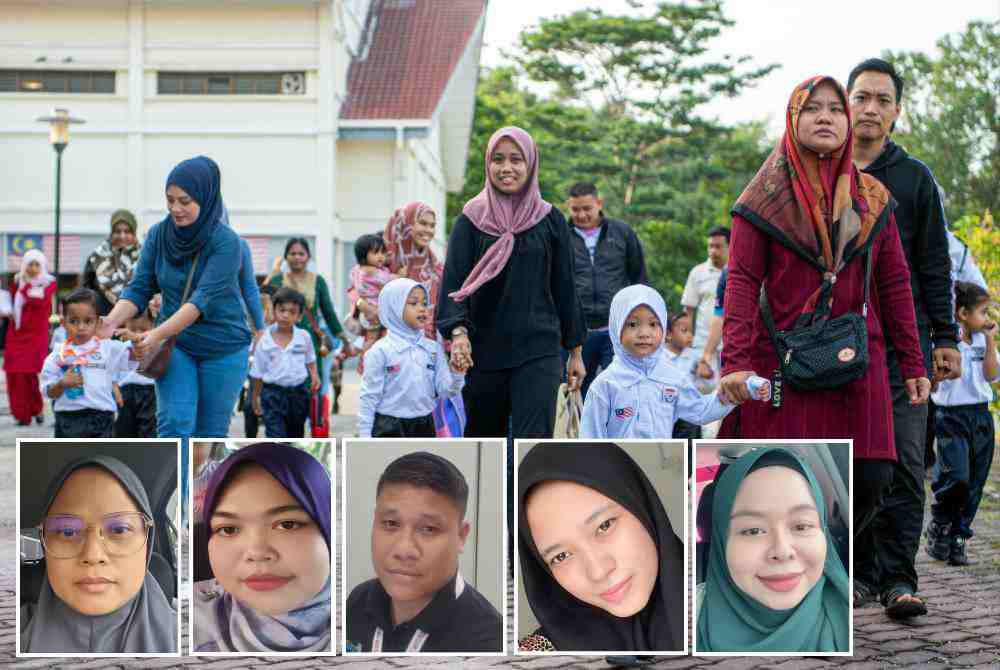
PUTRAJAYA – The implementation of a new policy allowing six-year-old children to voluntarily enter Year One starting in 2027 has drawn cautious and varied reactions from parents across the country.
While the policy offers flexibility, many parents expressed concerns that their children may not be emotionally ready, lack foundational literacy skills, or struggle to adapt to the rigours of a formal school environment.
Connie S. Moncal, a 42-year-old housewife, stated that her child has only just begun kindergarten and remains in the early stages of socialisation.
“My child is only just learning how to socialise, cannot really read yet and even going to school still involves a lot of ‘drama’. Within a year, I do not believe my child could adapt to the Year One environment. I myself am not ready either,” she said.
Siti Nuraim Mohd Asri, 40, a Kafa (Al-Quran and Fardu Ain) teacher, echoed these sentiments, stressing that emotional development and communication skills are vital prerequisites for primary education.
She highlighted that her own child requires additional guidance due to speech delays.
“My child still needs time. Emotional and communication issues will pose a significant challenge when entering the formal school system,” she added.
Private-sector worker Zulfahimi Roslan, 41, warned that early entry without mastering the "3Rs"—reading, writing and arithmetic—could lead to students falling behind and place undue pressure on educators.
“We do not want to rush it. If the basics are not strong, children will struggle to follow lessons. Based on our child’s current performance, we would choose not to enrol them early,” he said.
Other parents raised concerns regarding the existing strain on the national education system. Hafizah Holid, 27, argued that the Education Ministry must first address the shortage of classrooms and teachers.
“Some schools already have to accommodate 40 to 50 pupils in a single Year One class, with some even running split sessions.
“Handling the current intake is already challenging; the situation will only be compounded if six-year-olds are added to the mix,” she said.
In contrast, 36-year-old Nur Hafiza Md Zulkifli viewed the policy as a "double-edged sword".
While acknowledging the logistical hurdles, she agreed that the move could reduce the financial burden on parents and provide advanced children with an earlier start to their formal education.
The debate follows an announcement by Prime Minister Datuk Seri Anwar Ibrahim on Tuesday, stating that parents may register their children for Year One as early as age six beginning in 2027.
Speaking at the launch of the National Education Plan 2026–2035, the Tambun MP also stated that children as young as five may be registered for preschool.
However, an educator who declined to be named expressed concern over classroom overcrowding and the ability of younger children to manage their personal needs.
The teacher advised parents to assess their children’s true developmental readiness rather than making a decision based solely on saving on kindergarten fees.
Download Sinar Daily application.Click Here!