The invisible economy that holds Malaysia together
Unpaid care work sustains families and the nation, yet women who step away from paid employment remain economically unprotected and unseen.


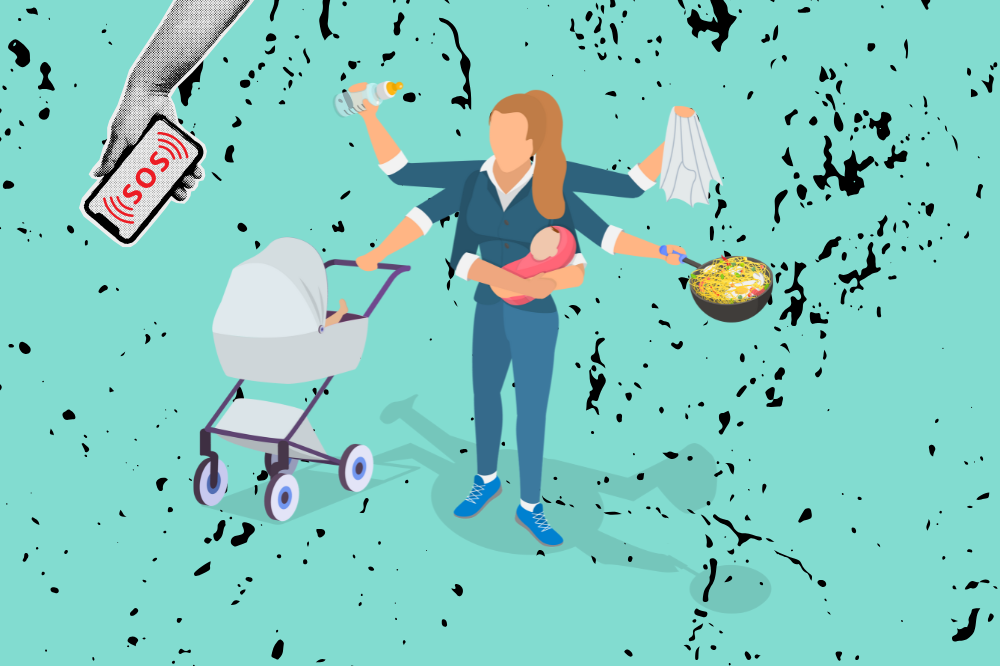
IN Malaysia, the decision to prioritise family above profession is most often than not a personal choice. Many women leave paid work to raise children, care for elderly parents, support disabled family members and manage households.
Their effort provides for families, communities and the economy as a whole, yet it is generally invisible.
This is Malaysia’s invisible economy: unpaid care work that keeps society functioning while offering little recognition, protection or long-term security to those who perform it.
Caregiving is not inactivity. It is productive labour that replaces market services such as childcare, eldercare, nursing and domestic management.
International estimates suggest unpaid care work contributes between 10 per cent and 40 per cent of Gross Domestic Product if monetised. But it it treated as an economic non-event, it does not appear in the calculations or formal employment statistics.
This blind spot leaves women who take on caregiving roles economically exposed and socially overlooked.
The consequences are real and long-lasting. Years spent outside the workforce do not count toward retirement savings or social security. Malaysia has no comprehensive caregiver allowance, pension credit or income protection for homemakers.
Financial dependence on spouses becomes common, reducing women’s decision-making power within households and increasing vulnerability in cases of divorce, widowhood or sudden economic shock.
What is portrayed as a "choice" frequently results in a lifelong financial penalty.
While the Ministry of Women, Family, and Community Development has taken steps to alleviate some of these issues through the Malaysia Care Economy Strategic Framework and Action Plan 2026-2030 and its Program Perantisan Kepimpinan Wanita (PERANTIS), these fall short of bridging the fundamental economic gap faced by women who choose to leave paid employment to care for children.
Current policy frameworks continue to treat caregiving as temporary, private, or cost-free. It is none of these.
Other countries have begun recognising care work as an economic pillar rather than a personal sacrifice. Scandinavian nations, Germany and Canada provide pension credits or social security coverage for caregivers, alongside heavily subsidised or universal childcare.
Countries such as Albania have introduced targeted measures to reduce unpaid labour burdens and protect women’s economic autonomy during caregiving years. These policies reflect a simple truth: societies that rely on unpaid care must also insure those who provide it.
Here, unpaid care work is largely excluded from economic planning, budgetary decisions and labour policy. By removing it from national accounts, the country undervalues both women's contributions and the true cost of supporting households and communities. Policies based on limited data eventually provide insufficient protection.
Addressing this invisible economy necessitates pragmatic solutions. Caregiver pension credits would allow homemakers to accumulate retirement savings during caregiving years.
A modest monthly caregiving allowance would recognise child-rearing and eldercare as socially valuable labour. Expanded access to affordable, high-quality childcare and eldercare would give women genuine flexibility — not just to work, but to return when they choose.
Reskilling and re-entry programmes must also be improved to ensure that caregiving interruptions do not permanently derail professional chances.
Equally important, unpaid care work should be regularly quantified and included in national statistics to ensure that economic planning is based on lived reality rather than obsolete beliefs.
However, policy alone is not sufficient. Cultural recognition matters. Caregiving should not be framed as a retreat from ambition or productivity.
Women who prioritise family care are not opting out of contribution; they are performing work that underpins the labour market itself.
True gender equity does not require that all women remain continuously employed — it requires that no woman is penalised for choosing otherwise.
Women who hold families together are quietly sustaining the nation’s social and economic foundations. Making their work visible is not charity. It is sound economic policy.
Download Sinar Daily application.Click Here!