Stay, go or reinvent? Pas meeting could decide Bersatu’s future in PN
Decision on Bersatu's position may reshape the opposition and confirm Pas as the coalition's dominant force
SHARIFAH SHAHIRAH

FOR once, the biggest political question this week is not about another public spat or fiery speech.
It is about what happens behind closed doors at Pas' Central Working Committee meeting tomorrow night.
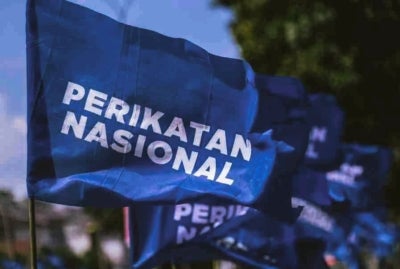
The meeting is expected to determine whether Bersatu remains part of Perikatan Nasional (PN), a decision that could reshape the opposition coalition and redefine the balance of power within it.
It is understood that Pas has already consulted PN's other component parties, Gerakan and MIPP, ahead of the meeting. Under the coalition's structure, the removal of any component party requires the support of a majority of its members.
The timing is significant. Just last week, Pas president Tan Sri Abdul Hadi Awang announced the termination of the party's political cooperation with Bersatu, fuelling speculation about the future of their relationship.
Whatever the outcome, the implications are likely to extend far beyond the meeting room. The opposition landscape may not look the same afterwards.
For years, PN functioned on a relatively straightforward arrangement. PAS supplied grassroots strength, ideological clarity and a loyal support base. Bersatu provided national leadership, government experience and a prime ministerial candidate.
That balance, however, appears to be shifting.
Political analyst Anis Anwar Suhaimi believes Pas has emerged as the coalition's undisputed centre of gravity, while Bersatu is increasingly being forced to reconsider its role.
According to him, Bersatu faces three broad options: remain within PN and adapt to Pas' dominance, leave the coalition and chart an independent course, or reinvent itself by expanding beyond its current political identity.
The first option may be the most practical.
Bersatu could remain within PN while accepting a reduced role and negotiating a new position within the coalition. Such a move would allow the party to continue benefiting from the PN brand, which remains a significant electoral force heading into the 16th General Election (GE16).
Rather than competing directly with Pas for influence, Bersatu may decide that accommodation is preferable to confrontation.
The second option - leaving PN - would be far riskier.
A formal split could fragment opposition votes and weaken both parties. Bersatu would lose access to Pas' extensive grassroots machinery, while Pas could find it more difficult to broaden its appeal beyond its traditional support base.
In such a scenario, the greatest beneficiary may not be either party, but Barisan Nasional (BN), which could exploit a divided opposition and strengthen its position in key battleground constituencies.
The third option is perhaps the most ambitious.
Bersatu could use the current crisis as an opportunity to reinvent itself by reaching beyond its existing support base and developing a broader national appeal. However, such a transformation would require time, resources and leadership clarity — all of which may be difficult to secure in the current political environment.
Political analyst Oh Ei Sun believes the more telling development is not the dispute itself, but PAS' growing confidence within PN.
He points to the party's decision to retain Datuk Seri Hamzah Zainudin as Opposition Leader rather than replacing him with one of its own leaders.
The move suggests Pas is comfortable exercising influence without necessarily occupying every top position. At the same time, it signals that the party increasingly sees itself as the coalition's leading force.
To Oh, the decision reinforces the view that PN is not collapsing but evolving into a coalition in which PAS increasingly calls the shots.
For voters, particularly younger Malaysians, the issue extends beyond the relationship between Pas and Bersatu.
What matters is whether the opposition can offer a coherent alternative and a clear sense of direction. Political alliances can change and party relationships can evolve, but prolonged uncertainty risks creating voter fatigue and undermining public confidence.
The question facing Bersatu is therefore larger than whether it remains in PN.
It is whether the party can remain relevant in a coalition that no longer revolves around it.
Tomorrow night's meeting may not provide all the answers. But it could confirm a reality that has been emerging for some time: if PN moves forward, it is likely to do so with Pas firmly in the driver's seat.
Download Sinar Daily application.Click Here!