A costly 20-year adventure, but will “naughty” Beasley still have his way?
The next phase requires a coach measured by outcomes and timelines, not reverence.
ARNAZ M. KHAIRUL
FOR nearly two decades, one name has come to define Malaysian track cycling - Mohd Azizulhasni Awang.
It was in June 2006 that a 16-year-old Azizulhasni was handed a do-or-die mission to save his fledgling career at the Asian Junior Cycling Championships that September.
The assignment came after his expulsion from the National Sports Council (NSC) pelapis programme over a disciplinary breach, later held pending appeal.
Azizul was, by his own early reputation, a “naughty kid”.
In truth, that was not unusual at the time. Many young cyclists were products of the rough “mosquito bike” scene on Malaysian streets, where talent and trouble often coexisted.
Azizul himself was first spotted by the late Rozimi Omar drifting through backlanes in Dungun on a skateboard or his late father’s battered bicycle before being shaped into a promising junior rider.
Back then, the cycling community understood that naughtiness often came with raw potential and tried to channel it rather than discard it.
Thanks to national junior coaches Datuk Ng Joo Ngan and So’ud Hussain, who persuaded the Malaysian National Cycling Federation (MNCF) and NSC to grant him a final chance, Azizul was allowed to race at the Asian Junior Championships.
He delivered emphatically, becoming the first rider to complete a sprint treble of keirin, sprint and 1km time trial at the continental meet.
From that moment, Malaysia believed it had produced a world-class sprinter through its own system. The pride was immediate.
That history matters because barely a year later, those same local coaches stepped aside to make way for Australian John Beasley, first as elite squad coach, and eventually as head coach of the national programme.
Beasley had earlier worked with Josiah Ng after his split from Mark Whitehead.
Under Beasley, the elite squad was relocated to Melbourne - a costly arrangement approved by NSC, justified by Malaysia’s lack of an indoor velodrome and elite training infrastructure at the time.
Azizul joined the elite set-up in 2007 and quickly rose to become the nation’s leading sprinter, overtaking Josiah and qualifying for the 2008 Beijing Olympics. He was joined by riders such as Rizal Tisin, Edrus Yunos and Junaidi Nasir, all products of the earlier local system.
As medals began to arrive through World Cups, Commonwealth Games and Asian Games, belief grew that even greater success was possible.
Yet the local system - often now described as non-existent before Beasley - continued to produce talent. Syamil Baharum, for instance, replicated Azizul’s junior sprint treble in 2008 before eventually quitting after failing to secure a place in Beasley’s Melbourne setup.
Others came and went in similar fashion over the following decade.
Beasley’s arrival did coincide with a transformation in Malaysian cycling, particularly in funding and structure. Government investment surged, with the elite track programme becoming one of the biggest recipients of high-performance funding across Olympic sports.
Sources estimate that more than RM100 million has been channelled into the programme under his tenure since 2009 - unprecedented in Malaysian Olympic sport.
Beasley repeatedly stressed that success required investment, and investment followed.
Results came too: Azizul secured World Championship silver in 2009, multiple podiums across six editions, and a historic keirin gold in 2017. Olympic medals followed - bronze in 2016 and silver in 2020 - cementing him as Malaysia’s greatest cyclist.
Beasley was widely credited for this success, and funding continued to grow in pursuit of Olympic gold.
He was also regarded as a father figure within the squad and later claimed permanent residency in Malaysia, signalling long-term commitment.
But questions over succession were rarely addressed. As Azizul neared the end of his career, no rider emerged to match his level, aside from Shah Firdaus Sahrom and Fadhil Zonis, who have yet to make the expected leap despite years in the programme.
Still, Beasley’s reputation remained largely unchallenged. Some media even dubbed him the “Father of Malaysian Track Cycling” - a label that overlooks a much longer history dating back to the 1930s and Malaysia’s Olympic participation in 1964.
Even after turning 60, the typical retirement threshold under NSC terms, he was retained through the MNCF as technical director, with NSC still funding his salary.
It should be noted that the track programme has long been jointly managed by NSC and MNCF, while other cycling disciplines fall under MNCF’s full control.
MNCF, in effect, made significant concessions to retain him.
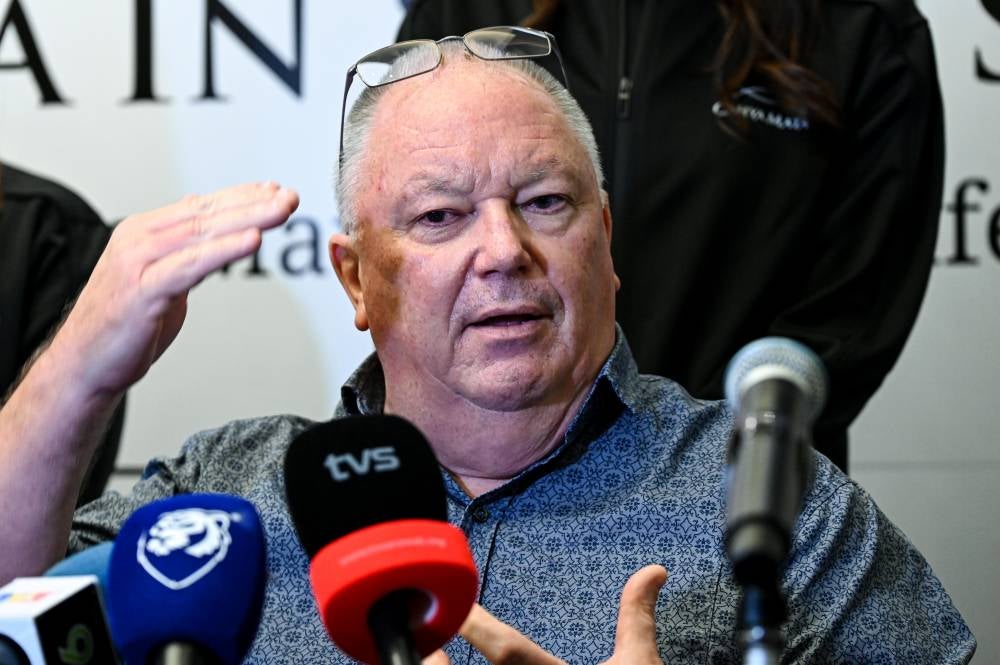
However, the relationship now appears strained. Last week, Beasley announced his impending departure after the Asian Games in October, while airing frustrations over internal politics in Malaysian cycling.
He accused officials, state associations, and unnamed coaches of undermining his leadership, describing some as behaving like “naughty little kids”.
He also criticised state bodies for refusing to release riders for the World Junior Championships in favour of the Malaysia Games, calling the decision selfish.
The remarks were widely supported on social media, where many agreed that Malaysian sport is often undermined by politics.
However, sources familiar with the system suggest the disagreements are not unusual and have been managed before, particularly given the Malaysia Games’ role in athlete development at state level.
Beasley also pointed to weak grassroots infrastructure, an area that has seen limited investment, as most funding has gone to elite track cycling.
Azizul himself warned of difficult times ahead should Beasley leave.
But a more measured view raises a harder question: what has 20 years of Beasley’s leadership, and over RM100 million in investment, actually produced beyond Azizulhasni Awang? The long-promised succession line has yet to materialise. The Olympic gold target has shifted from realistic to remote as Azizul nears retirement.
Ultimately, the programme still depends on a rider identified and developed before the bulk of Beasley’s era - refined by earlier local coaches, then elevated under his tenure.
At some point, the uncomfortable question becomes unavoidable: what exactly has Beasley produced? In the pursuit of success, accountability was often overlooked. The system invested heavily, trusted deeply, and questioned too little.
Expectations for successors should arguably have been enforced a decade ago. Instead, Beasley became increasingly central - and increasingly untouchable.
Now he appears set to leave, not only without clear answers on succession, but while publicly criticising the very system that sustained him.
Where does Malaysian cycling go from here? In a structure still short on accountability, certainty is elusive.
Beasley’s departure - if final - should at least open the door to leadership renewal under the NSC.
The next phase requires a coach measured by outcomes and timelines, not reverence.
Yet a return to the status quo also remains possible. His comments may simply trigger another round of negotiations, assurances, and renewed funding.
Such is the politics of Malaysian sport.
Arnaz M. Khairul is a sportswriter, media consultant and former South East Asia representative of the International Association of Cycling Journalists (AIJC). The views expressed in this article are the author's own and do not necessarily reflect those of Sinar Daily.
Download Sinar Daily application.Click Here!