Political truce fragile: Analysts see last-minute PN logo consensus as election strategy
Political analysts view the last-minute consensus as a fragile arrangement held together by electoral necessity rather than genuine unity, despite all component parties agreeing to contest under a single name and official logo ahead of today's candidate announcement in Muar.

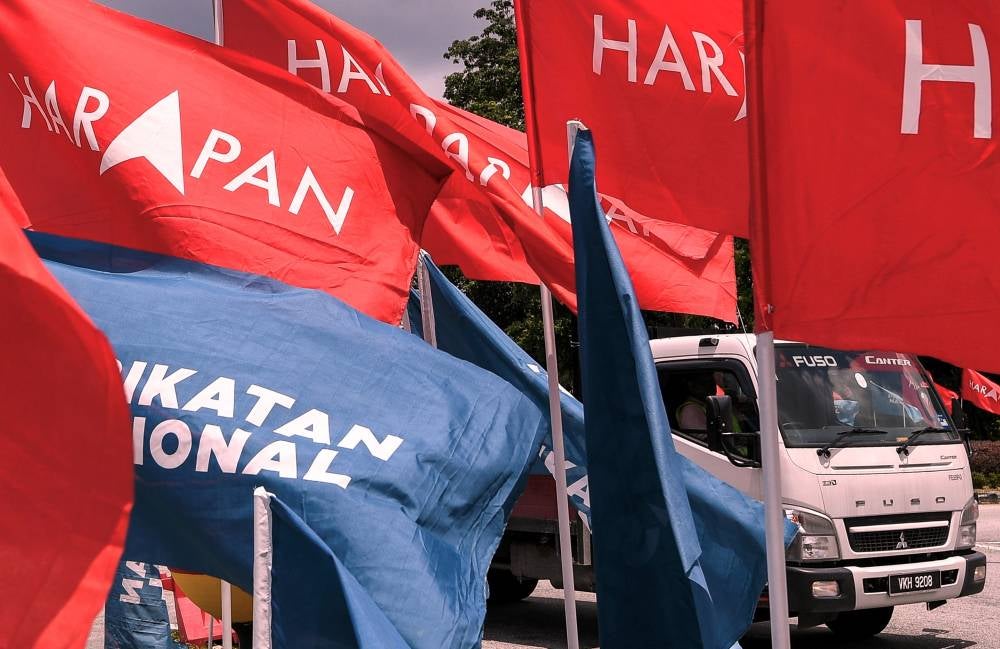
KUALA LUMPUR - Although the dispute over the use of the Perikatan Nasional (PN) logo for the Johor state election appears to have subsided following the conclusion of seat negotiations yesterday, the political truce is still insufficient to guarantee the coalition's long-term stability.
Political analysts view the last-minute consensus as a fragile arrangement held together by electoral necessity rather than genuine unity, despite all component parties agreeing to contest under a single name and official logo ahead of today's candidate announcement in Muar.
Observers said the resolution was driven more by electoral strategy than a comprehensive reconciliation of underlying differences, signalling that PN's internal fractures remain far from resolved.
The assessment is rooted in the strained relationship between PAS and Bersatu, which has long been marred by a trust deficit stemming from several disputes, including the controversy surrounding the appointment of the Perlis Menteri Besar that eventually led PAS to end its cooperation with the party led by Tan Sri Muhyiddin Yassin.
Political analyst Dr Mazlan Ali said voters are becoming increasingly mature in assessing political developments and are able to distinguish between cooperation founded on genuine understanding and alliances forged out of political expediency ahead of elections.
"Voters are becoming more discerning and they understand that the prolonged conflict between PAS and Bersatu, which culminated in the end of their cooperation, is not a crisis that can be resolved within a day or two, especially given the escalating dispute over the use of the logo ahead of the state election.
"Although it is said to have been resolved and both sides claim to be satisfied with the outcome of today's negotiations, I expect it to be little more than election-season political manoeuvring, as the coalition's image has long been affected by internal power struggles rather than its focus on issues affecting the people," he said.
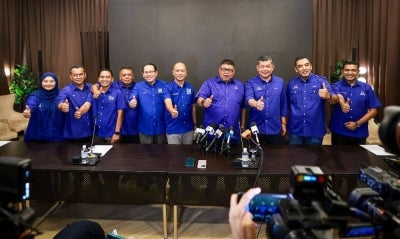
Media reports quoted PN Election Director Datuk Seri Muhammad Sanusi Md Nor as saying that all original member parties of the coalition -- PAS, Bersatu, Gerakan and the Malaysian Indian People's Party (MIPP) -- would contest under the PN logo in the Johor state election, while seats would also be allocated to their new ally, Pejuang.
Mazlan said the prolonged dispute had created doubts among voters not only in Johor and Negeri Sembilan, but also regarding PN's ability to emerge as a stable alternative to the current government in the next general election.
The Universiti Teknologi Malaysia's Kuala Lumpur Director of the Faculty of Social Sciences and Humanities said perceptions of stability remain a key factor influencing voters, particularly fence-sitters who tend to favour coalitions with clear leadership and strong internal cohesion.
"Once a coalition begins to fracture, fence-sitters will start looking for alternatives they perceive as more stable. In such circumstances, they are likely to look towards the stability offered by the ruling coalition, Barisan Nasional (BN) or Pakatan Harapan (PH).
"This is because when confidence in a coalition's unity begins to erode, it affects its ability to convince voters that it can govern effectively," he said.
Political observer Prof Dr Mohd Azizuddin Mohd Sani said PN's predicament stands in stark contrast to parties within the government coalition, which have appeared more organised by successfully concluding seat negotiations and announcing candidates much earlier.
The Universiti Utara Malaysia’s Deputy Vice-Chancellor (Academic and International) said PN's failure to resolve fundamental issues such as seat allocation and candidate selection not only reflected weaknesses in its internal management but also undermined public confidence in its governing capabilities.
He noted that the administration led by Prime Minister Datuk Seri Anwar Ibrahim is currently seen as being more focused on development initiatives and strengthening the national economy rather than being distracted by internal political disputes.
"The country's focus is now clearly directed towards advancing the economy, and the results are already becoming visible. Among them are lower diesel prices, improving economic performance, strong investment inflows and the creation of more employment opportunities for the people.
"If the country's administration is functioning smoothly, why should voters choose a party facing internal problems? Why switch to a party whose ability to govern effectively remains uncertain?" he questioned.- BERNAMA
Download Sinar Daily application.Click Here!