Data connectivity, not more machines, makes the smart factory
In an increasingly demanding global environment, Malaysian manufacturers must move quickly to strengthen their operational foundations if they want to position themselves to take full advantage of smart manufacturing.
VINCENT TANG
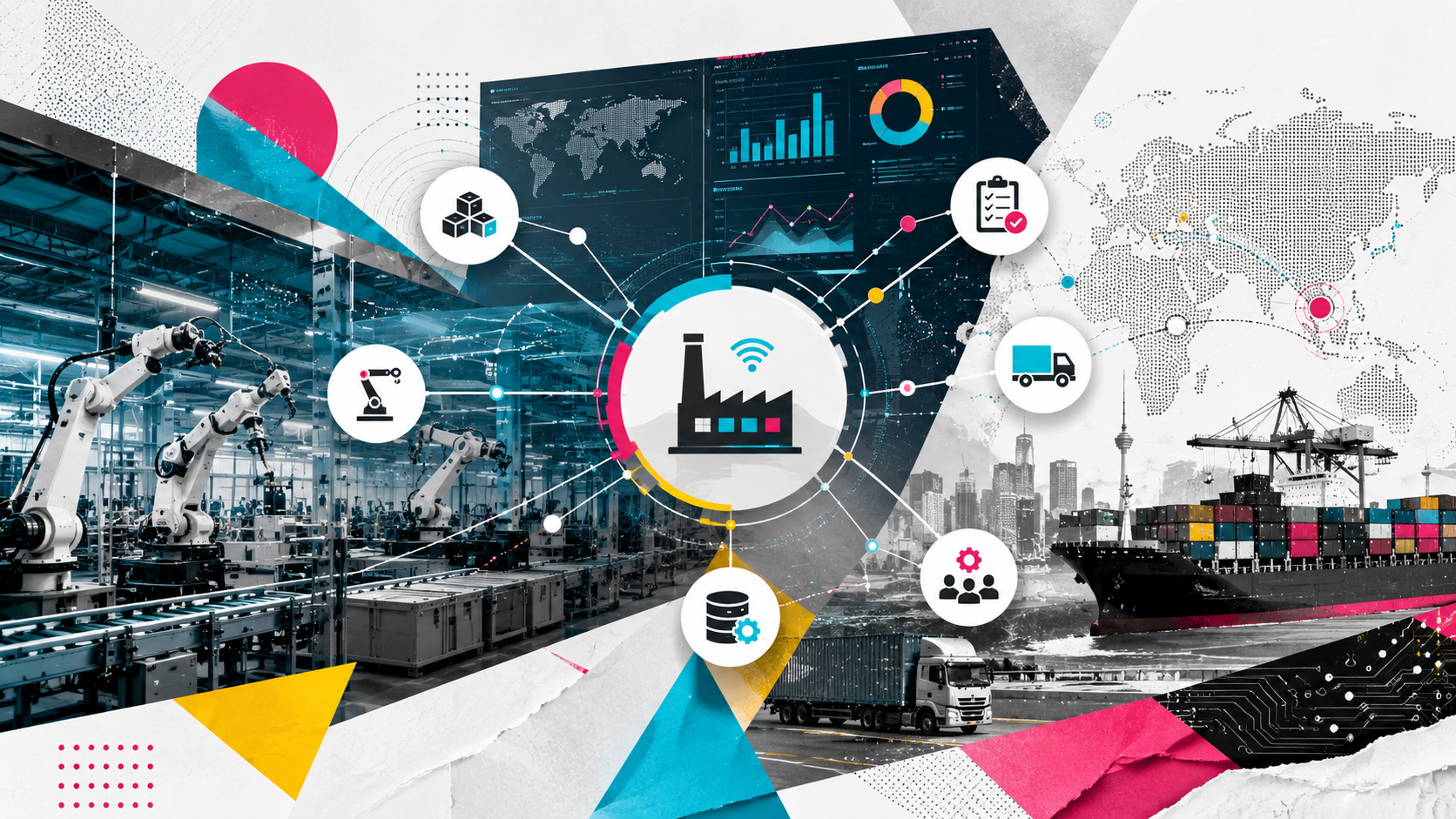
MANUFACTURERS have more information available than ever before. Walk into any modern manufacturing business today and you will find no shortage of data. There is data from production lines, customer orders, suppliers, inventory systems, finance teams and machines.
Yet many business leaders would admit that having more data does not always mean having better visibility over a production delay, for example. What typically starts as a small issue on the factory floor can quickly spread across the organisation, affecting inventory availability and customer commitments.
The real challenge is knowing what information matters, where to find it and how quickly it can be turned into action. As Malaysian manufacturing enters a new phase of growth, it's the companies that can connect these pieces and respond quickly that will thrive.
Growth's hidden productivity challenge
Customers today still demand swift and consistent delivery, but that is on top of higher expectations around customisation. And, often, operational complexity holds back manufacturers and exacerbates the issues stemming from less predictable supply chains, rising costs, and skilled labour shortages.
Operational efficiency remains elusive because many organisations still rely on processes that were designed for a different era. Information may sit in separate systems across departments, teams may spend hours consolidating reports manually and important decisions may depend on information that is incomplete or already outdated.
These challenges tend to remain hidden because businesses have found ways to work around them, with employees typically developing informal processes to bridge gaps between systems. But as businesses grow, these workarounds become increasingly difficult to sustain.
A foundation of operational connectivity
The conversation around manufacturing transformation often focuses on what comes next and advancements in technology such as artificial intelligence (AI) dominate the conversation, but usually in a shallow manner.
These technologies are undoubtedly important, but before businesses can benefit from them, they need to address whether their operations can work together as one connected system.
When all functions of the business operate with shared information, leaders gain a clearer understanding of what is happening across the organisation.
A manufacturer can then identify potential supply issues earlier and adjust production plans more effectively, setting itself up for operational excellence and the ability to avert a crisis.
ERP is smart manufacturing's real engine
This is where modern enterprise resource planning (ERP) systems play an important role. Rather than functioning only as transactional platforms, today’s ERP solutions connect business processes and provide a unified view of operations.
They help organisations move from fragmented decision-making towards a more coordinated way of working that gives teams and their leaders the confidence to run the business effectively.
This is also essential amid the excitement around AI. Many organisations are understandably eager to deploy AI for demand prediction and better production efficiency, but AI does not create value in isolation as the technology depends heavily on the quality of the data it is fed. AI outputs will prove unreliable if information is inconsistent between departments or fragmented across disconnected systems.
In other words, rushing to deploy AI when you don't have the operational foundations is bound to hamper rather than stimulate your business' growth. A smarter approach begins with connecting processes and bringing your data to life. And an industry-specific ERP software that empowers real-time customisation provides the much-needed structure and visibility for manufacturers to really leverage AI and transform the shop floor.
Bringing Malaysia's advantage to bear
Last year, manufacturing contributed approximately 23 per cent to Malaysia's national GDP and the industry is central to the nation's economic ambitions. To continue being a linchpin of the economy, manufacturers will no doubt have to adopt advanced technologies from AI to robotic process automation.
In this regard, initiatives such as the New Industrial Master Plan 2030 (NIMP 2030) are certainly commendable for endeavouring to get manufacturers to embed technology into operations. However, those very same businesses must integrate their tech stack with daily operations, and industry-specific ERP software is the way to do that.
The organisations that gain the greatest value from digital investments will be those that focus on connected systems, trusted data, efficient processes, and empowered employees. Operational excellence is not a destination but an ongoing commitment to adapt and improve.
In an increasingly demanding global environment, Malaysian manufacturers must move quickly to strengthen their operational foundations if they want to position themselves to take full advantage of smart manufacturing.
Becoming a smart manufacturer depends less on installing new technologies and more on creating an organisation that can see clearly, coordinate effectively, and make decisions with confidence. The factories of the future will certainly be more intelligent. But intelligence begins with visibility, and visibility begins with connected operations.
Vincent Tang is the vice president of Epicor Asia.
The views expressed in this article are the author's own and do not necessarily reflect those of Sinar Daily.
Download Sinar Daily application.Click Here!