CSA opens space for PH-Bersatu cooperation


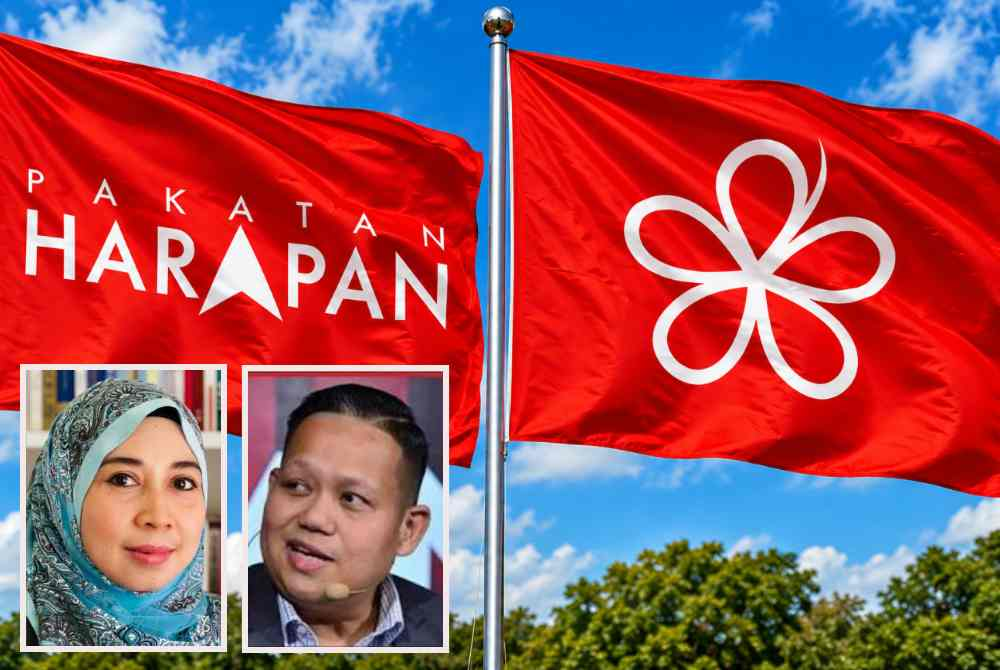
SHAH ALAM — The Confidence and Supply Agreement (CSA) between Pakatan Harapan (PH) and Bersatu has the potential to pave the way for electoral cooperation ahead of the Melaka state election. However, it does not yet prove that both parties will form a formal alliance.
Ilham Centre research fellow Mujibu Abd Muis said the CSA and electoral cooperation must be distinguished in terms of their objectives, although both can be interconnected within political strategy.
He said CSA is a mechanism to ensure support for the government on matters such as confidence votes and budgets, whereas electoral cooperation involves seat-allocation negotiations, candidate selection and efforts to avoid multi-cornered fights among themselves.
Nevertheless, he noted that the understanding built through the CSA could serve as a foundation to test the possibility of broader cooperation between PH and Bersatu.
"Developments in the PH-Bersatu talks ahead of the Melaka state election indicate that this avenue is indeed being explored, even though the exact form of electoral cooperation cannot yet be considered finalised.
"However, a CSA is not automatic proof that both will form an electoral pact, even if it may be an indicator pointing in that direction," he told Sinar on Thursday.
Mujibu said cooperation aimed at ensuring administrative stability does not necessarily mean that both sides have reached a consensus on candidates, manifestos, or their political direction.
Therefore, he added, subsequent developments in negotiations must be observed to determine whether the understanding evolves from institutional cooperation into more structured electoral cooperation.
Meanwhile, commenting on the political impact of the CSA on the Melaka state election, Mujibu said the agreement could also open channels of communication and build a degree of trust between both parties.
"Better relations could facilitate talks to prevent contesting against each other, particularly in areas prone to vote-splitting at a time when Barisan Nasional (BN) and Perikatan Nasional (PN) are also striving to avoid clashes," he said.
However, Mujibu noted that seat negotiations are not merely about deciding which party contests a particular area, they also take into account the strength of candidates, voter acceptance, and the readiness of party machinery to support candidates from parties that were once their opponents.
"PH must take into account the reaction of supporters who still remember the 'Sheraton Move' and the fall of the PH government in 2020.
"For Bersatu, cooperating with PH could provide an opportunity to remain relevant following the demise of its political relationship with Pas.
"However, Bersatu must convince PH that this collaboration is built on a trustworthy foundation," he said.
Mujibu noted that PH’s seat allocations involving PKR, DAP and Amanah are reportedly finalised, leaving the potential allocation of seats to Bersatu as an open question.
He said the greatest benefit of the cooperation would be reducing the risk of vote splitting, as well as ensuring that BN-PN does not secure an easy and comfortable victory.
"However, both parties risk losing the trust of their own supporters if political compromises are seen as straying too far from the principles they have long championed," he added.
Commenting on the hurdles facing this cooperation, Mujibu said the unresolved deficit of political trust remains the greatest challenge, as PH and Bersatu previously partnered in the 14th General Election (GE14) before forming a government, only for that relationship to end following the Sheraton Move.
"Grassroots acceptance is also an obstacle, as central leaders may view the cooperation as a strategic move to prevent vote splitting, whereas state-level supporters may hold a different view," he said.
Supporter confidence
He added that both sides must clarify their post-election direction, including whether they are merely agreeing to avoid contesting against one another or are truly prepared to cooperate in governance and long-term political strategy.
"PH must ensure that any compromise does not erode the confidence of its supporters, while Bersatu must prove it can be a consistent partner," he said.
Nevertheless, Mujibu believed that the unfolding BN-PN cooperation in Johor and Negeri Sembilan could prompt PH and Bersatu to consider political compromises if they perceive cooperation as a more beneficial option compared to running independently.
"This consideration also takes into account GE16, which will follow the Melaka state election," he added.
Meanwhile,Universiti Kebangsaan Malaysia political analyst Professor Dr Kartini Aboo Talib, said while the CSA could open broader negotiation channels between PH and Bersatu, it does not guarantee an easy victory in the Melaka election.
She said the decision to cooperate in the election depends on current political calculations and the strategic interests of each party, particularly regarding seat allocation and avoiding multi-cornered contests.
She explained that if the CSA successfully establishes cooperation between the two sides, it could help heal past wounds.
"In electoral terms, tactical cooperation is crucial to prevent multi-cornered contests, especially in areas with overlapping support patterns. The benefits of such cooperation are clear.
"However, the issue of seat allocation is highly sensitive, as it demands careful consideration of past winning records and the profiles of individual candidates.
"Although a CSA can improve political relations, it does not necessarily simplify seat negotiations," she said.
Commenting on the challenges of realising this cooperation, Kartini outlined four main hurdles that PH and Bersatu must address, beginning with the trust deficit between both parties.
Secondly, grassroots acceptance presents a challenge, as supporters may find it difficult to embrace cooperation with a party previously viewed as an opponent, which could adversely affect campaigning and voter turnout.
"Thirdly, competing agendas, as both parties hold their own political interests and priorities that could spark disputes.
"Fourthly, differing political narratives, with PH promoting institutional reform and multi-ethnic representation, while Bersatu remains focused on the Malay-Bumiputera agenda," she said.
Download Sinar Daily application.Click Here!