Are EVs safe enough? Experts warn of risks as Malaysia's infrastructure lags
Although Malaysia’s push towards electric mobility reflects significant progress, automotive experts are warning that the supporting infrastructure, consumer protections and technical assistance frameworks have not kept pace.


SHAH ALAM – The rapid rise of electric vehicles (EVs) in Malaysia has outpaced the country's capacity to enforce safety regulations, uphold quality standards and protect consumers.
Although Malaysia’s push towards electric mobility reflects significant progress, automotive experts are warning that supporting infrastructure, consumer protections and technical assistance frameworks have not kept pace.
They cautioned that early adopters may be exposed to greater risks as a result.
Universiti Sains Malaysia (USM) School of Civil Engineering Associate Professor Dr Nur Sabahiah Abdul Sukor believes the EV rollout is moving faster than the country’s preparedness in key areas such as consumer protection, servicing infrastructure and quality assurance.
She referred to recent incidents involving EVs suddenly stalling in traffic, including models like the BYD Atto 3 and Audi e-tron GT and raised concerns about gaps in after-sales support and the lack of clear responsibility when technical issues arise.
“These incidents, coupled with inconsistent after-sales support and unclear lines of accountability, point to an underdeveloped infrastructure that is struggling to meet the demands of a growing EV market.
“Technical issues occurring even in EVs from well-established brands highlight the limitations of current quality control systems, which may not yet be fully tailored to the unique demands of EV technology.
"Manufacturers must improve their quality assurance processes, especially by focusing on EV-specific components and systems," she told Sinar Daily recently.
She also called on regulatory bodies to implement and strictly enforce safety and performance standards specific to EVs to ensure greater consumer trust and road safety.
Sharing a similar perspective, Universiti Putra Malaysia (UPM) Engineering Faculty Road Safety Research Centre head Law Teik Hua said the pace of the country’s rollout had clearly exceeded its overall preparedness to fully support the new technology.
While the growth of public charging stations and infrastructure in urban and semi-urban areas is moving at an encouraging rate, he stated that crucial backend systems such as maintenance, regulatory enforcement and consumer protection are still struggling to keep up.
“Recent waves of complaints about EVs stopping suddenly during drives, poor customer service and slow technical responses point to fundamental structural flaws.
“The push for adoption through tax incentives, rebates and heavy promotion has surpassed the development of a robust support system needed to sustain it.
"This gap forces early adopters to take unnecessary risks and, in turn, weakens public confidence in EVs," he said.
Law said that the issue does not lie with EV technology itself, but with how manufacturers, importers and local dealers handle testing, after-sales support and customer service within Malaysia’s specific environment.
He observed a clear lack of accountability and quality assurance after purchase and called for agencies like the Road Transport Department (JPJ) and the Investment, Trade and Industry Ministry (Miti) to implement stricter safety and performance standards before these vehicles reach consumers.
“Furthermore, EV retailers must establish formal consumer complaint resolution processes similar to those in industries like aviation or insurance.
"Regular audits of dealerships and service centres are essential to ensure consistent after-sales care.
“Ultimately, brand reputation cannot replace real consumer protection, and regulations must evolve alongside advancements in EV technology," he added.
Meanwhile, Piston.My Managing Editor Keshvinder Singh Dhillon said that although EVs, like traditional internal combustion engine (ICE) cars, can experience breakdowns, they tend to draw more attention.
This is primarily because EVs are still relatively new and people are eager to see how they perform in real-world conditions.
Contrary to common belief, he said there has been no significant increase in EV breakdowns in Malaysia.
“Much of the reported breakdowns come from countries like the United Kingdom (UK), Canada and the United States (US), where EV adoption is significantly higher.
"Naturally, the more EVs on the road, the more likely issues will be reported.
“As Malaysia prepares to welcome more EVs, especially with Proton and Perodua set to release affordable models in the coming months, the urgency to accelerate the rollout of a comprehensive charging infrastructure cannot be overstated," he said.
He also believes that quality control is gradually advancing, though the EV industry remains in a developmental phase, much like the early stages of ICE vehicles.
He drew a parallel to the early years of conventional cars, when safety features such as seat belts, ABS brakes and airbags were only introduced after years of refinement and user feedback.
“However, with today’s advancements in technology and regulatory systems, governments now have better tools to monitor the EV sector closely and learn from international incidents.
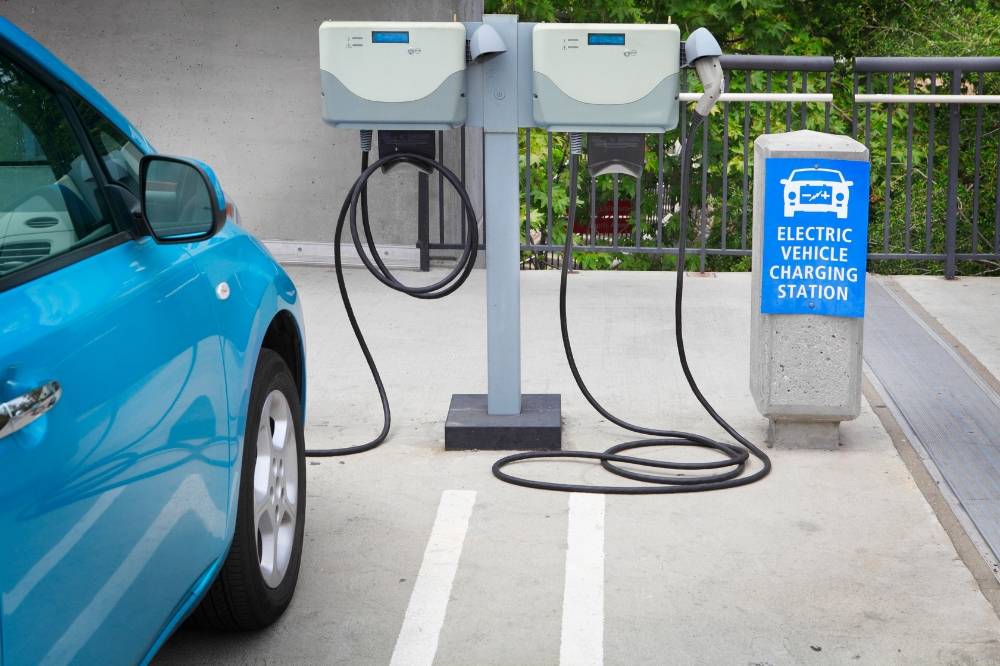
“For instance, placing EV chargers underground in shopping malls could pose a fire safety risk due to limited access for firefighters.
"At the same time, chargers should also be installed in convenient locations where users are not exposed to weather hazards. These matters require clear regulations and continuous oversight," he said.
Real-life safety concerns
In early May, two Malaysian EV owners came forward with troubling experiences that triggered debate over EV safety standards in the country.
On May 1, Facebook user Nur Afifah Abdul Rahim shared an alarming incident involving her husband’s BYD Atto 3.
While on the Cheras-Kajang highway, the vehicle suddenly halted and displayed a ‘Power System Failure’ warning.
All four tyres locked without any prior alert, posing a serious danger to surrounding traffic.
The couple faced poor service and delayed replies from the dealer, who told them the cause was a faulty 12V battery not covered under warranty due to the vehicle’s mileage, despite it being only 10 months old.
On May 6, Facebook user HL Tan, owner of an Audi e-tron GT imported from Japan, revealed his car had broken down three times in just over 13,000 km.
The most recent incident occurred on April 25, when the car shut down mid-drive on the North-South Expressway with his wife and two young children onboard.
While he praised Audi Malaysia’s after-sales team, he said that Audi AG must intervene, as the car's repeated failures posed a serious safety risk.
Both owners said they shared their experiences to warn the public and urge EV manufacturers to take these issues seriously, as the promise of clean mobility must not come at the cost of consumer safety.
Download Sinar Daily application.Click Here!


