New caregiving framework to protect women’s finances in old age
Rising living costs and limited social protection expose homemakers to long-term financial risks as Malaysia ages


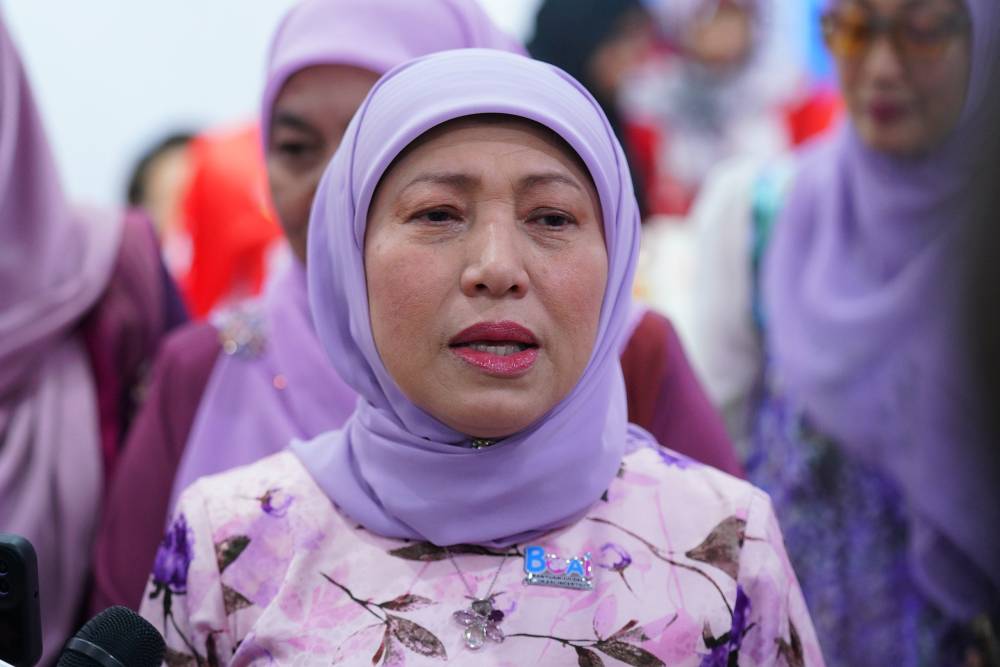
THE government is introducing measures to professionalise caregiving, provide social protection and reduce the financial risks faced by women.
Women, Family and Community Development Minister Datuk Seri Nancy Shukri said these challenges are being addressed through the Malaysia Care Strategic Framework and Action Plan 2026–2030, alongside enhancements to retirement savings schemes.
“The government aims to transform caregiving from an informal, unpaid responsibility into a recognised professional sector to ease the burden on women,” she said.
Her remarks came in response to a recent Sinar Daily report highlighting how the rising cost of living and limited social protection have made full-time homemaking increasingly unviable for many Malaysian families.
Despite contributing significantly through unpaid care work, these women often remain excluded from formal wages, pensions and social security, leaving them financially vulnerable as the nation ages.
Nancy said the framework focuses on creating formal career pathways for caregivers.
“Malaysia Care includes a goal to train 50,000 skilled caregivers by 2030 and establish a structured care economy. The plan introduces strategies for job security and safety for both paid and unpaid caregivers, recognising them as critical economic contributors,” she said.
The minister also highlighted financial support for families caring for elderly parents.
“Families looking after elderly parents can access specialised tax reliefs, providing immediate financial breathing room,” she said, noting the impact of rising living costs.
Beyond caregiving, Nancy said the ministry is preparing for demographic change through the Kasih National Family Policy, which integrates family-centred care into national social and economic frameworks.
“Kasih is a comprehensive policy framework designed to address contemporary family challenges using an integrated, life-cycle approach. It recognises the family as the foundation of social stability and national resilience, especially as Malaysia transitions into an ageing nation,” she added.
The framework comprises five strategic pillars, 16 strategies, three enabling mechanisms, and 43 coordinated actions, all aimed at strengthening family institutions.
“These pillars were formulated based on evaluations of previous family policies and an assessment of current and emerging challenges,” Nancy said.
In strengthening broader social protection, she pointed to the National Ageing Blueprint (NAB) 2025–2045, which has been integrated into the 13th Malaysia Plan (13MP).
“The blueprint focuses on four key pillars: long-term care, labour market skills, social protection, and retirement savings,” she said.
Additionally, the ministry has launched the Senior Citizens Action Plan (PTWEN) 2026–2030, targeting the wellbeing, income security, and social assistance of older Malaysians.
“PTWEN specifically supports the elderly as the nation transitions to aged status. Women live longer but also face higher financial risks in later life. Our policies are designed to ensure they are protected, supported, and economically secure both as caregivers and as senior citizens,” Nancy added.
As Malaysia moves toward becoming an ageing nation, homemakers face mounting financial insecurity.
Women who dedicate their lives to raising children, supporting spouses and caring for elderly parents often do so without formal recognition, social protection or retirement benefits.
Their unpaid labour, while essential to family stability and society at large, leaves them economically vulnerable in old age.
Even in dual-income households, women who step away from the workforce to manage household responsibilities often lack long-term savings or structured retirement support.
This unprotected status places them at higher risk of financial hardship, particularly since women generally live longer than men and are more likely to serve as primary caregivers throughout their lives.
Experts warned that unless caregiving roles are formally recognised and supported, homemakers remain exposed to both immediate financial pressures and long-term economic vulnerability.
The government acknowledged that caregiving is not merely a private duty but a critical contribution to the national economy.
Without targeted interventions, women performing these roles risk a lifetime of unprotected labour.
Download Sinar Daily application.Click Here!