Traffic congestion: Can work‑from‑home options, smart policies curb gridlock?
"It does not make sense to spend hours on the road."



SHAH ALAM - With Malaysia’s roads facing increasing congestion amid rapid urbanisation, a surge in vehicle growth and limited road infrastructure improvements, commuters are spending longer hours in traffic than ever before.
Motoring expert and Piston.My Managing Editor Keshvinder Singh Dhillon has raised concerns over the worsening situation, warning that current traffic patterns are unsustainable and could negatively impact productivity, public safety and quality of life.
He is calling for immediate measures, including the adoption of work-from-home policies, smarter traffic management strategies and innovative solutions inspired by cities like Singapore, which have successfully reduced road congestion through policy-driven approaches.
"I am a big believer in work-from-home options. It simply does not make sense to spend hours on the road when people can manage their own time and be productive in the comfort of their own homes.
"Of course, this may not work for all companies but even if we can keep a thousand cars off the road in a day, that may still help," he told Sinar Daily.
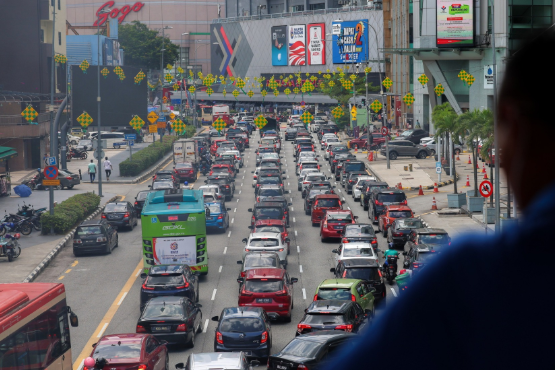
Keshvinder pointed out that the structure of Malaysian roads themselves contributes significantly to traffic woes.
“There are plenty of pinch points that force traffic from three lanes down to one lane, unclear signage that sometimes forces people into dangerous driving behaviours like illegal u-turns and ongoing construction or road repairs during peak hours. All of this makes congestion worse,” he added.
As a short-term solution, he suggested that companies implement flexible work-from-home arrangements, particularly on Fridays.
“Why not make Friday a work-from-home day? We have two-hour lunch breaks on Friday and our Muslim brothers need time to pray as well.
"Allowing employees to work from home that day will ease congestion and it won’t cost the government a thing,” he said.
He also proposed traffic control strategies that have worked in other countries.
“We can limit some cars to certain days using coloured number plates, yellow plates could be restricted to weekends, blue plates on Monday, Wednesday and Friday.
"Similarly, we could explore the odd-and-even number system, where cars with odd numbers can’t access the city on certain days and even numbers on others.
"These are simple strategies that have proven effective in major cities and they could work in Malaysia too," he said.
Download Sinar Daily application.Click Here!