From scarcity to overload: How social media rewired Malaysia
Malaysia has the access, now it must learn to live responsibly with technology


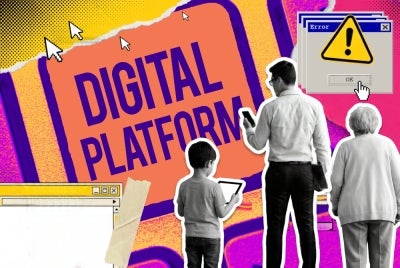
MALAYSIAN society has undergone a fundamental shift from an era when information was scarce and communication was largely private to one defined by information abundance, continuous connectivity and widespread public participation.
Senior Lecturer at Universiti Putra Malaysia’s Faculty of Human Ecology, Department of Social and Development Sciences, Dr Wan Munira Wan Jaafar, said information previously moved mainly through recognised institutions such as newspapers, television, radio, schools, workplaces and community organisations.
“The biggest change I have observed is that Malaysian society has moved from information scarcity to information abundance and from relatively private interpersonal communication to continuous connectivity.
“Previously, information generally moved through recognised institutions such as newspapers, television, radio, schools, workplaces and community organisations. Today, almost everyone can simultaneously consume, produce and distribute information.
“With 98.3 per cent of individuals using the Internet in 2025 and household Internet access reaching 97.1 per cent, communication has become immediate, networked and increasingly public,” she told Sinar Daily.
She said the transformation had democratised access to information, enabling ordinary citizens, non-governmental organisations, academics, entrepreneurs and communities to communicate directly with the public.
However, the same accessibility has also enabled misinformation to spread rapidly, while likes, views, shares, followers and comments have created an attention economy in which social interaction can involve identity performance, visibility and validation.
“I would not describe this transformation as simply positive or negative.
“Social media has strengthened connectivity, access and participation, but it has also brought information overload, blurred personal boundaries and increased the speed at which misunderstanding, anger and misinformation can spread.
“Previously, information had to travel to us; today, we live inside a continuous information environment that requires very different social skills to navigate,” she added.
Munira said the rapid development of technology compared with the slower adaptation of social norms, education, regulation, institutions and human behaviour could be understood through the sociological concept of cultural lag.
While Malaysia had achieved high levels of digital access, she said being able to operate a smartphone did not necessarily mean someone was digitally literate.
She said digital literacy in 2026 should encompass evaluating sources, recognising manipulation, understanding how algorithms shape information exposure, protecting personal data, identifying social-engineering techniques and distinguishing genuine content from artificial intelligence (AI) generated material.
The scale of online scams also demonstrated the gap, with the police recording 66,204 online-fraud cases involving RM2.97 billion in losses in 2025.
“I therefore see a shift from the traditional digital divide between those who have Internet access and those who do not, towards a second-level divide between people who can use technology and those who can use it critically, safely and strategically.
“Digital literacy must combine technical knowledge with an understanding of how technology can be used to influence and manipulate human behaviour,” she emphasised.
She said digital safety should not be viewed as a choice between individual and platform responsibility, describing it instead as a shared ecosystem involving users, platforms, government, educational institutions, families and civil society.
Under the model, users should practise digital self-protection, platforms should adopt safety-by-design, while institutions should provide regulation, education and enforcement.
Munira also said constant connectivity had changed how Malaysians understood privacy, creating what she described as a privacy paradox in which people considered privacy important while routinely sharing photographs, locations, relationships, workplaces and personal experiences online.
The boundary between private and public space had consequently become less distinct, while WhatsApp, email and social platforms could create expectations of constant availability.
“I believe privacy in 2026 should therefore be understood as having control over who can access our information, for what purpose, for how long and with whom it may subsequently be shared.
“Malaysia's next challenge is to move beyond teaching people how to operate technology towards teaching them how to live responsibly with it,” she said.
Among the social norms she advocated were verifying information before sharing it, pausing before reacting emotionally, normalising disagreement without hostility, adopting privacy by default, treating urgency as a warning sign and making digital literacy a lifelong social skill.
People should check who produced information, identify the original source and look for supporting evidence instead of treating widely shared WhatsApp messages, TikTok posts or convincing videos as proof.
She also urged users to be cautious with provocative content, particularly material designed to trigger anger or fear, while learning to disagree without attacking another person's character, identity or dignity.
Munira said Malaysia had largely achieved digital connectivity, but needed to develop greater digital maturity.
“Social media is here to stay, so my focus should be on developing a society that is critical, resilient, ethical and socially responsible in using it,” she said.
Download Sinar Daily application.Click Here!